Skip to content
American Goldfinch (Carduelis tristis)
Summary
- Natural history: American Goldfinches are among Vermont’s latest-nesting songbirds, timing their breeding season to the ripening of thistle and milkweed seeds rather than to insect abundance like most birds, and lining their nests with thistle down. This late start has a side benefit, letting them largely avoid Brown-headed Cowbird parasitism since cowbirds have mostly finished laying eggs by the time goldfinch nesting begins. Some experienced females then raise a second brood by leaving their fledged young with their first mate and pairing with a new one to nest again.
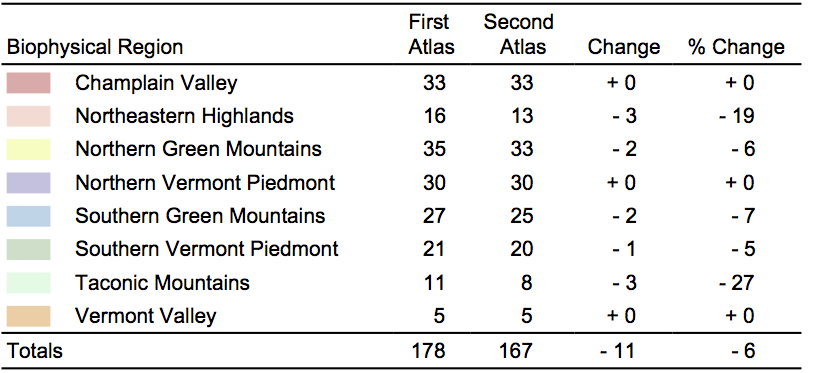
- Status in VT: Decreased by 6% (178 to 167 blocks). Greatest decrease in Taconic Mountains and Northeastern Highlands.
- Data from other research: No additional data for VT.
- Conservation status: State rank S5B; S5N
- Other atlases: NY, PA, MD: virtually no change; ON: sig. increase in north.
- VT’s role in North American range: VT is within the core of the range.
- Causes of change since first Atlas: Minimal change.
- Management/Monitoring recommendations: No specific recommendations.
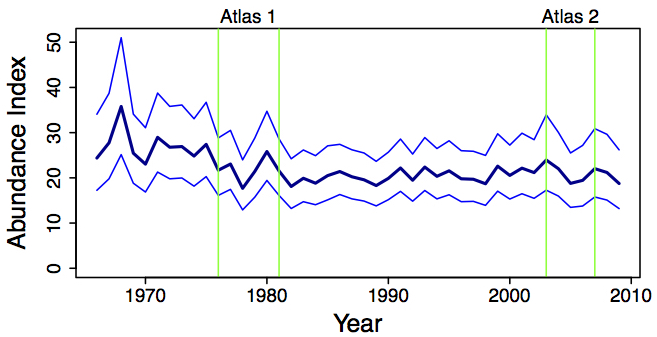
Population Trends
First Vermont Breeding Bird Atlas (1976-1981)
Species Account
Second Vermont Breeding Bird Atlas (2003 – 2007)
Species Account
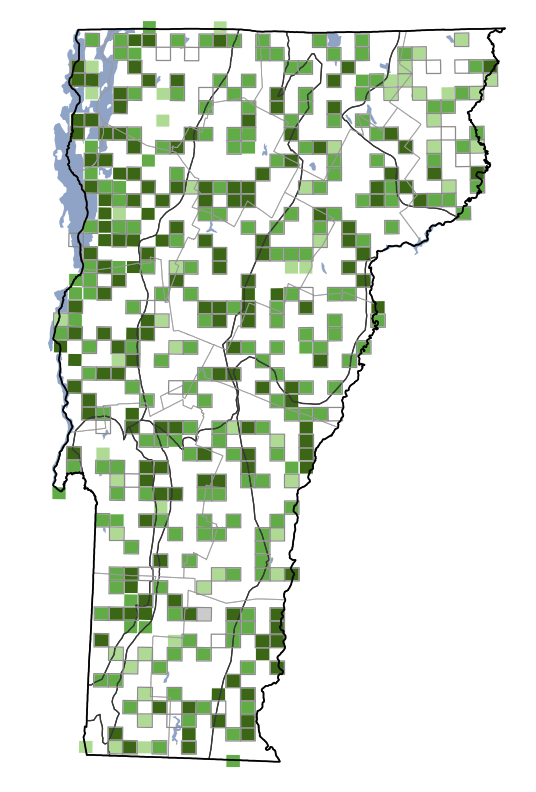

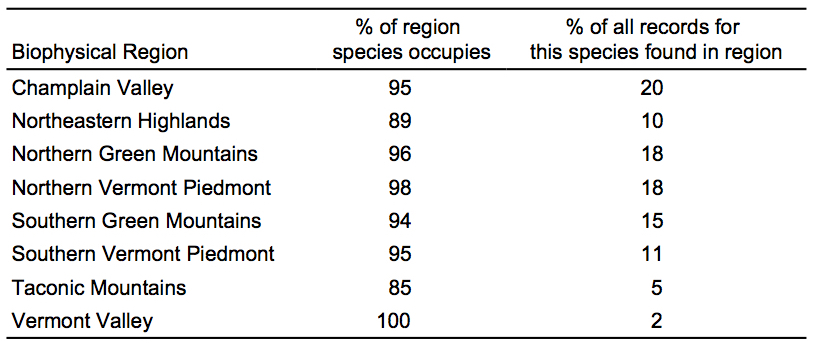
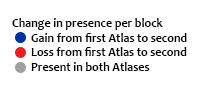
Change in Distribution

Links
Vermont eBird
Encyclopedia of Life
All About Birds