Summary
- Natural history: Hooded Mergansers compete directly with Wood Ducks for the same tree cavities and often come out ahead in that contest, laying a clutch of about ten eggs that the male abandons partway through incubation to go molt elsewhere while the female raises the brood alone. Unlike most small ducks, which breed in their first year, Hooded Mergansers typically wait until age two to nest for the first time, and their sharp rise across Vermont has tracked a parallel surge in Wood Ducks, both helped by the state’s beaver population climbing 130 percent between 1980 and 1990 and by maturing forests offering more flooded timber and nest cavities.
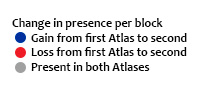
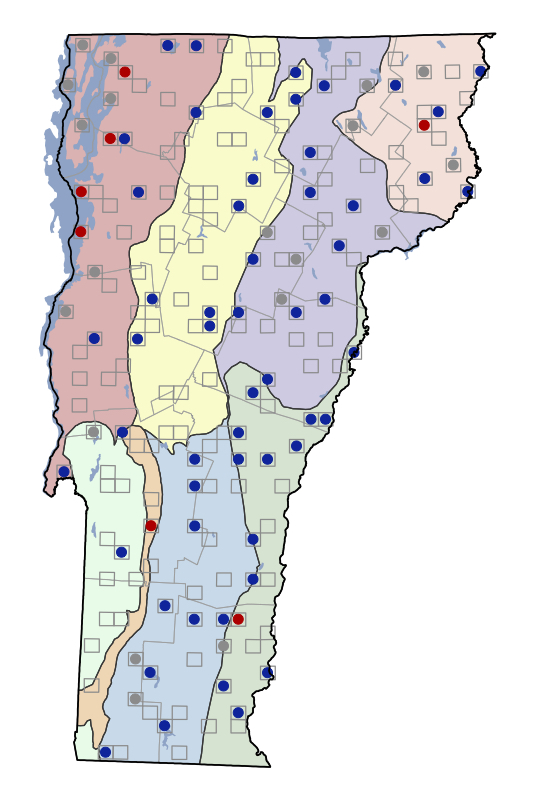
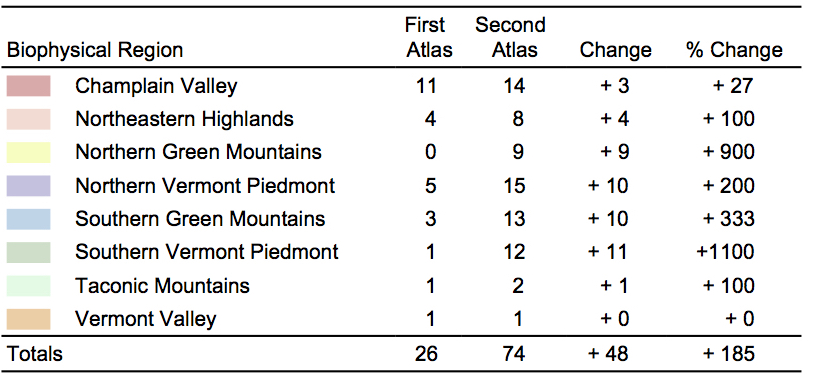
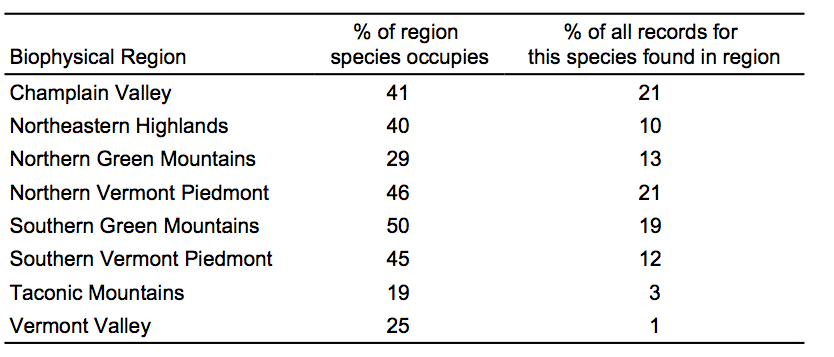
- Status in VT: Increased by 188% (26 to 75 blocks). Greatest increase in Southern Vermont Piedmont.
- Data from other research: No additional data for VT.
- Conservation status: State rank S4B; S2N
- Other atlases: NY: 111%; PA: 185%; ON: 80%
- VT’s role in North American range: VT is within the core of the range.
- Causes of change since first Atlas: Increase in beaver population (?); maturation of forests (?).
- Management/Monitoring recommendations: Maintenance of high water quality to reduce turbidity and support integrity of food chains.
First Vermont Breeding Bird Atlas (1976-1981)
Second Vermont Breeding Bird Atlas (2003 – 2007)


Change in Distribution