Summary
- Natural history: Like the Bobolink, the Eastern Meadowlark is originally a prairie species, and it only spread into the Northeast after colonial-era forest clearing created the open hayfields and pastures it depends on. Vermont sits at the far northeastern edge of a breeding range that stretches all the way to Arizona and the Gulf Coast. The bird builds its grass nest directly on the ground, and for reasons unknown it almost always orients the entrance to the northwest or southwest, a quirk observed even as the large, dry fields it needs have grown scarcer with farm abandonment and forest regrowth.
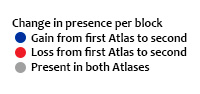
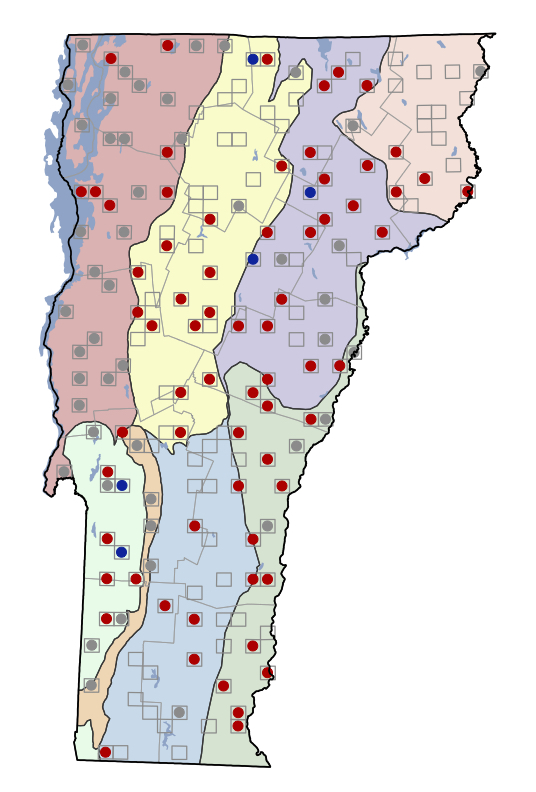
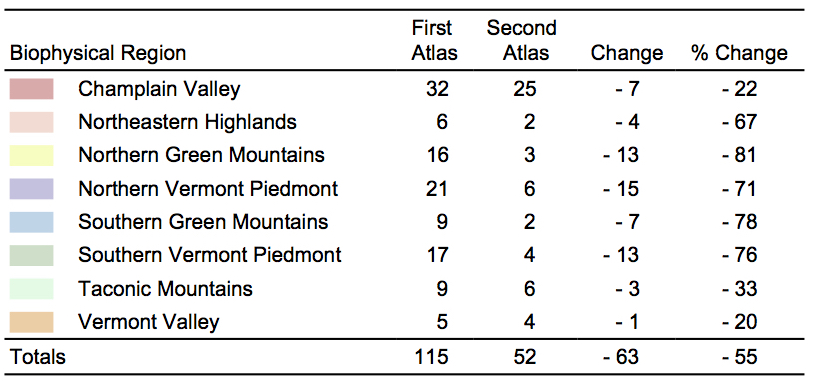
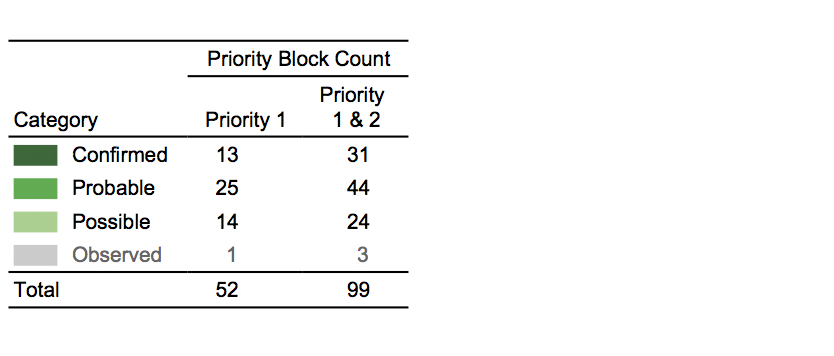
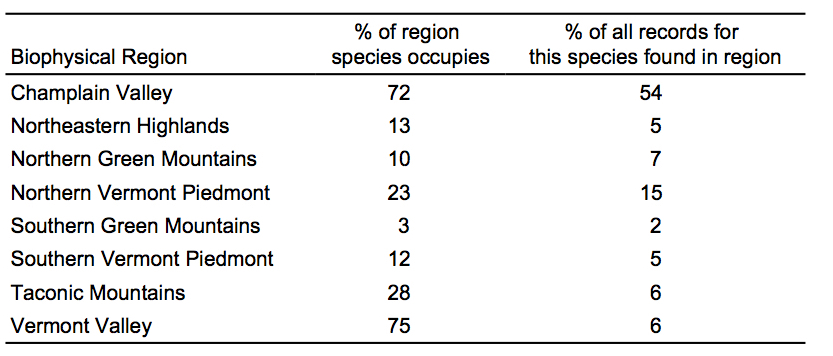
- Status in VT: Decreased by 55% (115 to 52 blocks). Greatest decreases in Northern Green Mountains and Southern Green Mountains.
- Data from other research: No additional data for VT.
- Conservation status: State rank S4B; SGCN-M; SSC
- Other atlases: NY, ON, PA: found in fewer blocks
- VT’s role in North American range: VT is within the core of the range.
- Causes of change since first Atlas: Loss of grassland habitat due to conversion of pastures to row crops; intensified agricultural practices including earlier and more frequent mowing.
- Management/Monitoring recommendations: Maintain nesting habitat through control of woody invasive species; alter mowing regimes: delay cutting until at least 7 July (ideally 15 July to 1 August), or limit first mowing to dates earlier than 1 June, and second mowing to no earlier than 65 days after first mowing; promote structural diversity by planting a variety of grass and forb species.
Population Trends

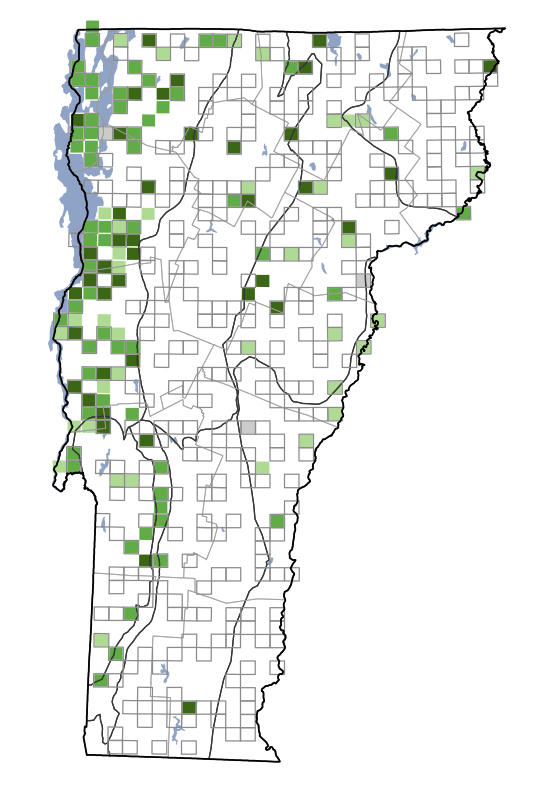
First Vermont Breeding Bird Atlas (1976-1981)
Second Vermont Breeding Bird Atlas (2003 – 2007)
Change in Distribution