Summary
- Natural history: Chimney Swifts originally nested in hollow trees but switched so readily to human chimneys that the earliest recorded use dates to 1672, and their feet are so specialized for clinging to vertical surfaces that they gather nest material by snapping twigs off trees in mid-flight rather than landing to collect it. Large groups sometimes seen swirling around a chimney in summer have led to a common misconception that the species nests in colonies, when these are typically just non-breeding birds gathering to roost. The bird’s Amazon Basin wintering grounds were not confirmed until 1943, even though the naturalist Mark Catesby had correctly guessed their location more than two centuries earlier.
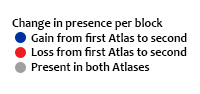
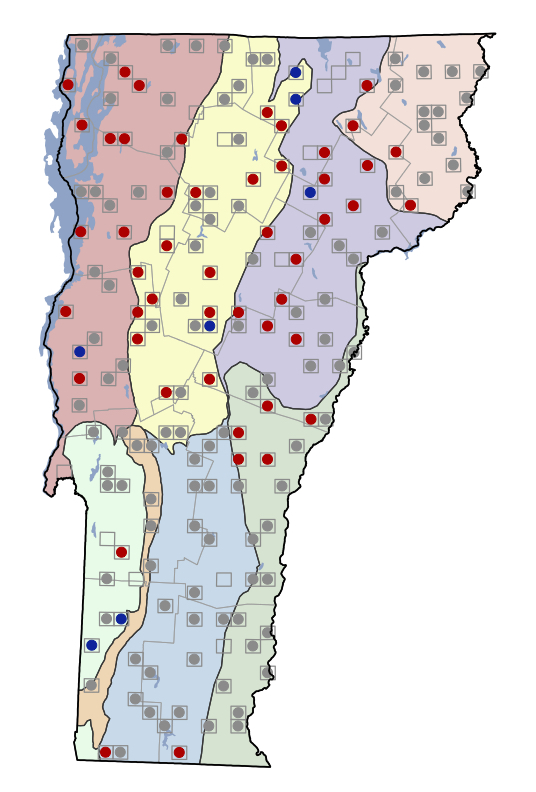
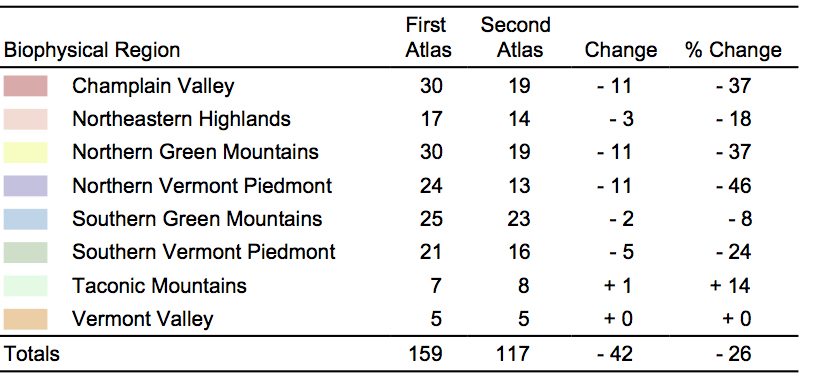
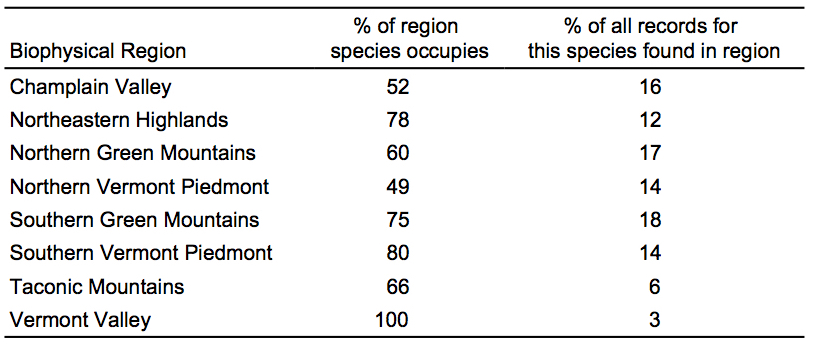
- Status in VT: Decreased by 26% (159 to 117 blocks). Greatest decrease in Northern Vermont Piedmont.
- Data from other research: No additional data for VT.
- Conservation status: State rank S4B; SSC; SGCN-M
- Other atlases: NY: -15%; PA: -2%; ON: -46%
- VT’s role in North American range: VT is within the core of the range.
- Causes of change since first Atlas: Reduction in aerial insect populations; intolerance of homeowners to birds in chimneys; human use of chimneys during summer (may kill nestlings); capping of chimneys; use of steel liners in chimneys (too smooth for nesting).
- Management/Monitoring recommendations:Provisioning of artificial chimneys.
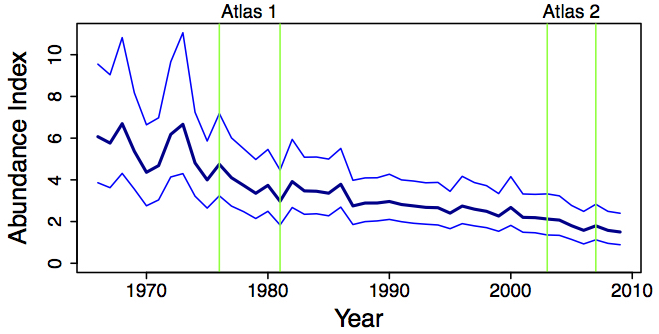
Population Trends
First Vermont Breeding Bird Atlas (1976-1981)
Second Vermont Breeding Bird Atlas (2003 – 2007)


Change in Distribution