Summary
- Natural history: Vermont had no breeding Canada Geese at all until Fish & Wildlife established a flock at Dead Creek in 1956. The birds’ quick adaptation to farm ponds, beaver ponds, and golf courses, plus a shift toward permanent, non-migratory residency, fueled a statewide boom that now requires its own hunting season and, in problem areas, egg and nest destruction permits.
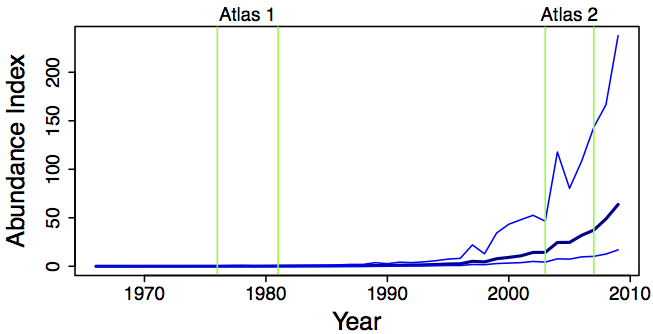
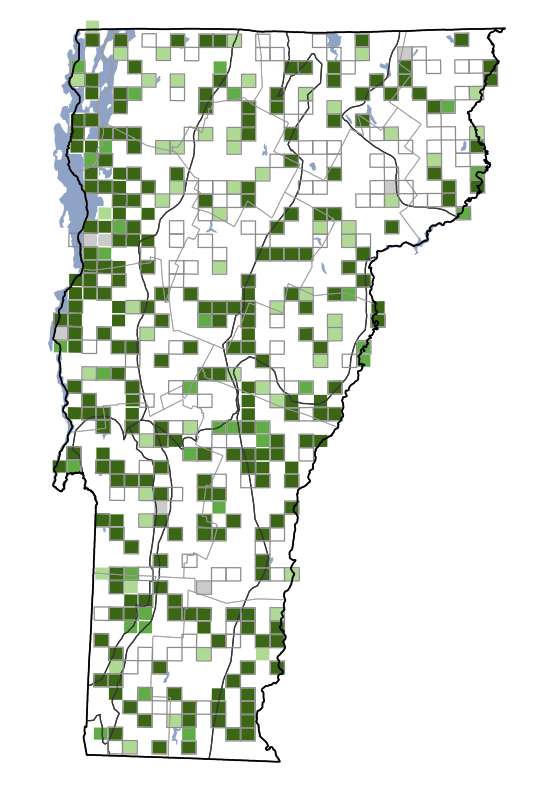
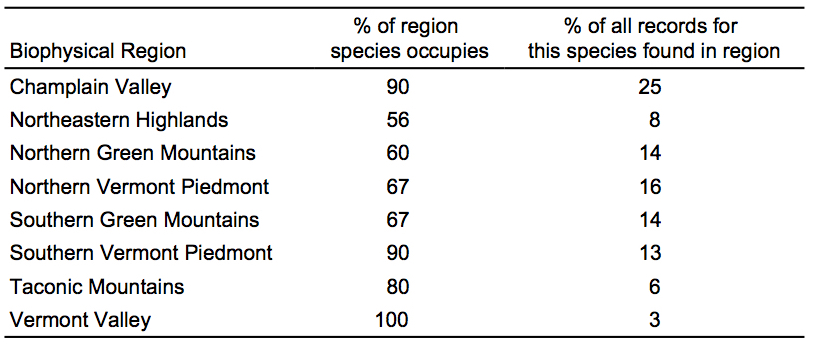
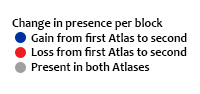
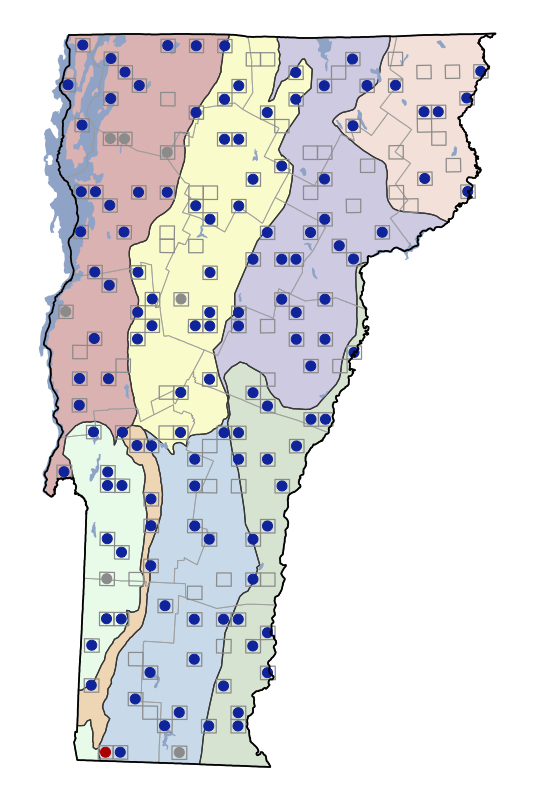
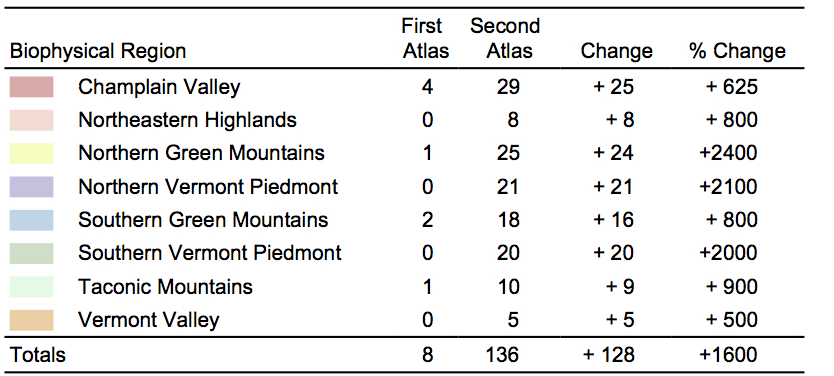
- Status in VT: Increased by 1600% (8 to 136 blocks). Greatest increase in Northern Green Mountains.
- Data from other research: No additional data for VT.
- Conservation status: State rank S5N
- Other atlases: NY: 275%; PA: 111%; MD: 187%; ON: sig. increase.
- VT’s role in North American range: VT is within the core of the range.
- Causes of change since first Atlas: Continued expansion following earlier intentional releases; milder winters allow for increased reproduction; Canada Goose >75% reproductive success in urban areas.
- Management/Monitoring recommendations: Possible population control involving egg and nest destruction.
Population Trends
First Vermont Breeding Bird Atlas (1976-1981)
Second Vermont Breeding Bird Atlas (2003 – 2007)

Change in Distribution
Links