With the aid of many volunteers across the state, the Vermont Moth Atlas at the Vermont Atlas of Life has been mapping moth distribution and phenology one photo-observation at a time. Since 2013, more than 7,600 observers have contributed nearly 200,000 moth photo-observations to iNaturalist Vermont representing nearly 1,800 species confirmed from photographs. Together, we’ve discovered over 360 new species for Vermont since 1995, with 26 found in just the last two years.
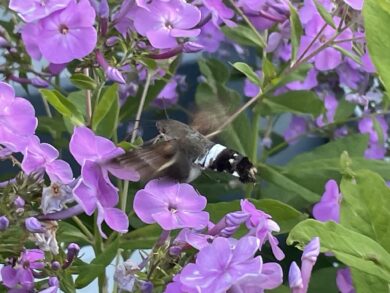
The first record of Titan Sphinx by @efdaut.
From the tiny Labrador Tea Leaf Miner (Phyllonorycter ledella), who’s caterpillar feeds inside the leaves of Bog Labrador Tea (Rhododendron groenlandicum), to the comparatively large Titan Sphinx (Aellopos titan) photographed nectaring on Phlox, all 26 newly documented species helped us take one more step closer to knowing our natural heritage. These new discoveries where not just found by experts like JoAnne Russo or Hugh McGuinness, but also from young naturalist like Levi Smith and Siler Russ, who found seven new species alone!
You can explore all the new species found in 2024 and 2025 with links to each record.
Vermont has not benefited from a formal statewide moth survey. Instead, this atlas draws on nearly 150 years of museum collections and recorded observations, including a new wave of backyard (and beyond) moth watching.
Many of us turn on special lights in our backyards on summer nights to find hundreds of moths and other insects gathering on white sheets, hunt fields and forest for day-flying moths, and place rotten fruit bait out to attract other moths. Many of these moths can be identified from photographs (although some are impossible without dissection and examination under a microscope). With today’s amazing digital photography and our mobile phones, coupled with field guides and web sites like iNaturalist, BugGuide, Moth Photographers Group; moth watching (aka mothing) has become increasingly popular.
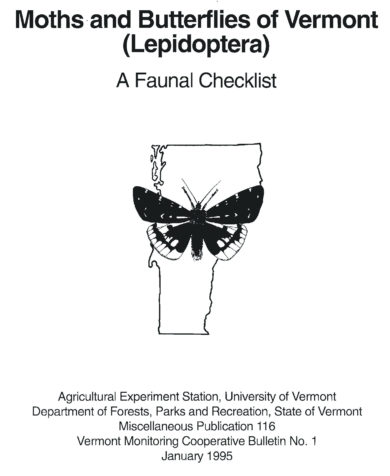
The spark for the Vermont Moth Atlas was the landmark publication, Moths and Butterflies of Vermont: A Faunal Checklist, from 1995. The checklist recorded 1,690 species of moths. Despite their incredible work, the authors recognized that their work was just the beginning, suggesting that large regional collections might yield even more species. And, as if the could see the future, they noted that the “development of a data storage and retrieval system documenting Lepidoptera distribution, seasonality, habitat and food requirements…is highly desirable.”
Now, 30 years later, cue the Vermont Atlas of Life moth atlas!
We have recorded 2,051 species of moths in the state with information on distributions, phenology, and more. We encourage you to add your photographs of moths, too. Finding moths can be as simple as looking for them flying about during the day, or leaving a porch light on and checking it after dark. Serious moth aficionados use special lights and baits to attract them. Check out Mothing 101 and learn how you can start moth watching next spring.