This fall, the community science project Sequence Every Mushroom in Vermont passed its season goal of 5,000 and has now logged more than 5,600 vouchered fungal samples for DNA sequencing. That makes it the largest single-season collection of fungi in Vermont’s history — and it was built almost entirely by volunteers who photographed mushrooms, posted them to iNaturalist Vermont, and mailed in samples.
Sequence Every Mushroom in Vermont is a partnership between Andrew Swafford’s lab at Middlebury College, the Vermont Mycological Society, and the Vermont Atlas of Life, and it is part of MycoMap’s national effort to sequence every fungus in the United States. (You can find VAL’s page for the project on our Sequence Vermont Fungi Mission page.) The Swafford lab recently sent participants a season wrap-up, and with their permission we’re sharing the highlights here.
The season by the numbers
- 5,600+ vouchered samples collected for sequencing, well past the season goal of 5,000.
- About 11,000 more fungal observations on iNaturalist Vermont than the average from previous years.
- ~200 species not previously recorded on iNaturalist Vermont this year, bringing the total to more than 2,500 fungal species observed in the state over the last five years.
- Once sequenced, the samples will add roughly 60% more research-grade fungal observations for Vermont, concentrated on species that are hard to identify by eye.
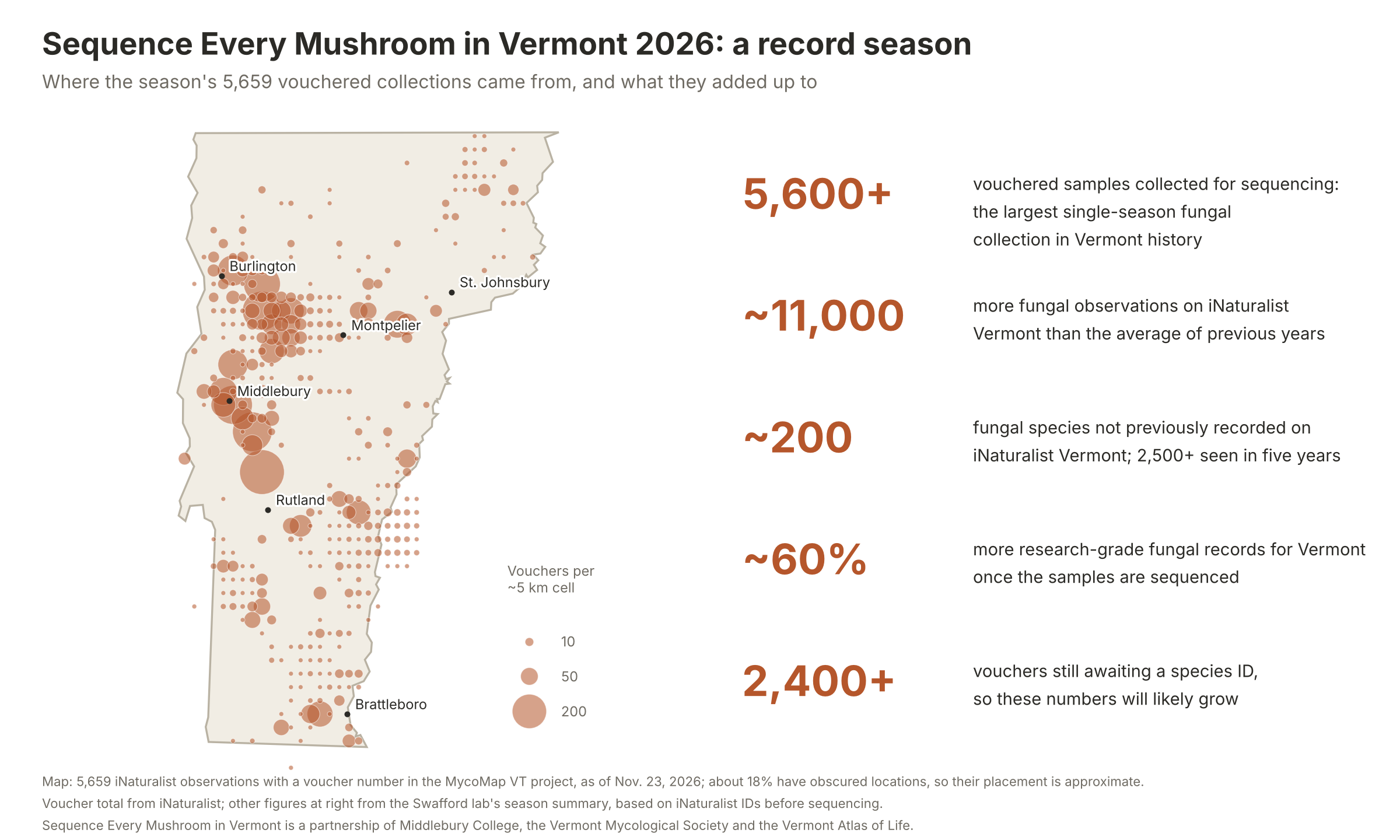
Where the season’s vouchered collections came from, and what they added up to. Map: 5,659 iNaturalist observations with a voucher number in the MycoMap VT project, as of Nov. 23, 2026; about 18% have obscured locations, so their placement is approximate. Other figures from the Swafford lab’s season summary, based on iNaturalist Vermont IDs before sequencing.
The project also turned up more species for the same amount of effort, more rare and uncommon species, and a sharp jump in the number of “Rare 20” species found across the state. The “Rare 20” are the target species of FUNDIS’s Northeast Rare Fungi Challenge, a regional effort to document rare and threatened fungi across the northeastern United States and eastern Canada, Vermont included.
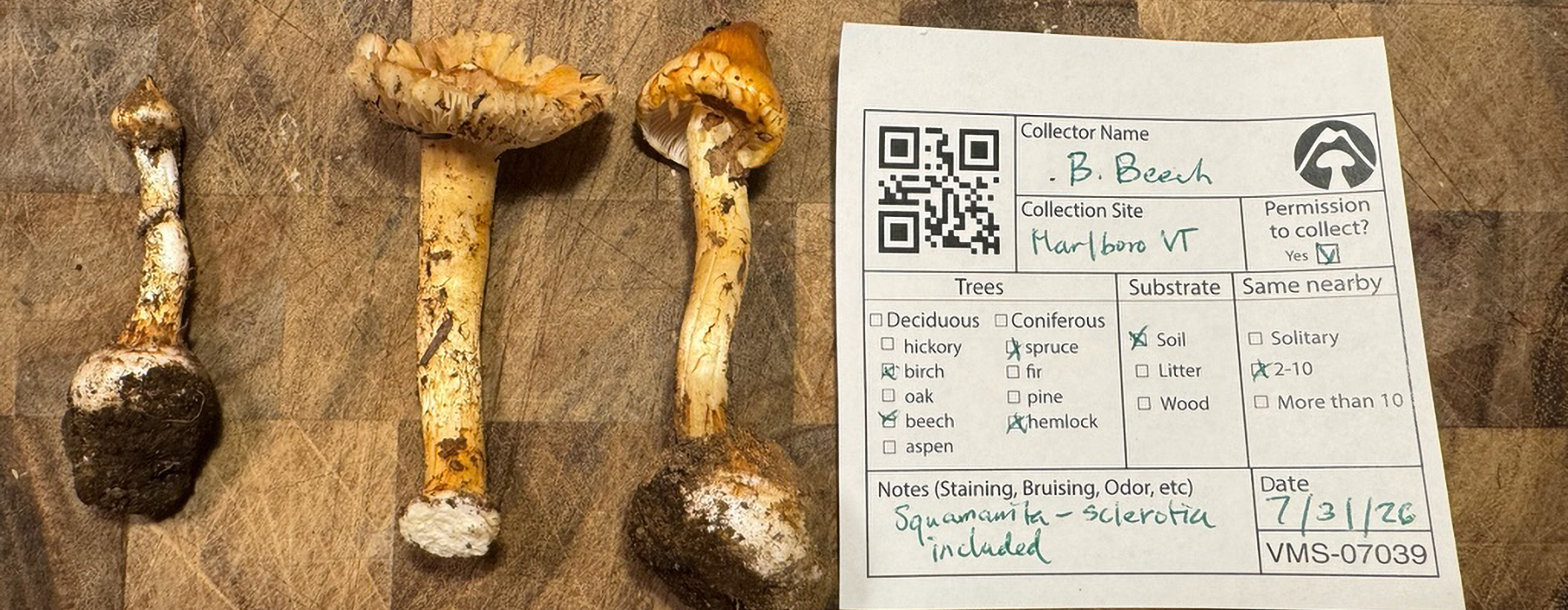
One of this year’s highlights is a very fresh specimen of Squamanita, a strange and seldom-seen genus of mushrooms that parasitize other fungi. The specimen was collected by the Vermont Mycological Society and delivered to the lab for preservation — and sequencing.
The best is still to come
All of the figures above are based only on the identifications volunteers and identifiers made on iNaturalist Vermont. More than 2,400 of the vouchers don’t yet have a species-level ID, so these numbers are likely to climb as sequencing sorts out cryptic species and pins down difficult specimens.
As results arrive over the winter, the lab plans another update with details on the most interesting fungi found, a summary of fungal diversity in Vermont heading into 2027, and data-backed estimates of how many species are still waiting to be discovered in our forests.
Part of a bigger picture: the Vermont Fungi Atlas
Sequence Every Mushroom in Vermont feeds a larger, long-term effort here at the Vermont Atlas of Life. The Vermont Fungi Atlas, led with the Vermont Fungi Scientific Advisory Group, aims to document the diversity of fungi across the state, map where species occur across Vermont’s natural communities, and track rare macrofungi and those of conservation concern. Surprisingly, Vermont still has no official list of its fungal species, and building one depends on exactly the kind of well-documented, DNA-backed records this project is producing.
You don’t need a voucher kit to help. Every fungus you photograph and post to iNaturalist Vermont adds to the atlas, and you can follow along or add your observations through the Fungi of Vermont project. To learn more or get involved, visit the Vermont Fungi Atlas participation page.
Join in next year
The project will run again in 2027. The lab will send an update in early spring, and any leftover voucher slips from this year will still be good next season.
As the lab put it to participants, every contribution counted — no matter how many fungi you sent in. Congratulations and thank you to everyone who collected this year, and to the Swafford lab team: Andrew Swafford, Daniel Lyons, Shirley Maldonado, Eloise Van Alen, Nicolas Leventopoulos, Gabrielle Anchondo, and Ari Ramos.