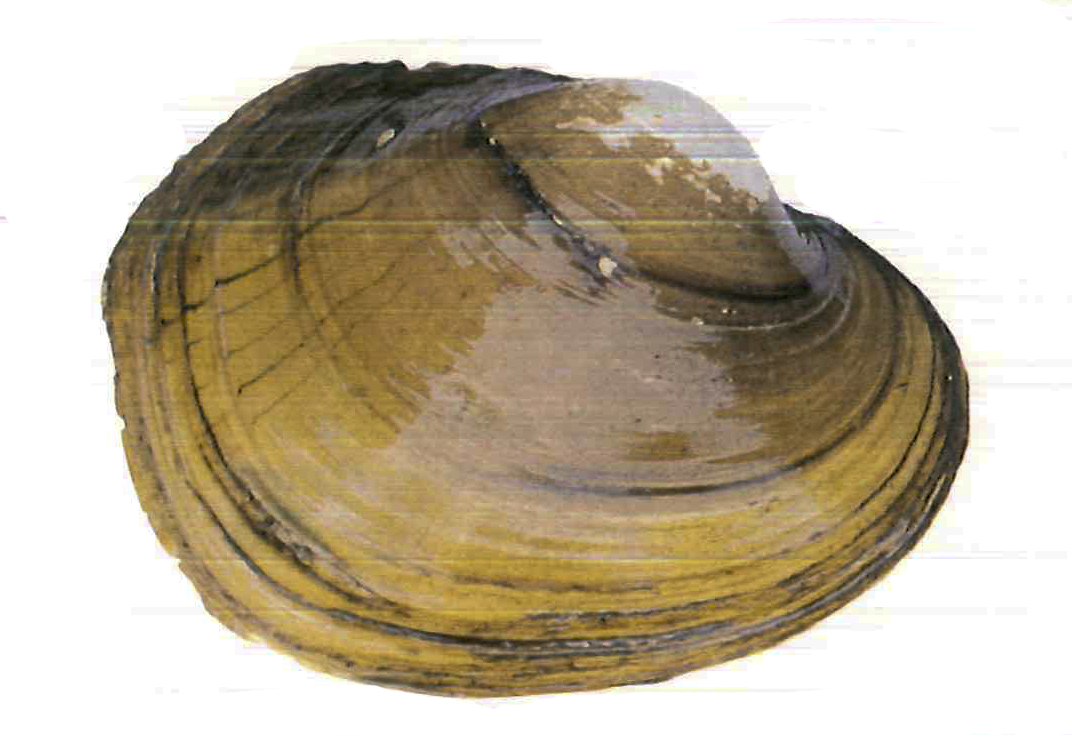
 The Pocketbook is found in the Interior Basin of North America reaching its northeastern range limit in the St. Lawrence River and Lake Champlain.
Key Characteristics
- Size: Length up to 6 inches
- Shape: Round or oblong inflated shell with an obviously angled posterior ridge and round anterior end. Beak elevated above hinge line.
- Periostracum: Yellow or tan and smooth; no rays except for the posterior slope.
- Lateral Teeth: Curved and short.
- Pseudocardinal Teeth: Two in the left valve, one in the right. Thick, compressed, and elevated.
- Nacre: White and iridescent
- Similar Species: Plain Pocketbook
Conservation Status
- State and Global Rank: S2 G4
- Vermont Wildlife Action Plan: Species of Greatest Conservation Need
- Vermont Endangered Species Law: Threatened
- U.S. Endangered Species Act: not listed
- IUCN Red List: Near Threatened
Habitat
Found in larger rivers with loose to firmly-packed sand, gravel-sand, or silty sand substrates.
Host Species
Centrarchids; white crappie, bluegill, green sunfish, largemouth bass, smallmouth bass, banded killifish, walleye.
More information
- Encyclopedia of Life
- NatureServe
- Musselp
- iNaturalist species page
Range
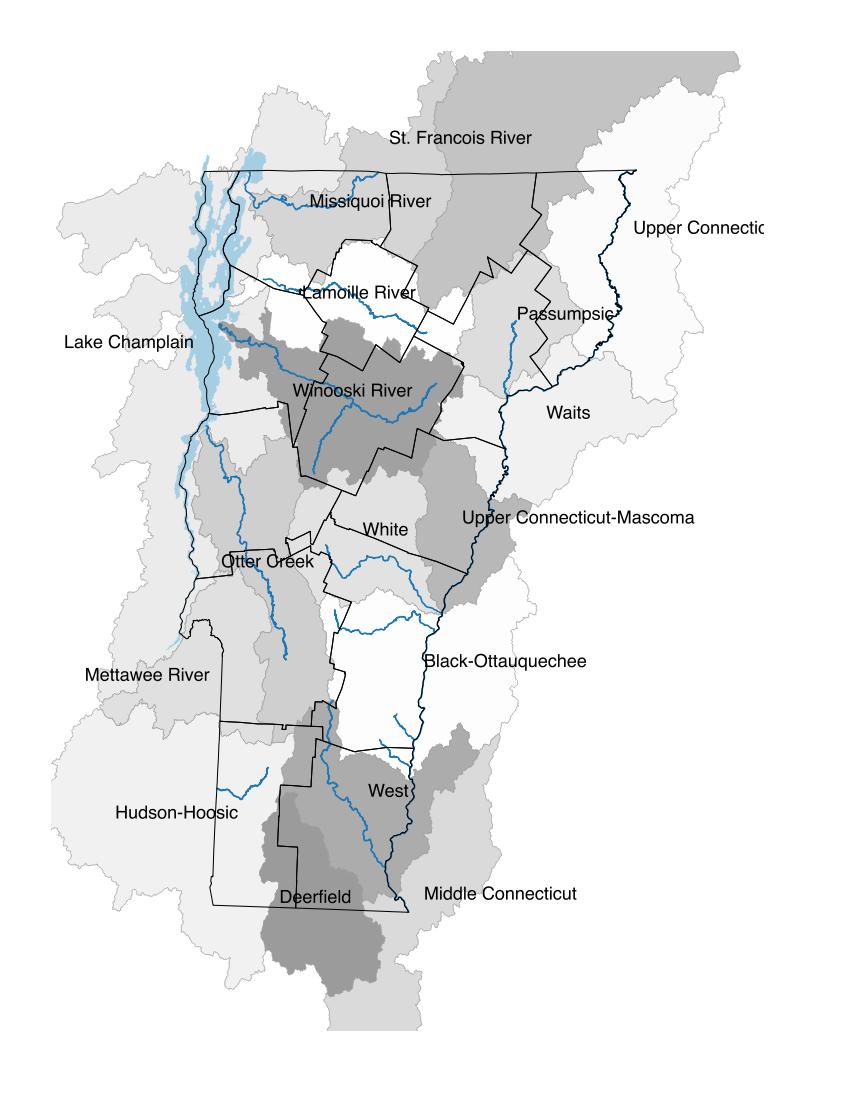
Found only in the Lake Champlain basin in tributaries upstream to fall-lines. Apparently not common except in the Poultney River. Other tributaries include: Missisquoi River, Lamoille River, Lewis Creek, and Otter Creek. It has been found in the littoral zone in Lake Champlain in Colchester.
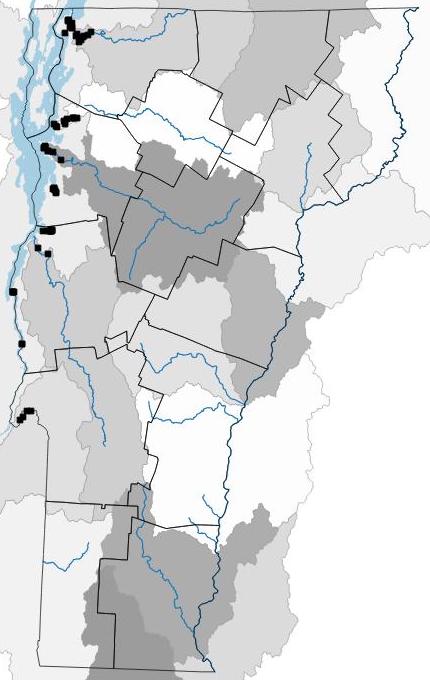
Distribution map has locations where this species has been documented and digitized into the atlas database. Systematic surveys have not been conducted for many species and those surveys that have been conducted have been largely focused on endangered species. Therefore, in some cases, the actual distribution of freshwater mussels may be more extensive than what is presented here. Shaded areas are watershed sub-basins and river main stems are shown.