Skip to content

Yellow-rumped Warbler (Setophaga coronata)
Summary
- Natural history: Until 1973, the Yellow-rumped Warbler was actually classified as two separate species, the eastern Myrtle Warbler and the western Audubon’s Warbler, before ornithologists lumped them together. In Vermont the bird was once considered strictly a boreal species confined to high elevations and the far northeast corner of the state, but as abandoned farmland grew back into stands of white pine over the twentieth century, it spread to become one of Vermont’s most widespread warblers. It also forages more flexibly than many warblers, gleaning insects from leaves, snatching them out of the air, and even switching to fruit once migration gets underway.
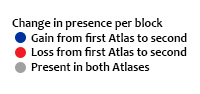
- Status in VT: Decreased by 2% (154 to 151 blocks). Decreases in Southern Vermont Piedmont and Taconic Mountains.
- Data from other research: FBMP: no sig. trend
- Conservation status: State rank S5B
- Other atlases: NY: 35%; PA: 181%; ON: 11%
- VT’s role in North American range: VT is within the core of the range.
- Causes of change since first Atlas: Minimal change.
- Management/Monitoring recommendations:Continued monitoring via multi-species programs to track potential effects of habitat changes in boreal forest.
First Vermont Breeding Bird Atlas (1976-1981)
Species Account
Second Vermont Breeding Bird Atlas (2003 – 2007)
Species Account


Change in Distribution


Links
Vermont eBird
Encyclopedia of Life
All About Birds