| Common Name | Ruff |
|---|---|
| Scientific Name | Calidris pugnax |
| Type of Report | Rare Species |
| Date of Observation | 04/19/2024 |
| Media | |
| Number Observed | 1 |
| Reporting Observer's Name | David Guertin |
| Mailing Address | 1599 Route 30 Cornwall, VT 05753 United States Map It |
| Email hidden; Javascript is required. | |
| Date Completed | 04/19/2024 |
| Latitude of Observation (enter 0 if unable to provide) | 43.9183987 |
| Longitude of Observation (enter 0 if unable to provide) | -73.1655027 |
| Place Name | Creek Road floodplain |
| Township | Salisbury |
| County | Addison |
| Vermont eBird Checklist URL | ebird.org |
| Time of Day | 07:10 AM |
| Length of Time Observed | 7-8 minutes |
| Maximum Estimated Distance from Bird (in feet) | 250 |
| Minimum Estimated Distance from Bird (in feet) | 120 |
| Noteworthy Weather Conditions | Overcast, light south wind |
| Optical Equipment Used for Observation | Hawke Frontier ED X 8x42 binoculars |
| Observer’s Previous Acquaintance With This or Similar Species | None! |
| I certify that any attachments included with this report were captured during this observation event. | |
| Description of Habitat | Grassy edge of flooded hay field. Associating with 4 Greater Yellowlegs. |
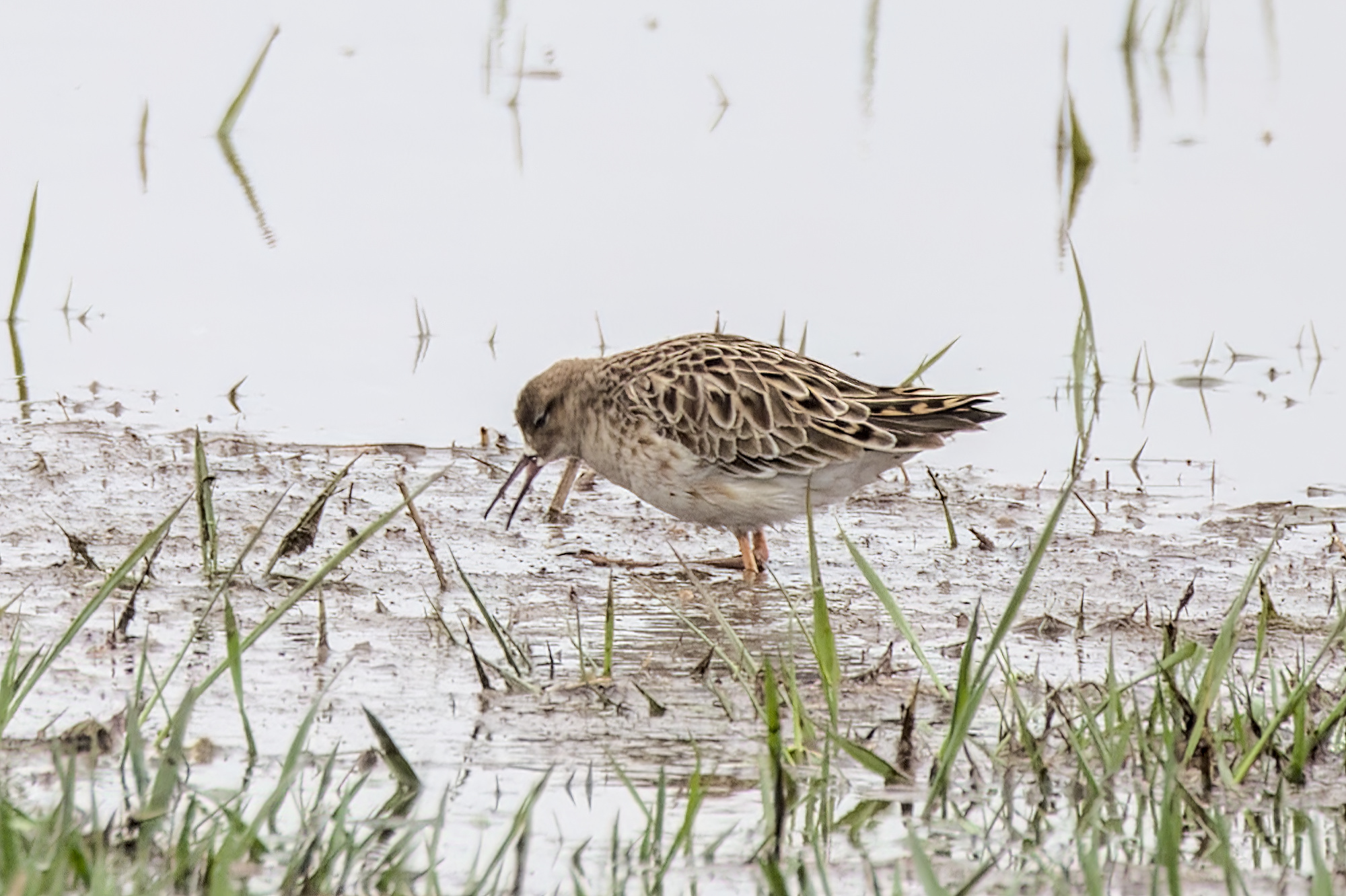
| Behaviors Observed | Mostly standing, looking around, and occasionally moving or feeding slowly, and briefly sleeping. |
| Description of Vocalizations | Silent |
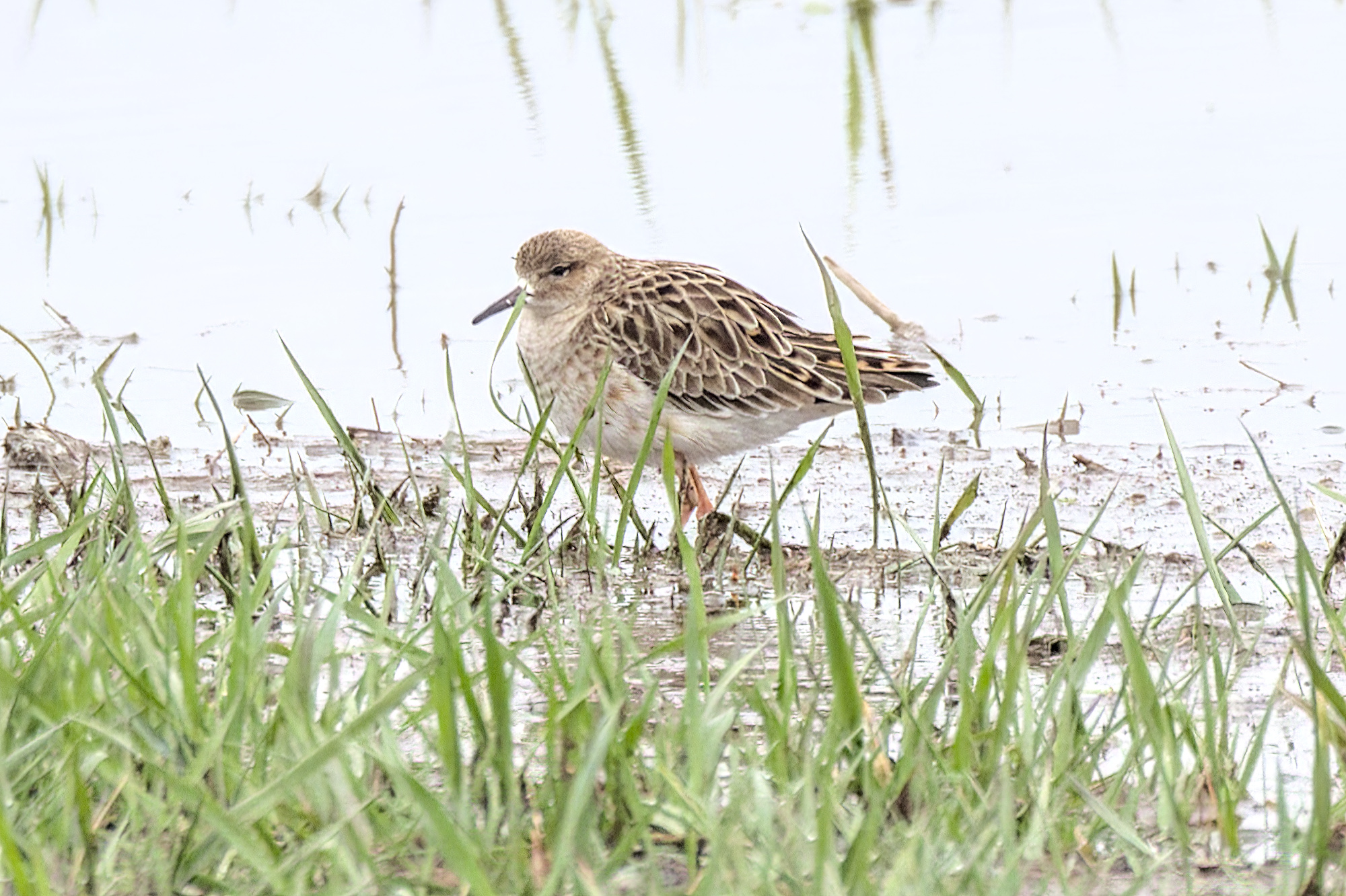
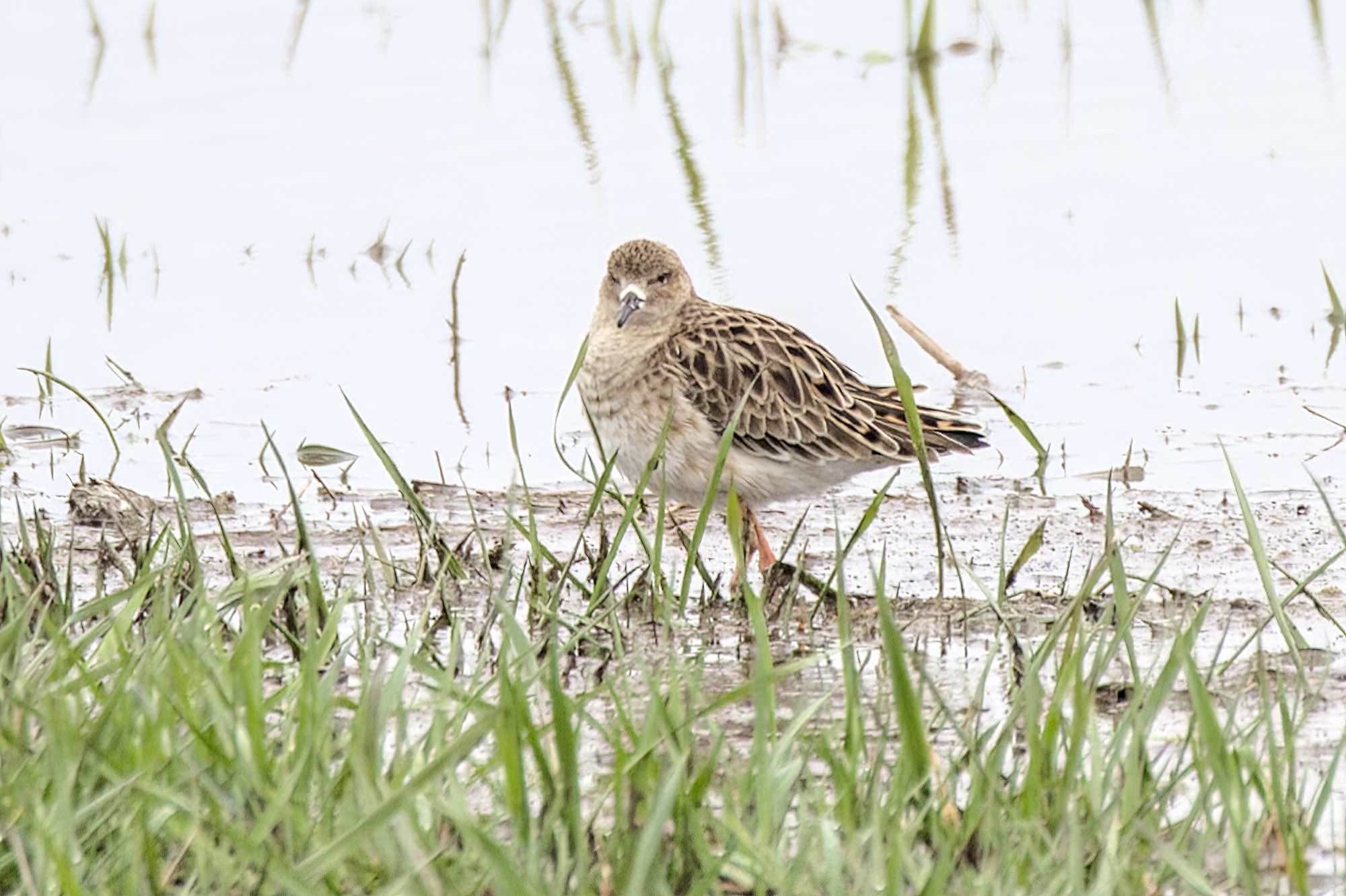
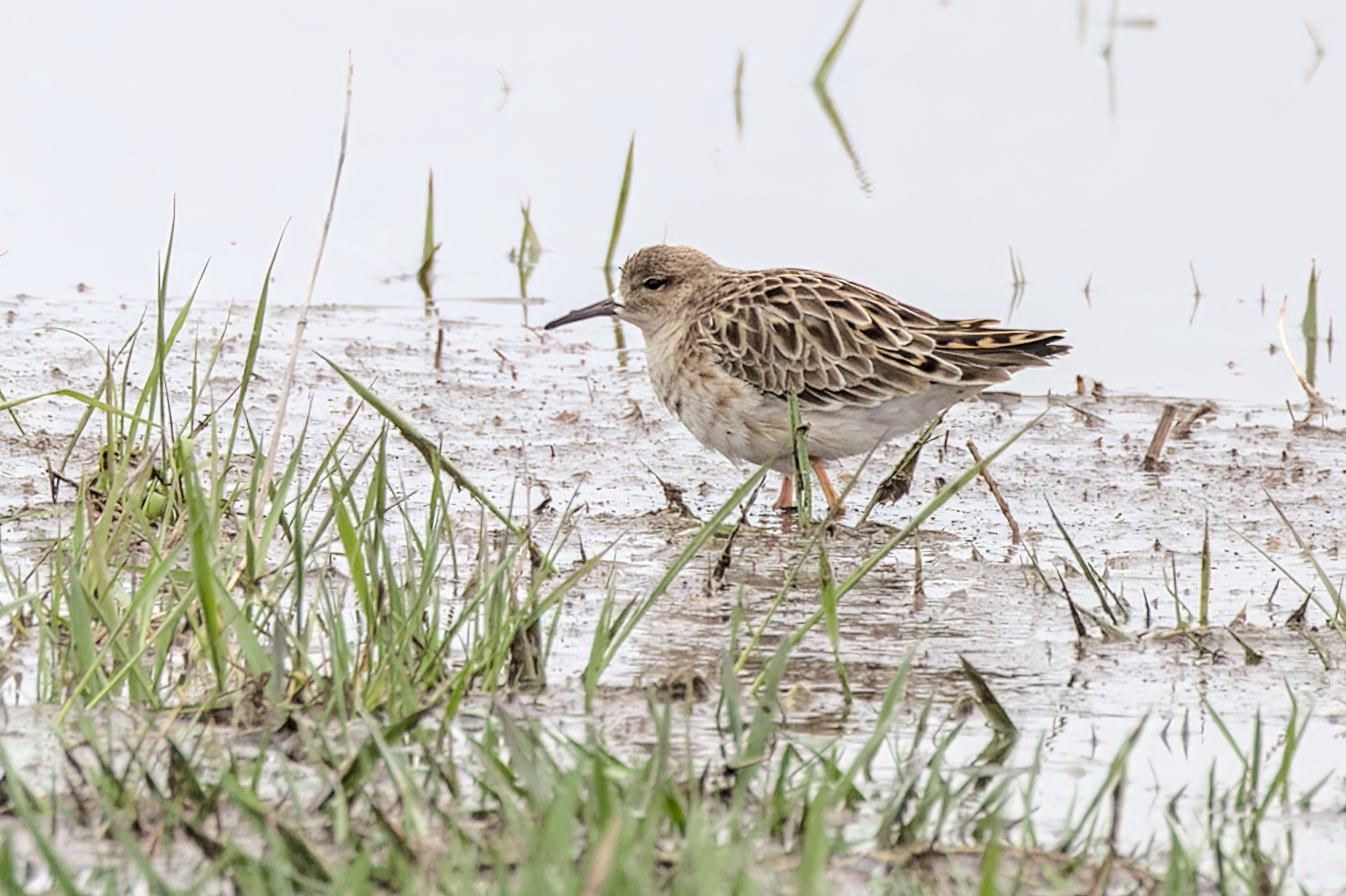
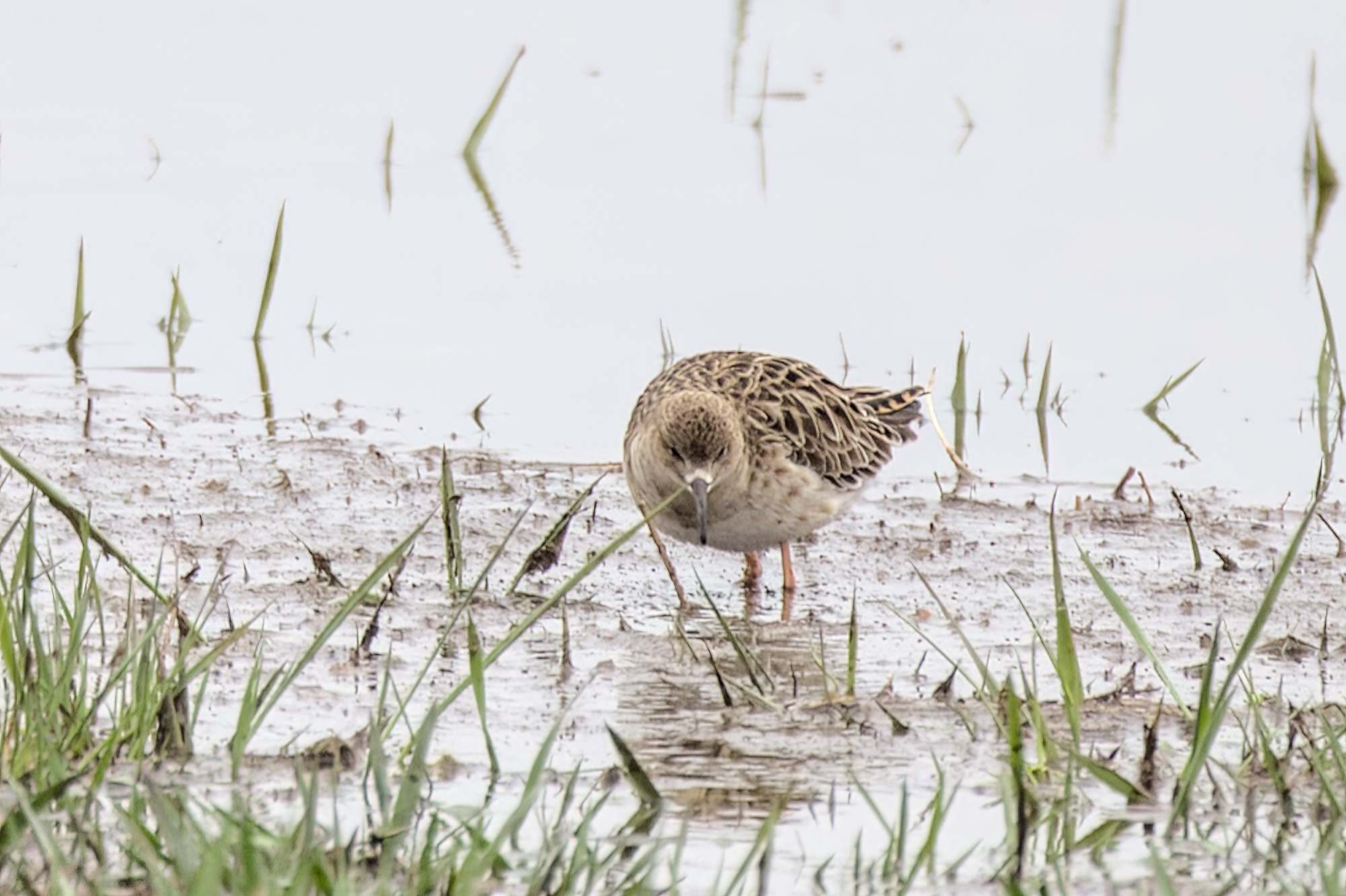
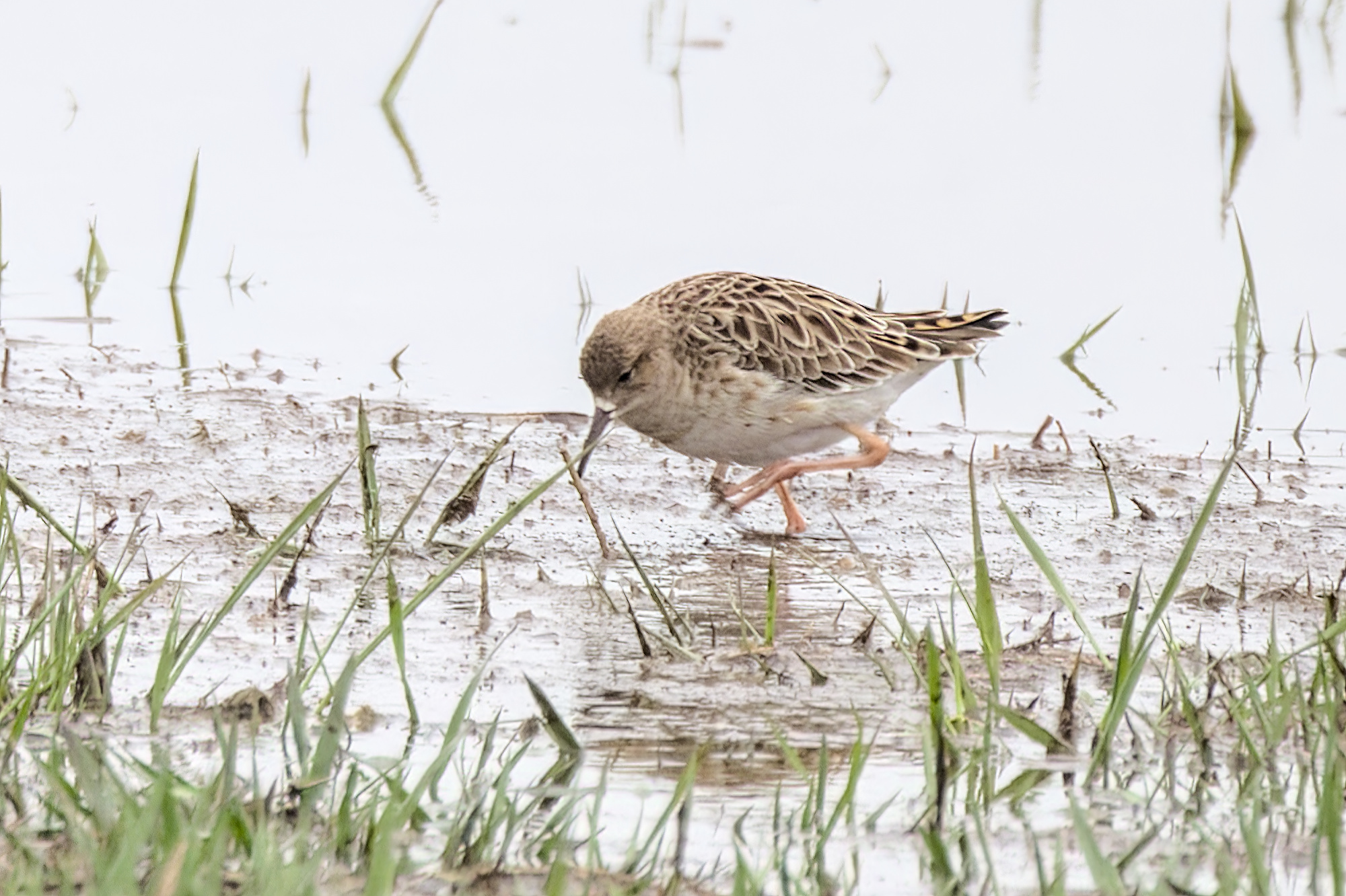
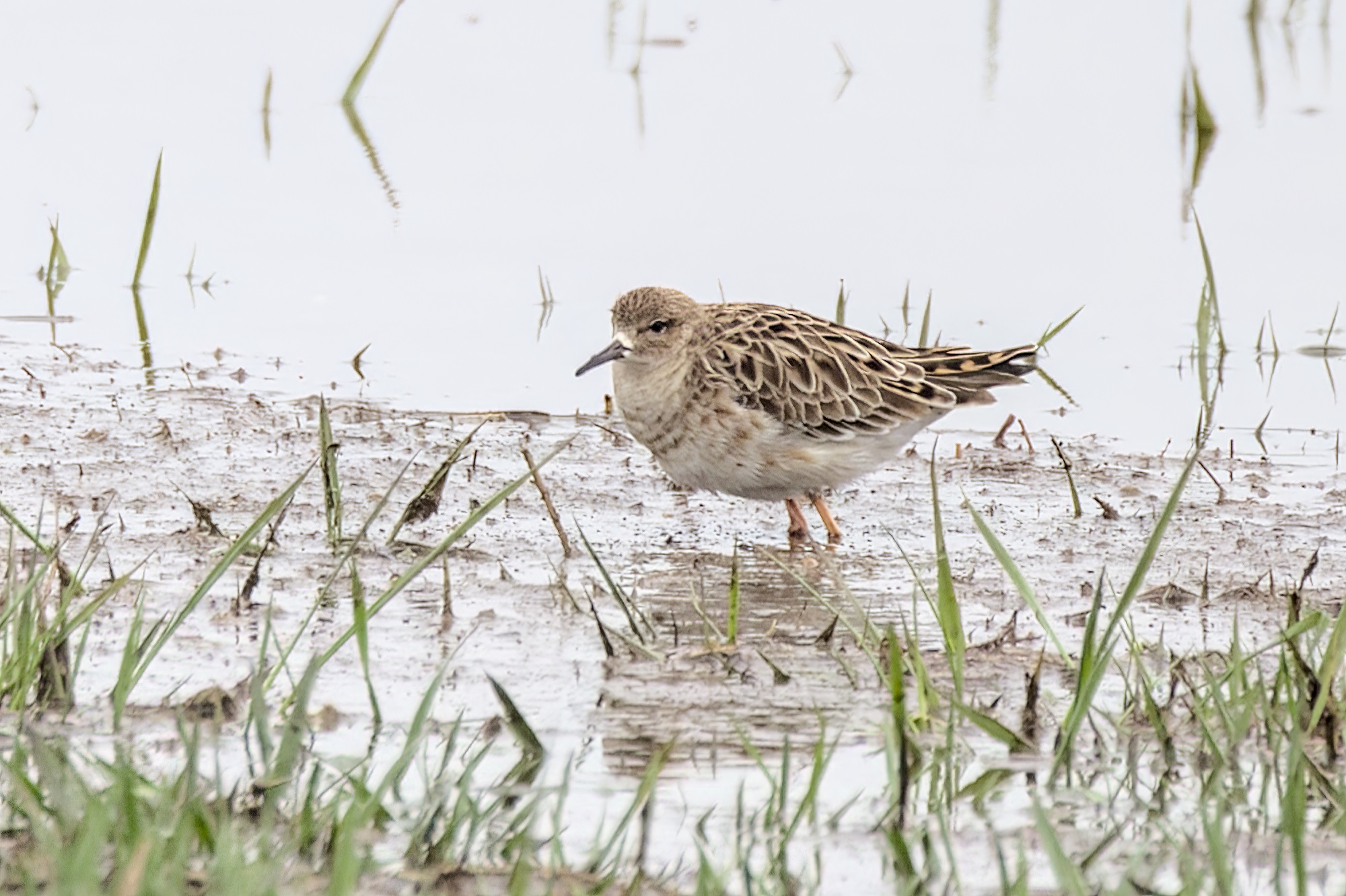
| Verbal Narrative & Description of Observation | I was watching a group of 4 Greater Yellowlegs foraging at the grassy edge of a flooded field near the side of the road, when I spotted another shorebird with them that was slightly smaller, darker, and shorter-billed. My initial impression based on proportions and a small-headed appearance was Pectoral Sandpiper, but this bird did not have the distinct breast streaking of a Pectoral Sandpiper, and had distinctly orange legs. The bill was shorter than a yellowlegs and slightly downturned, with a pale area around the base of the bill. Mottled buffy sides extending forward to create a hint of an indistinct breast band, with lighter throat and belly. Scaly brown back with barred brown/buffy tertials just visible. Tertial length about equal with tail. It was not foraging as actively as the yellowlegs, mostly just standing and occasionally moving or feeding slowly, and briefly sleeping. I watched this bird for 7-8 minutes before it flew, along with the yellowlegs. Seen well from a distance about 40m in good viewing conditions with overcast skies, and about 30 minutes later briefly from about 80m. |
| Relative Size & Shape | Slightly smaller than the Greater Yellowlegs. |
| Head | Small-headed appearance like a Pectoral Sandpiper. Overall buffy brown like a typical Calidris sandpiper, with no notable features. |
| Feet & Bill | Bill shorter than a yellowlegs and slightly downturned, with a pale area around the base of the bill. |
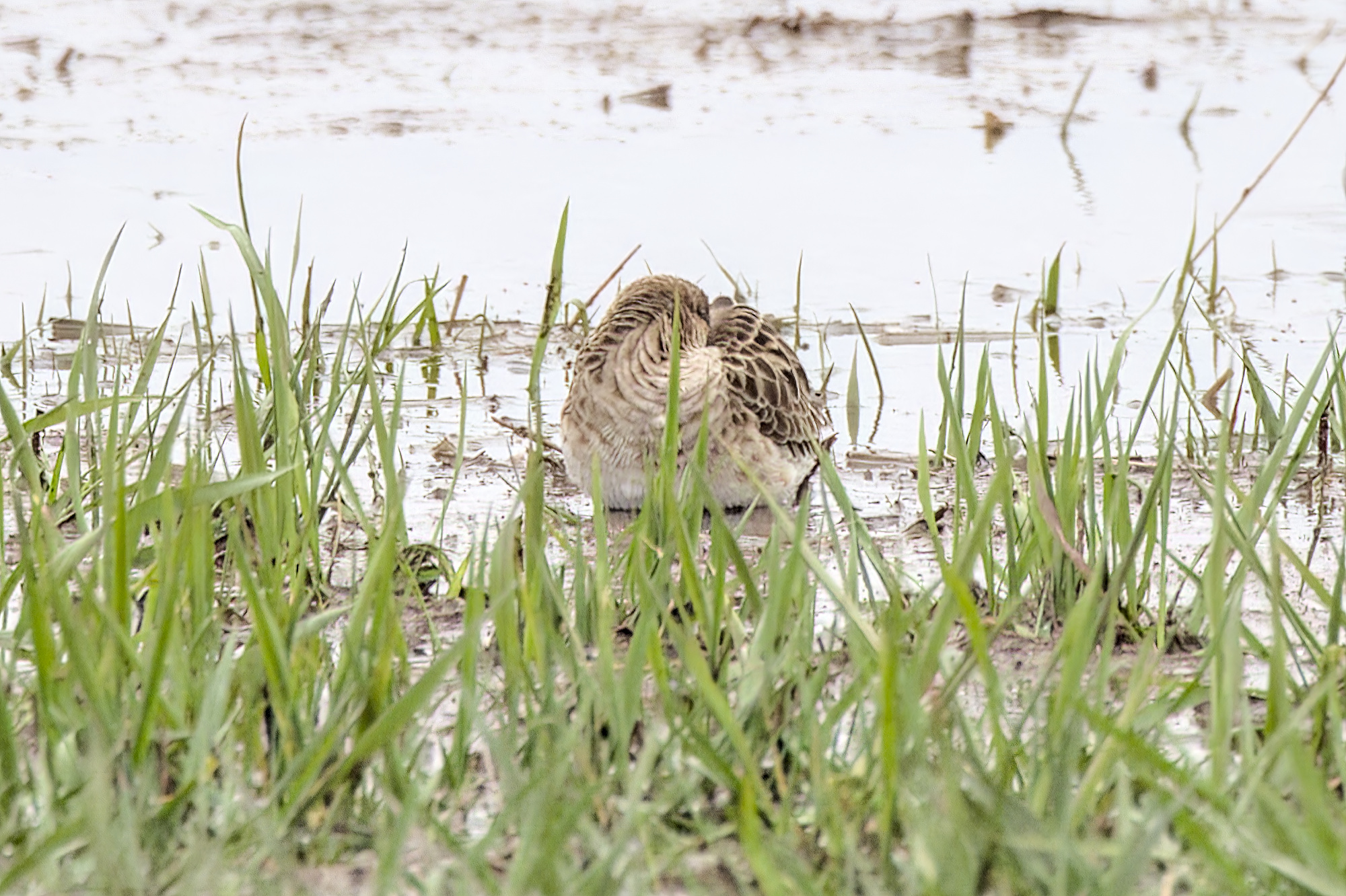
| Upper Back | Darker than the yellowlegs, back feathers scapulars with light edges. Sibley notes that "scapulars often stick up over round back", and one of my photos shows this. |
| Wings | Barred brown/buffy tertials just visible. Tertial length about equal with tail. |
| Breast, Belly, Flanks, Under Tail Coverts | Mottled buffy sides extending forward to create a hint of an indistinct breast band, with lighter throat and belly. |
| IMPORTANT: What similar species were eliminated when making the identification and how was this bird different? | My first impression based on size and proportions was Pectoral Sandpiper, but this birds lacks the densely streaked breasted of a Pectoral, and has orange legs. |
| This report was written from notes taken: | Immediately After |
Vermont Atlas of Life Partners