| Common Name | Western Sandpiper |
|---|---|
| Scientific Name | Calidris mauri |
| Type of Report | Rare Species |
| Date of Observation | 09/02/2019 |
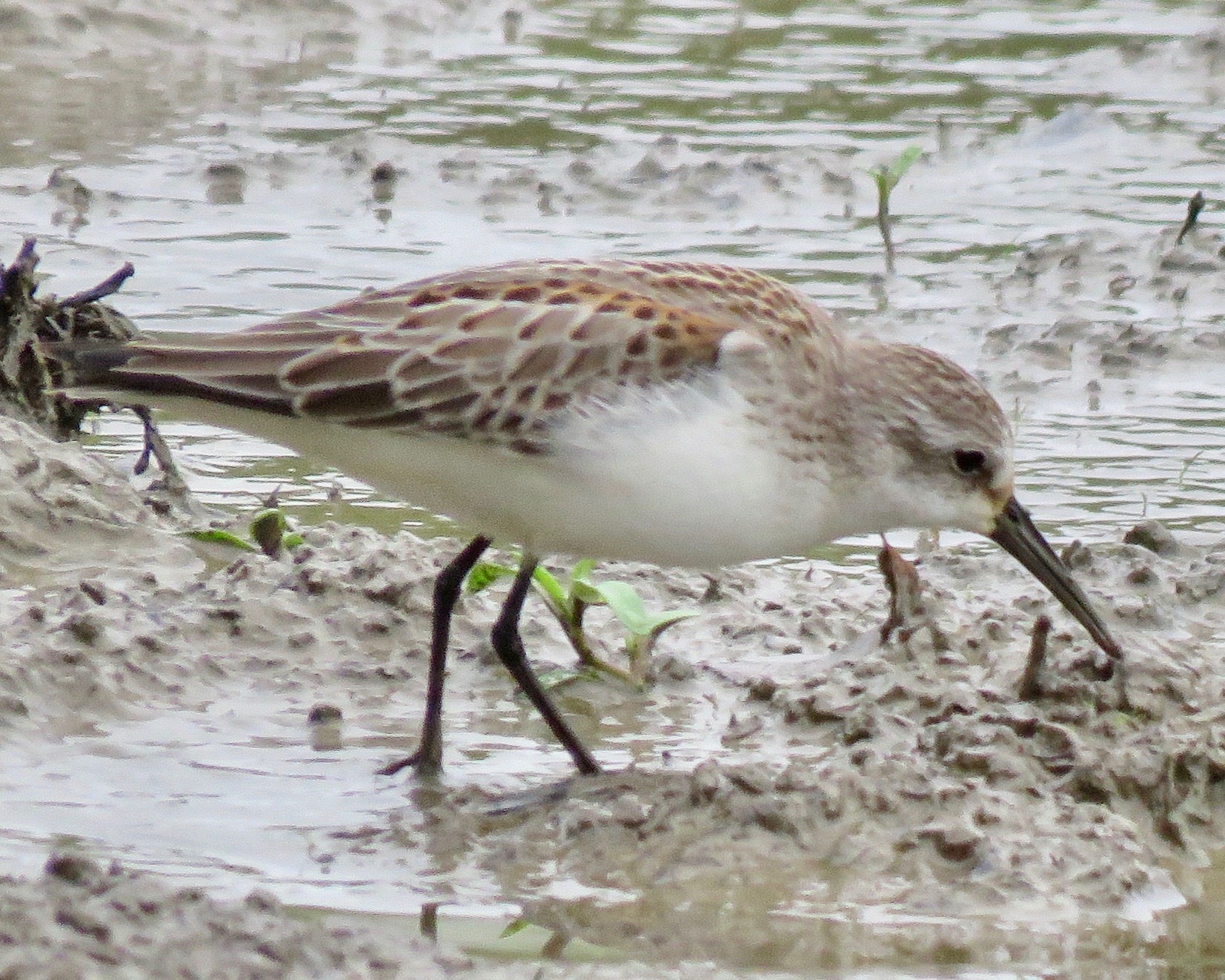
| Media | |
| Number Observed | 1 |
| Reporting Observer's Name | Jim Mead |
| Mailing Address | 798 Metcalf Drive Williston, VT 05495 United States Map It |
| Email hidden; Javascript is required. | |
| Date Completed | 09/02/2019 |
| Names & Emails of Other Contributing Observers | Henry Trombley observed this bird with me. His email: |
| Latitude of Observation (enter 0 if unable to provide) | 44º06'38.6"N |
| Longitude of Observation (enter 0 if unable to provide) | 73º20'20.7"W |
| Place Name | Farrell Access |
| Township | Addison |
| County | Addison |
| Vermont eBird Checklist URL | ebird.org |
| Time of Day | 11:05 AM |
| Length of Time Observed | 45 minutes |
| Maximum Estimated Distance from Bird (in feet) | 120' |
| Minimum Estimated Distance from Bird (in feet) | 20' |
| Noteworthy Weather Conditions | 100% overcast, no rain during the time of observation, 10-12 mph S wind, 64ºF |
| Optical Equipment Used for Observation | Kowa TSN-884 Prominar 20-60 power lens scope & Zeiss Victory SF 10x42 bins |
| Observer’s Previous Acquaintance With This or Similar Species | I saw 300+ on 7/7/19 in Kalaloch, Washington State. I have also seen many more of this species in other states. |
| I certify that any attachments included with this report were captured during this observation event. | |
| Description of Habitat | Mudflats in Dead Creek. Seen with Semipalmated Sandpipers, Least Sandpipers, a White-rumped Sandpiper, Semipalmated Plovers & Killdeer. |
| Behaviors Observed | It was simply walking around and continuously feeding except at one point it rested and tucked its' bill into its' upper back/wing area. The group flew suddenly several times and this bird did take off with them and also stayed put at times. None of the birds including this one seemed at all concerned or alarmed by our presence. |
| Description of Vocalizations | I did not hear it vocalize. |
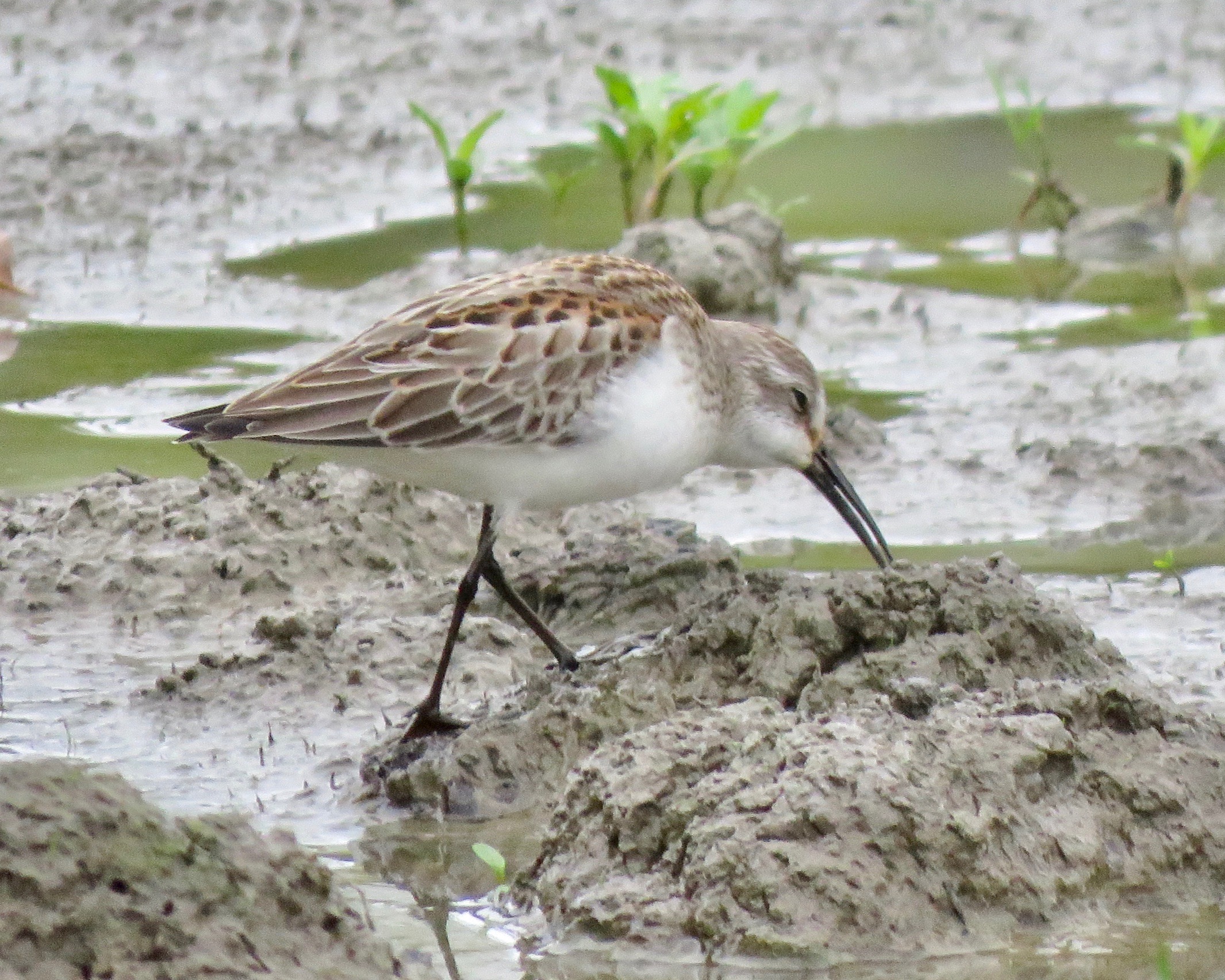
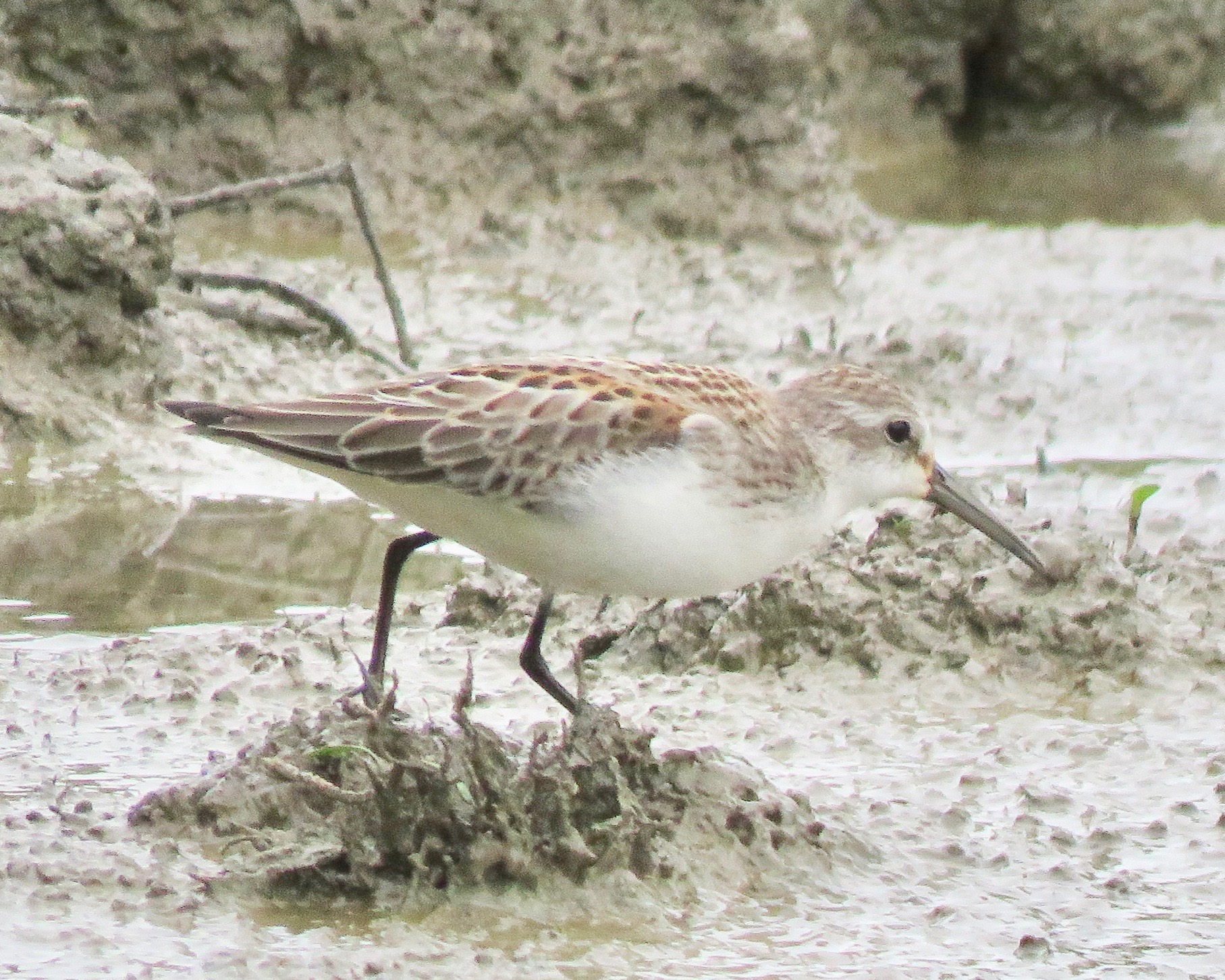
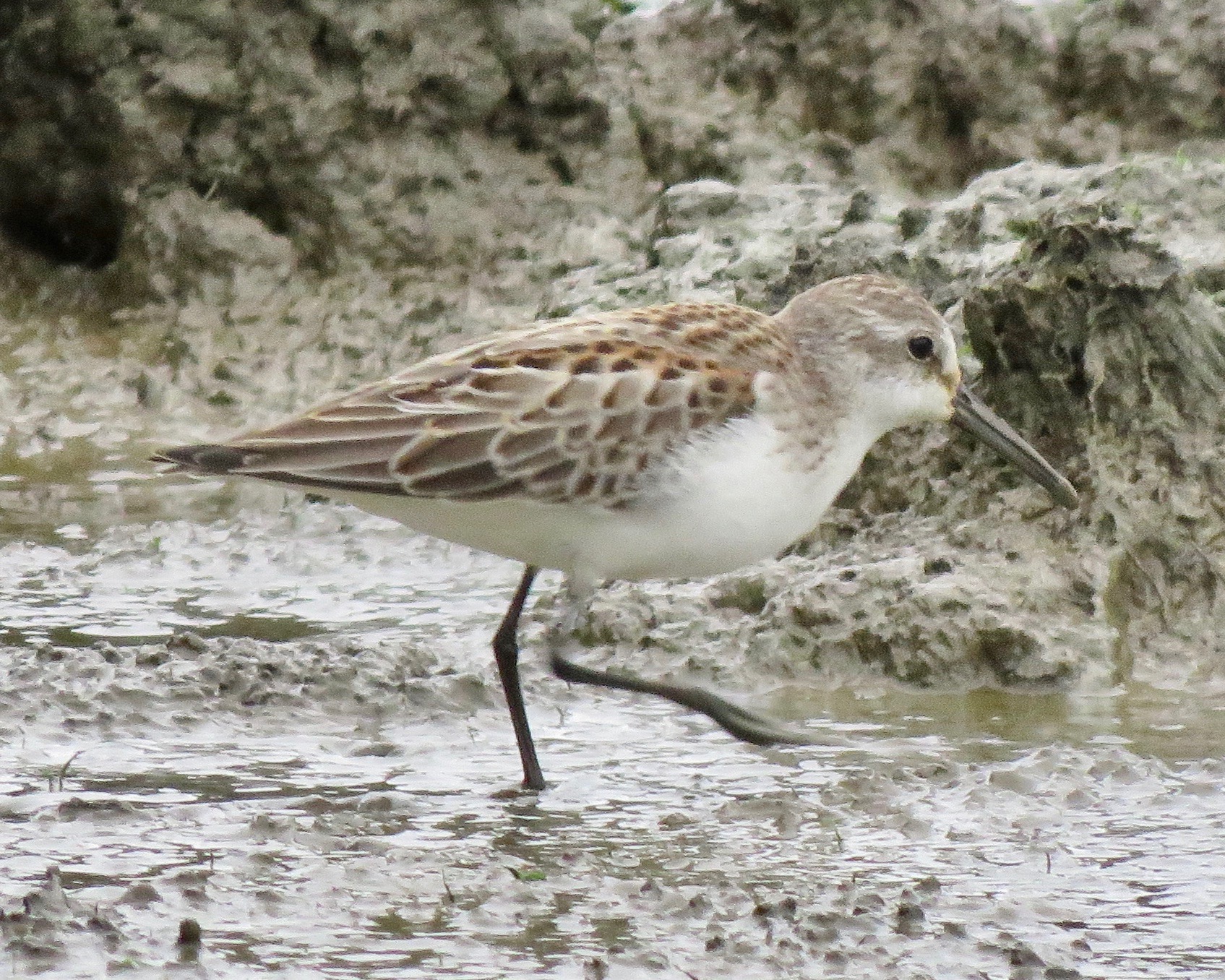
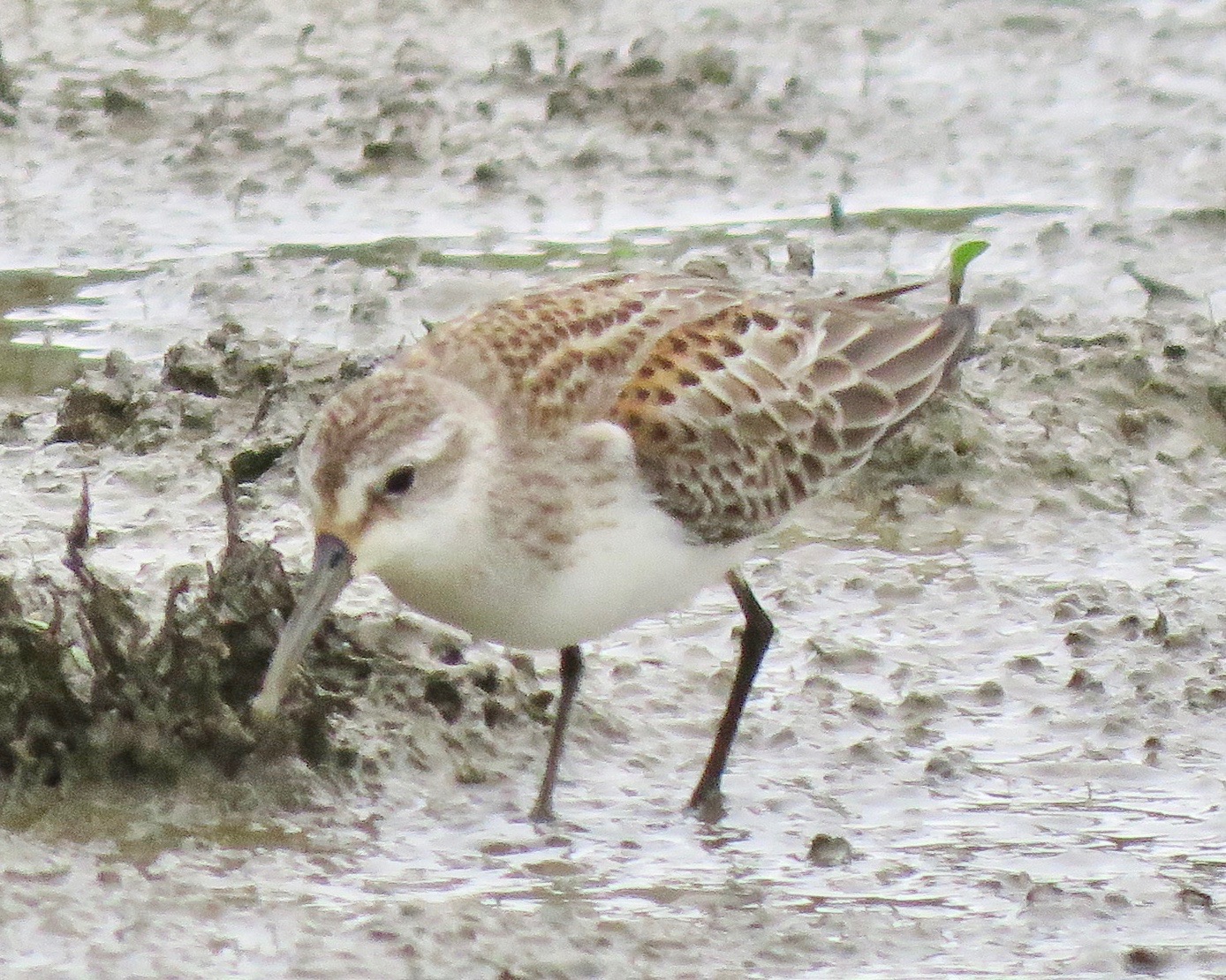
| Verbal Narrative & Description of Observation | I was scanning the birds when I came upon this one and stopped. I could clearly see 2 rows of rufous edged scapulars. I then noticed that it was noticeably larger than the Semipalmated & Least Sandpipers that were near it. I then noticed that it had a particularly long bill for its' size and that it was slightly decurved at the tip end. When I first saw this bird from the road which was about 20' above the mudflats, I thought I was looking at a Dunlin because of the bills' length and downward curve. However, when I saw it from the mudflat I could clearly see that it was not a Dunlin. |
| Relative Size & Shape | Slightly larger than the Semipalmated Sandpipers nearby and of similar shape. |
| Head | The head was also slightly larger that the Semipalmated Sandpipers. The crown was light brown, eye was black, face and throat were clean white, nape was even lighter brown than crown and it showed a light brown eye line & lores. |
| Feet & Bill | The feet and legs were black. The bill was also black, longish and slightly decurved at the tip end. When it was next to a Semipalmated Sandpiper, its' bill was considerably longer and the Semipalmated Sandpiper's bill was straight. |
| Upper Back | The upper back showed fresh darkish feathers that were very small. |
| Lower Back & Rump | The lower back showed brownish/grayish colored feathers that were larger than the upper back. |
| Wings | The wingtips at rest were pretty much even with the tail tip. In flight they showed a white stripe and seemed in proportion to the body size. The underside of the wings were mostly white. |
| Breast, Belly, Flanks, Under Tail Coverts | The breast, belly, flanks & under tail coverts were clean white. |
| Tail | The tail was white with a dark strip in the center from the base to the tip. |
| IMPORTANT: What similar species were eliminated when making the identification and how was this bird different? | I already mentioned the Dunlin but ruled that one out due to the size comparison between the two. A Dunlin weighs 2.1 oz. A Western Sandpiper weighs .91 oz. Also a Dunlin would not have the 2 rows of rufous edged scapulars and with no other rufous colored feathers. The other species that I needed to rule out was Semipalmated Sandpiper. First of all, it is smaller that Western Sandpiper. Its' scapulars do not show "bright" rufous colored edges, its' breast is more dingy colored instead of clean white and its' bill is shorter and straight, not longish and decurved like that of a Western Sandpiper. |
| Other Notes & Comments | I determined that this bird was a juvenile due to its' fresh looking and white edged feathers. Also, it did not show any rufous coloration on its' crown or auricular area. An adult in breeding plumage would show rufous colored edges in scapulars, rufous in the crown and auricular area. An adult in non breeding plumage would not show any rufous coloration anywhere. |
| This report was written from notes taken: | Immediately After |
Vermont Atlas of Life Partners