Skip to content
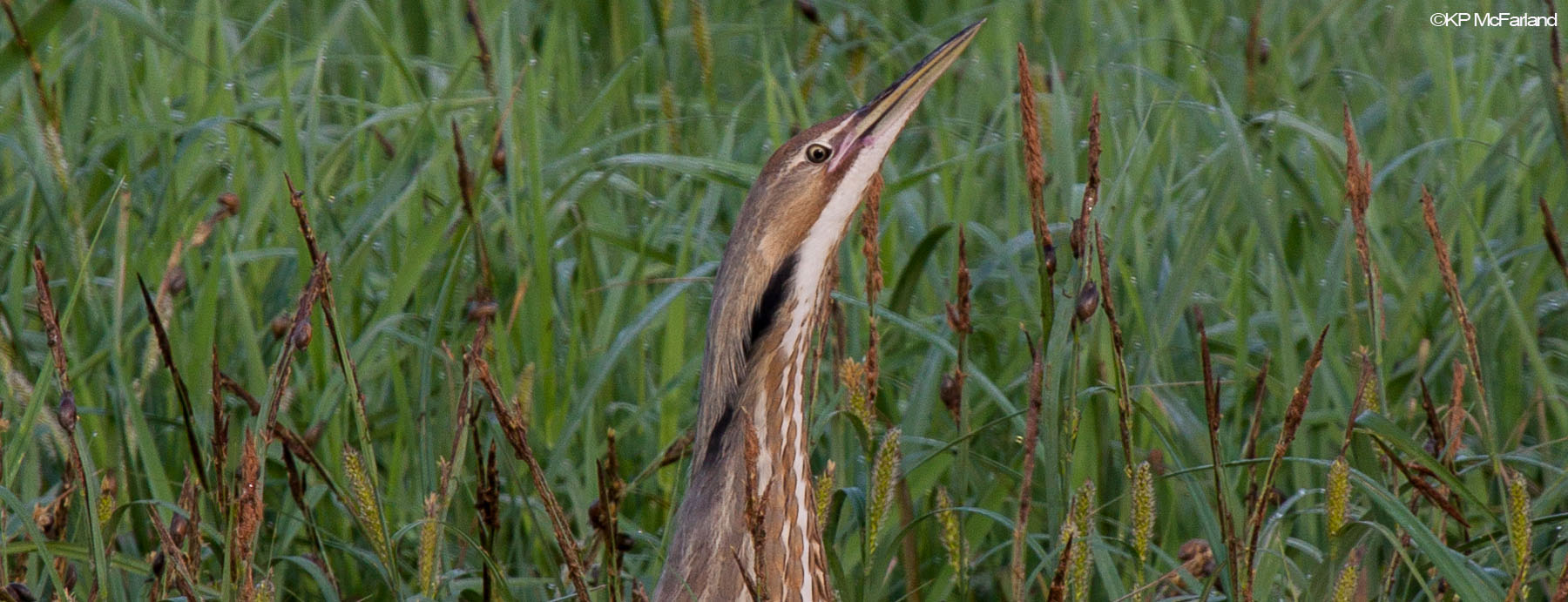
American Bittern (Botaurus lentiginosus)
Summary
- Natural history: American Bitterns rely on a distinctive freeze display, tipping the bill straight up so their streaked front feathers double as reed camouflage, and when that is not enough they will rock the body slowly to match the marsh grass swaying in the breeze. Its odd, resonant ‘pump-handle’ call can carry several hundred meters across open marsh, often the only clue to a bird that is otherwise nearly impossible to see. Vermont’s marshes have bucked a broader regional trend of decline in New York, Pennsylvania, and around the Great Lakes, a divergence encouraging enough that wildlife officials recently removed the bittern from Vermont’s Species of Special Concern list.
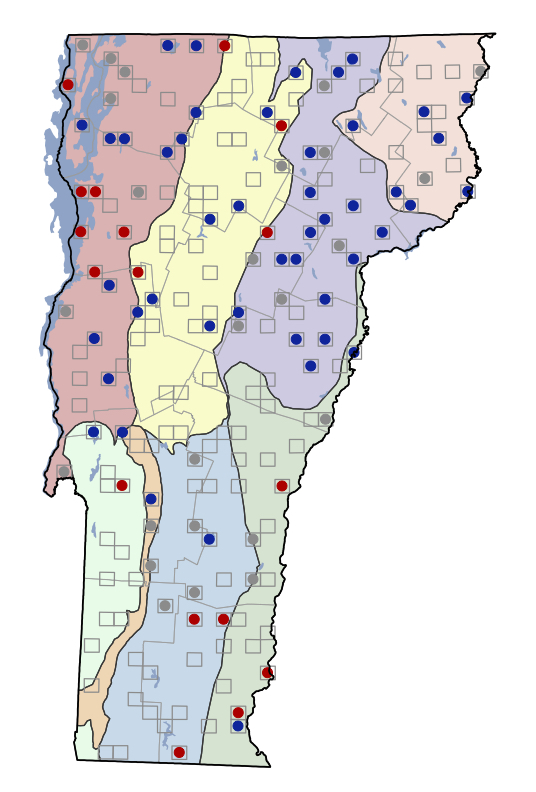
- Status in VT: Increased by 71% (42 to 72 blocks). Greatest increase in Northeastern Highlands.
- Data from other research: No additional data for VT.
- Conservation status: State rank S3B; no longer Species of Special Concern as of April 2010.
- Other atlases: NY: -10%; PA: -42%; ON: no sig. change.
- VT’s role in North American range: VT is within the core of the range.
- Causes of change since first Atlas: Unknown.
- Management/Monitoring recommendations:Increase monitoring efforts; use of recorded vocalizations in surveys to provide better understanding of population changes in VT.
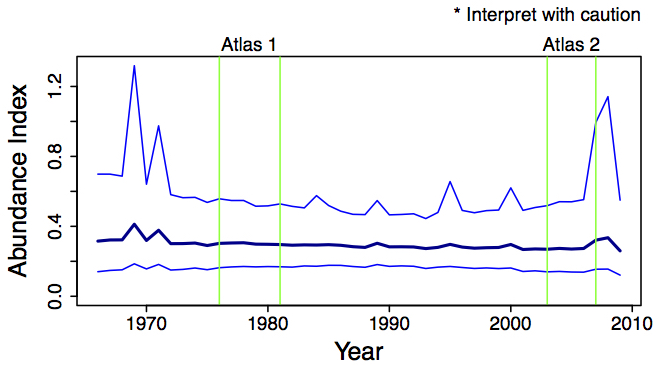
Population Trends
First Vermont Breeding Bird Atlas (1976-1981)
Species Account
Second Vermont Breeding Bird Atlas (2003 – 2007)
Species Account
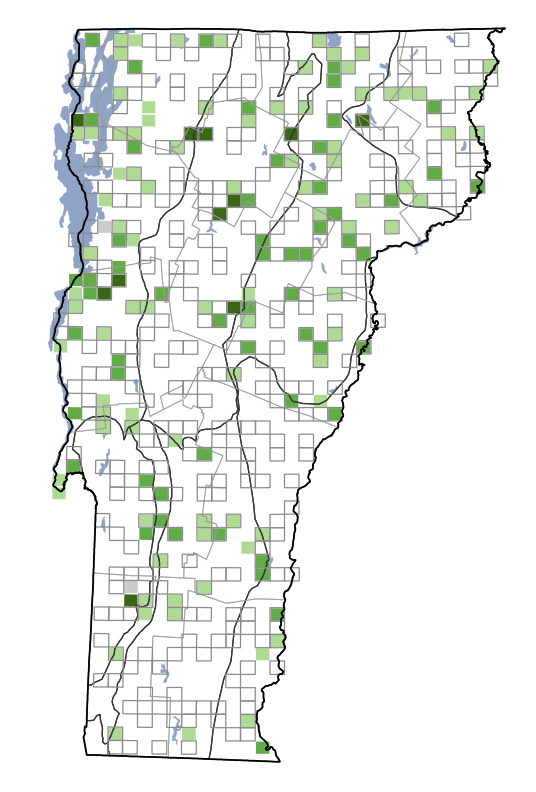

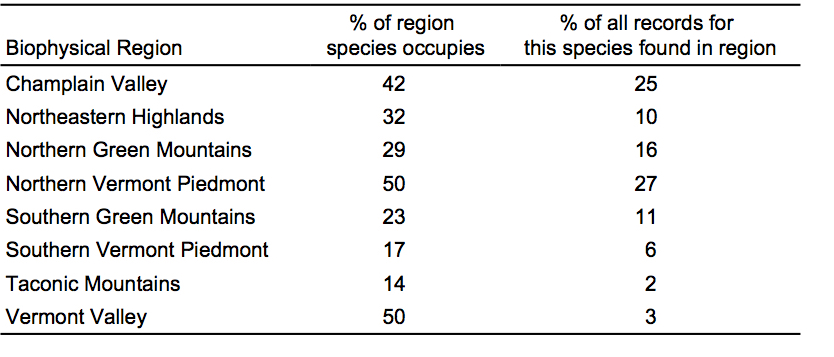
Change in Distribution

Links
Vermont eBird
Encyclopedia of Life
All About Birds