| Common Name | Cave Swallow |
|---|---|
| Scientific Name | Petrochelidon fulva |
| Type of Report | Rare Species |
| Date of Observation | 11/05/2025 |
| Media | |
| Number Observed | 1 |
| Reporting Observer's Name | Taj Schottland |
| Mailing Address | 410 Farrell St. Apt 304 South Burlington, Vermont 05403 United States Map It |
| Email hidden; Javascript is required. | |
| Date Completed | 11/30/2025 |
| Names & Emails of Other Contributing Observers | Megan Leopold: |
| Latitude of Observation (enter 0 if unable to provide) | 44°16'04"N |
| Longitude of Observation (enter 0 if unable to provide) | 73°18'18"W |
| Place Name | Thompson's Point |
| Township | Charlotte |
| County | Chittenden |
| Vermont eBird Checklist URL | ebird.org |
| Time of Day | 07:45 AM |
| Length of Time Observed | 20 seconds |
| Maximum Estimated Distance from Bird (in feet) | 300 |
| Minimum Estimated Distance from Bird (in feet) | 150 |
| Noteworthy Weather Conditions | Overcast, brisk SW breeze (5-15mph) |
| Optical Equipment Used for Observation | Leica Ultravid 8x42 binoculars and Canon EOS 70D with a fixed 400mm F5.6 lens. |
| Observer’s Previous Acquaintance With This or Similar Species | I’ve seen Cave Swallows in TX and FL, including this year along the FL keys. Very familiar with Cliff Swallows which nest locally. |
| I certify that any attachments included with this report were captured during this observation event. | |
| Description of Habitat | Seen from a bluff overlooking Lake Champlain at Thompson’s Point. Bird was flying solo, not associating with any other species. |
| Behaviors Observed | Observed flying west to east, crossing the lake at about 100-200’ above the water. |
| Description of Vocalizations | None heard. |
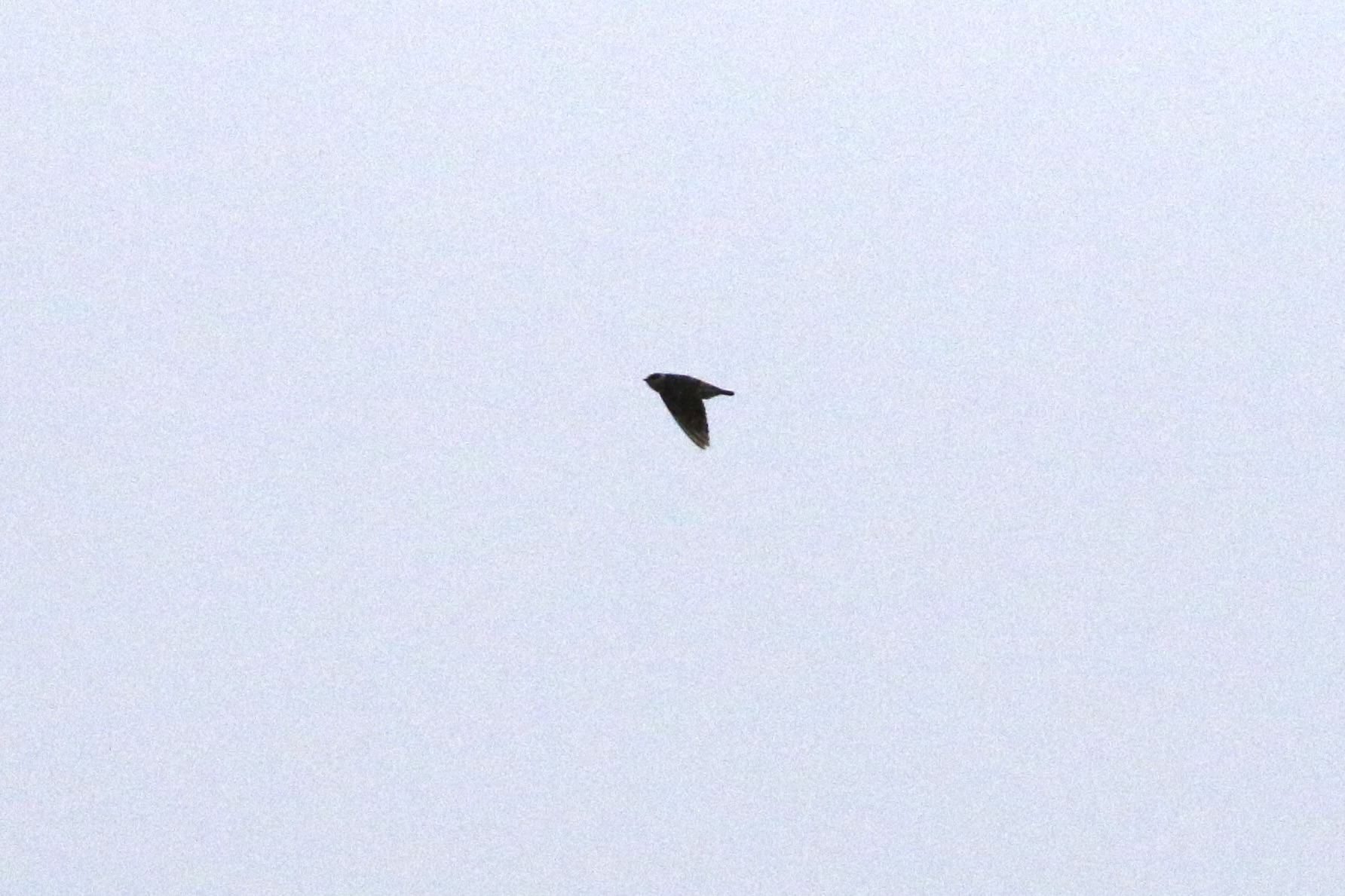
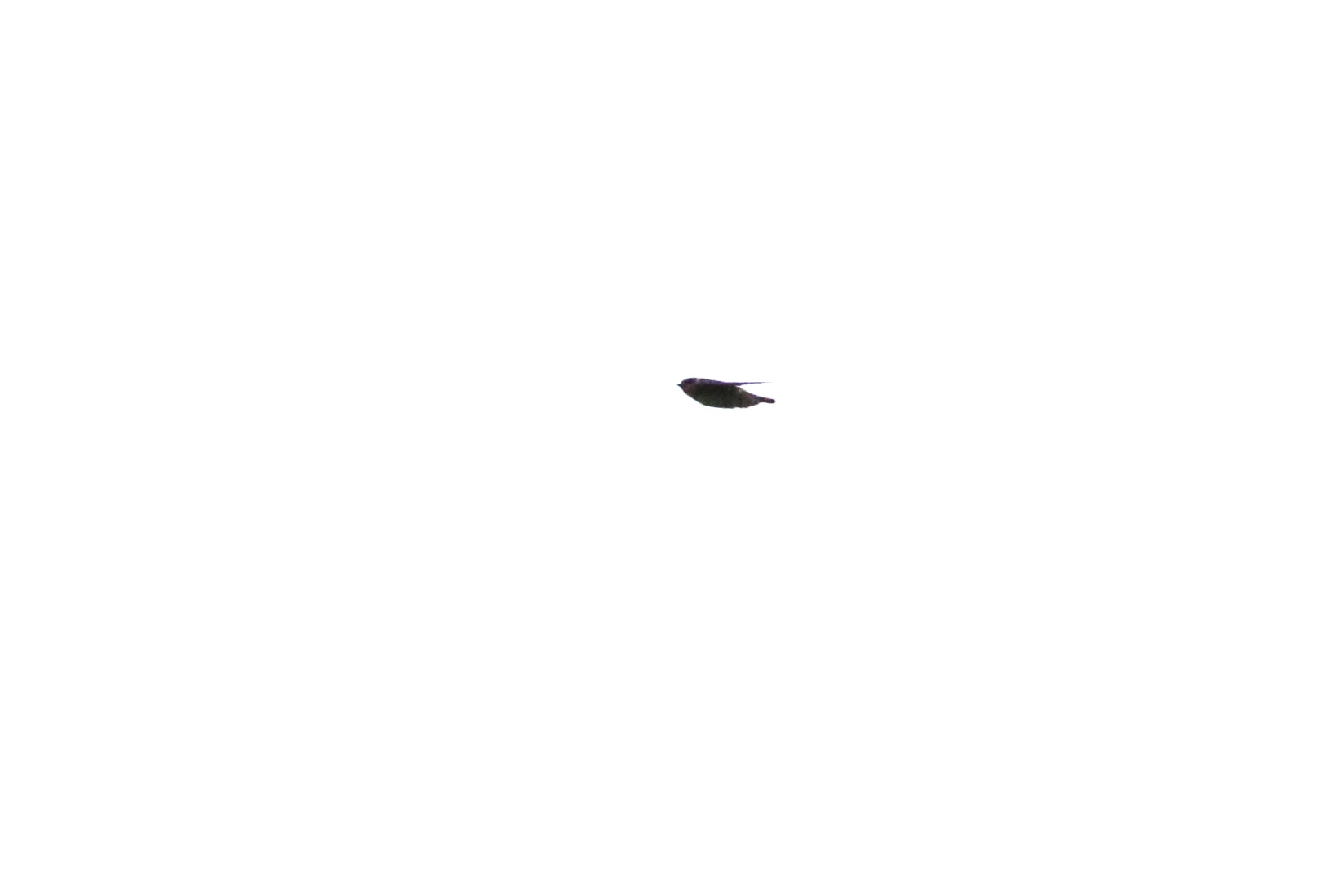
| Verbal Narrative & Description of Observation | I initially spotted it as an eye bird flying across the lake, and I quickly got on it with my binoculars. I immediately saw that it was a swallow and alerted Megan and Clem to get on it ASAP. I knew there was an influx of Cave Swallows throughout New England and NY the day before, so I figured this could be a good bird! Once I got on the bird with binoculars, I quickly eliminated Barn Swallow due to the square tail. After watching it for about 3-5 seconds in my binoculars, I switched to my camera and started snapping pics (see photos linked to this RSD and in the eBird checklist). Due to the challenging lighting and short duration of the sighting (it never circled or slowed down and flew straight West to East), I didn’t have time to adjust my camera settings, and as a result I only have marginal photos. But thankfully three of the photos show the diagnostic features of a Cave Swallow. Big thanks to Clem for editing the horrible photos to try and help pull out key ID features. |
| Relative Size & Shape | Size of a typical swallow (smaller than a purple martin but bigger than goldfinch). |
| Head | Photos show dark around and behind the eye with light grey or light rufous on the auriculars and side of throat, creating a fairly diagnostic dark-capped appearance (compared to a Cliff Swallow which would show a uniformly dark head). No white spot on the nape (which a Cliff Swallow is likely to show). |
| Feet & Bill | Tiny, apparent dark bill. Feet not seen. |
| Upper Back | Dark colored back |
| Lower Back & Rump | Photos show diagnostic dark rufous rump contrasting against the darker back (cliff swallow should have a paler rump) |
| Wings | Angular, swallow-like wings |
| Breast, Belly, Flanks, Under Tail Coverts | Hard to discern much from the photos, but it doesn’t appear to have a clean white belly (like a Cliff Swallow); Rather it appears to have darker colored flanks with a white belly (though it’s hard to be certain from the photos). |
| Tail | Rufus on the rump and a square tail. Hard to make out much on the under-tail. |
| IMPORTANT: What similar species were eliminated when making the identification and how was this bird different? | Martin Sp.: Smaller, square tail, and dark-capped appearance rule out Purple Martin (or other south-american Martins) Tree, Bank, Barn and Northern-rough-winged Swallow: Rufous on the rump, square tail, and dark-capped appearance rule out all of these swallows. Cliff Swallow: This is the slightly more challenging species to rule out. However the photos show the diagnostic darker rufous rump and paler throat and grey collar with dark around the eye. Cliff swallow would show a much darker overall face and head rather than the lighter colored auriculars leading to a capped appearance shown in the photos. Also there was no white on the forehead which is another point in favor of Cave Swallow over Cliff Swallow. I shared the photos with several very experienced birders including Alex Lamoreaux (Senior Bird Guide with Wildside Tours), Alan Kneidel (Sr. Conservation Biologist and member of the RI bird records committee), and Ted Murin. All agreed the photos were poor but showed the diagnostic features of a Cave Swallow. |
| Other Notes & Comments | Persistent and strong W and SW winds led to a large-scale invasion of Cave Swallows throughout New England and NY starting on November 4th (the day before this observation) and continuing at least through the 8th. Dozens of Cave Swallows were reported in nearly every coastal New England state along with observations in both eastern and western NY as well as in Montreal and the northern shores of Lake Ontario. I was aware of this CASW invasion at the time of the sighting, and went out hoping to find one. In fact, 10 minutes prior to us observing this swallow, I said to the birders with me “Someone somewhere is going to find a Cave Swallow on the lake today, the question is who and where!” I hoped but did not expect that it would be us! |
| This report was written from notes taken: | Written from Memory |

Vermont Atlas of Life Partners