| Common Name | Virginia Rail |
|---|---|
| Scientific Name | Rallus limicola |
| Type of Report | Out-of-Season |
| Date of Observation | 01/04/2024 |
| Media | |
| Number Observed | 1 |
| Reporting Observer's Name | John Peckham |
| Mailing Address | 1641 Essex Road Apt 206 Williston, VT 05495 United States Map It |
| Email hidden; Javascript is required. | |
| Date Completed | 01/30/2024 |
| Names & Emails of Other Contributing Observers | Avery Fish |
| Latitude of Observation (enter 0 if unable to provide) | 44.55476236794085 |
| Longitude of Observation (enter 0 if unable to provide) | -73.11986625772734 |
| Place Name | Colchester Pond |
| Township | Colchester |
| County | Chittenden |
| Vermont eBird Checklist URL | ebird.org |
| Time of Day | 11:42 AM |
| Length of Time Observed | 1 hour 35 minutes |
| Maximum Estimated Distance from Bird (in feet) | 20 |
| Minimum Estimated Distance from Bird (in feet) | 10 |
| Noteworthy Weather Conditions | 26 F. Cold, clear, calm. |
| Optical Equipment Used for Observation | Naked eye. Nikon D500. Kowa 8x42 BD II XD Wide-Angle Binoculars. |
| Observer’s Previous Acquaintance With This or Similar Species | I have observed this species on 51 occasions, with this being the most recent. I have observed a total of 72 individuals. |
| I certify that any attachments included with this report were captured during this observation event. | |
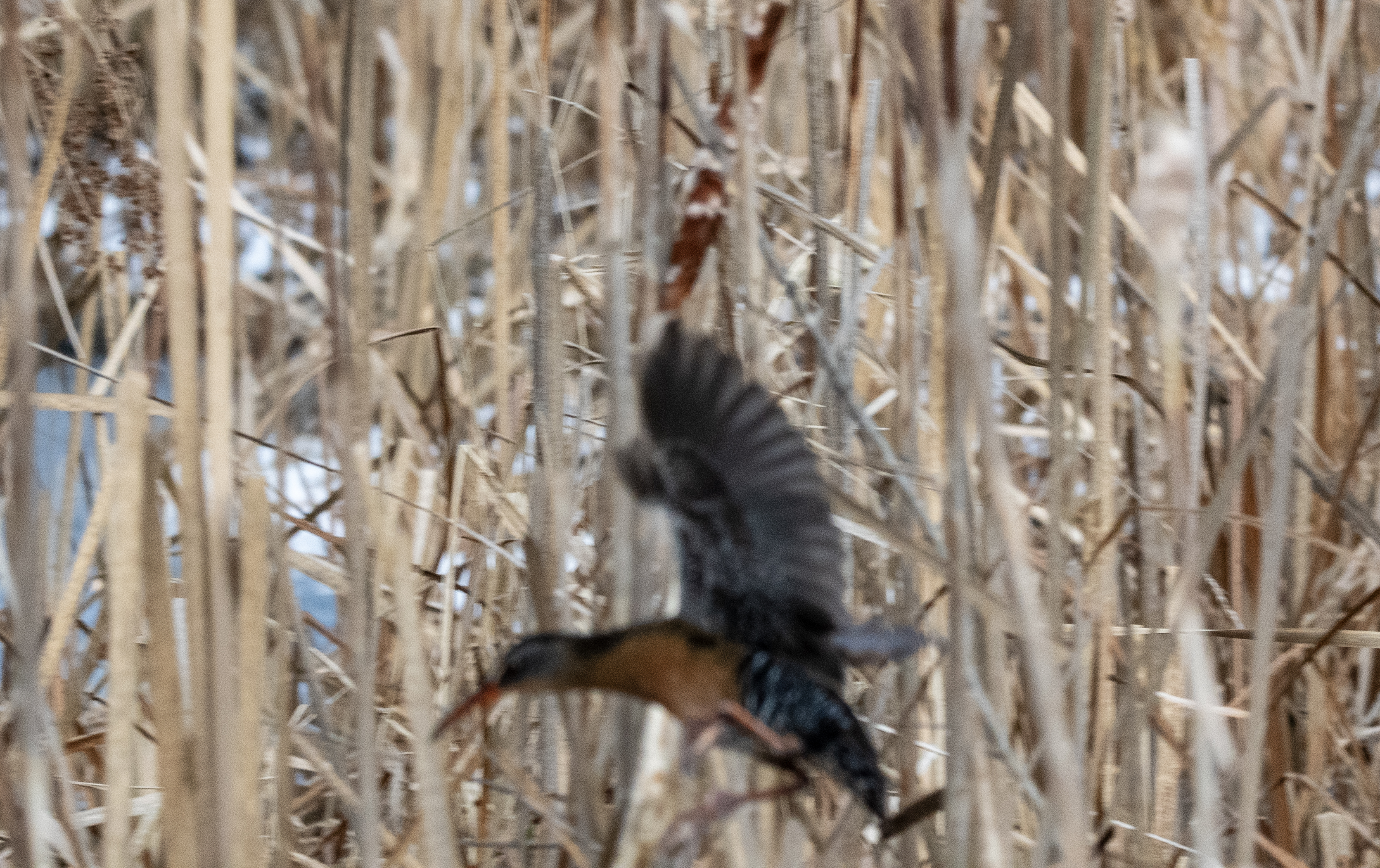
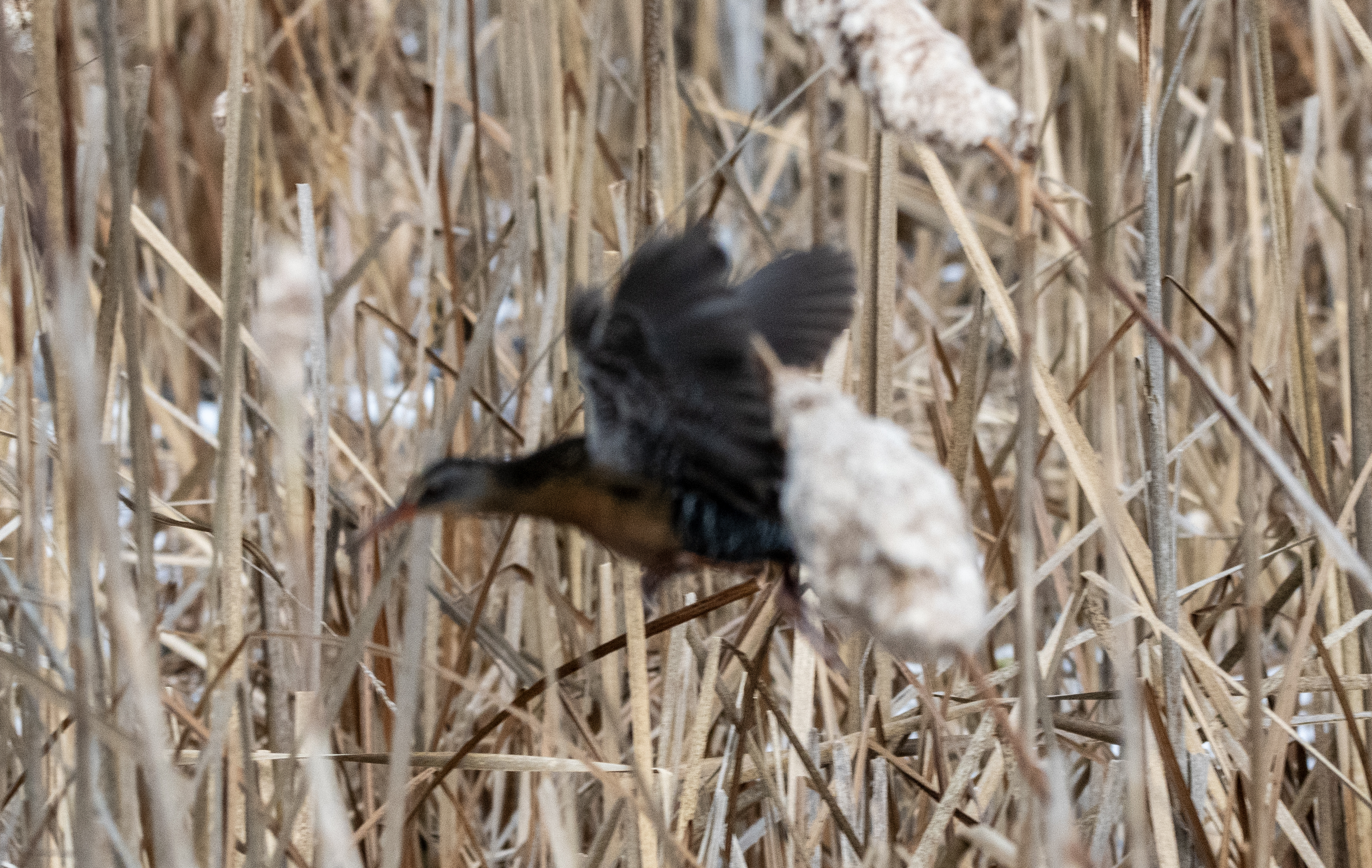
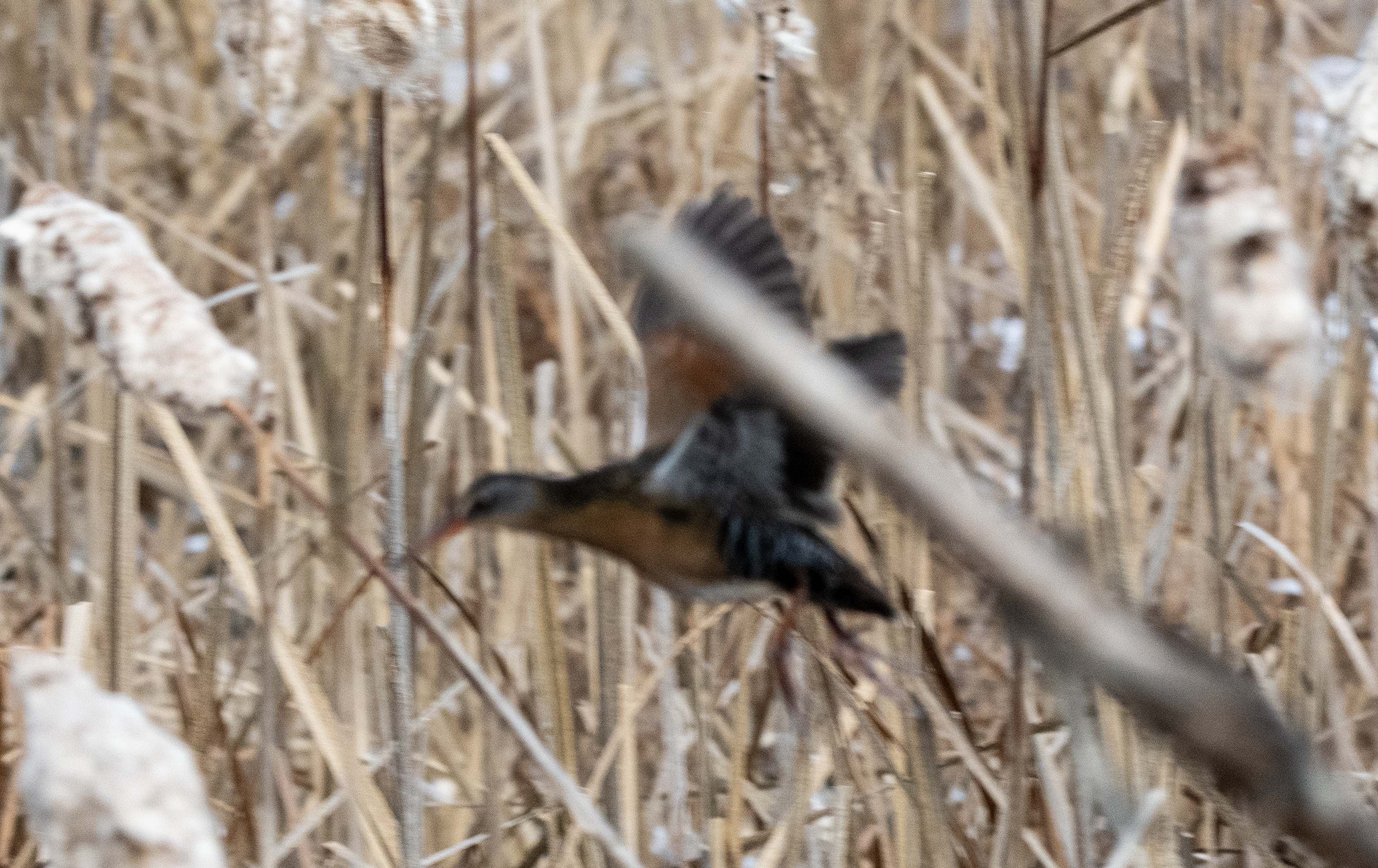
| Description of Habitat | It was a very calm, quiet day. Overall bird activity was low, and no species of birds were directly associating with the Virginia Rail. There was a weasel that seemed to be in pursuit of it. |
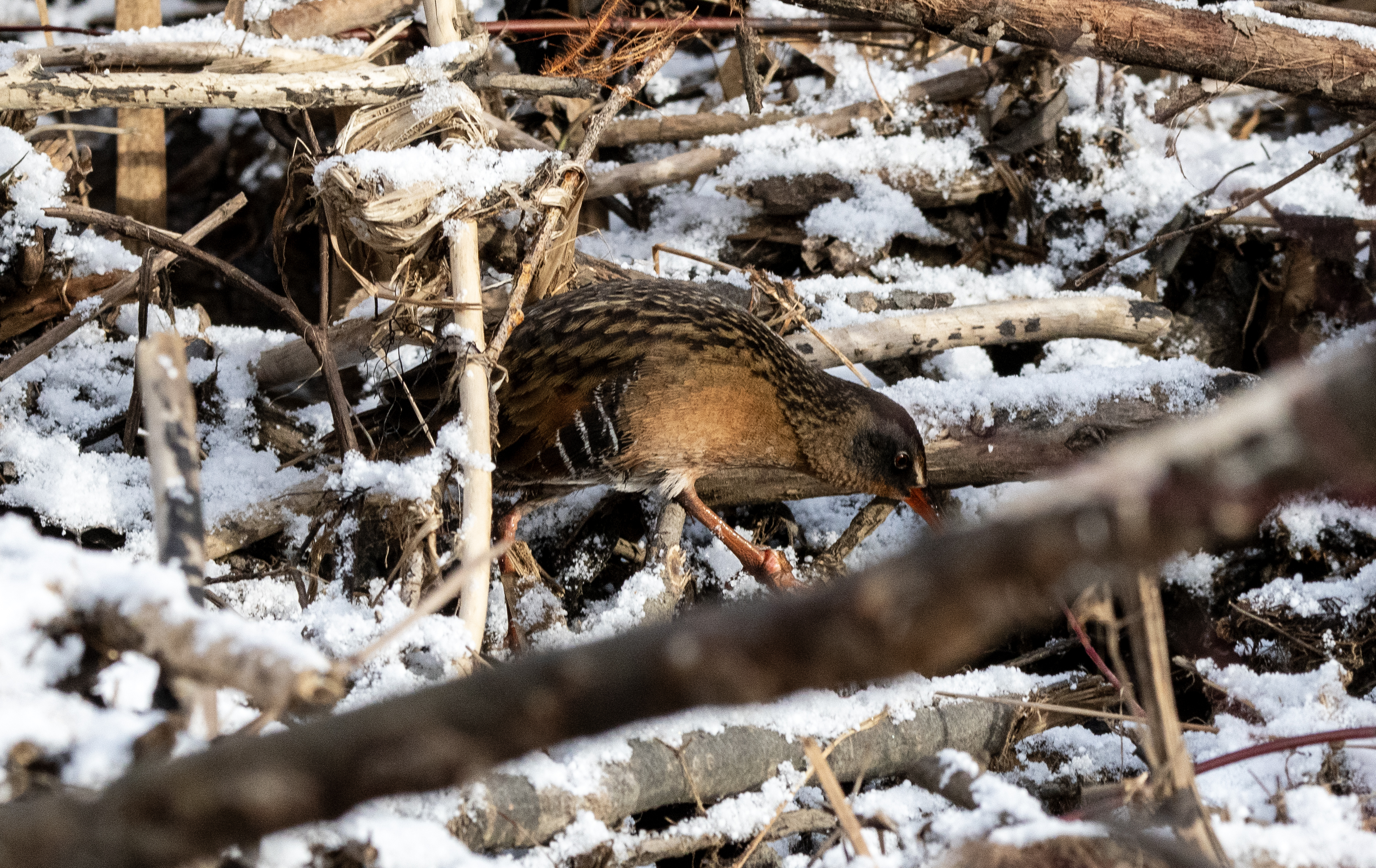
| Behaviors Observed | The bird appeared to be feeding, or attempting to feed in the flowing water that was just below the beaver baffle. The bird was also hiding out in a lodge of sticks, and sometimes walking on top of it, and at times it was either hiding in the cattails, or visible in different sections of the marsh. |
| Description of Vocalizations | The bird was silent. |
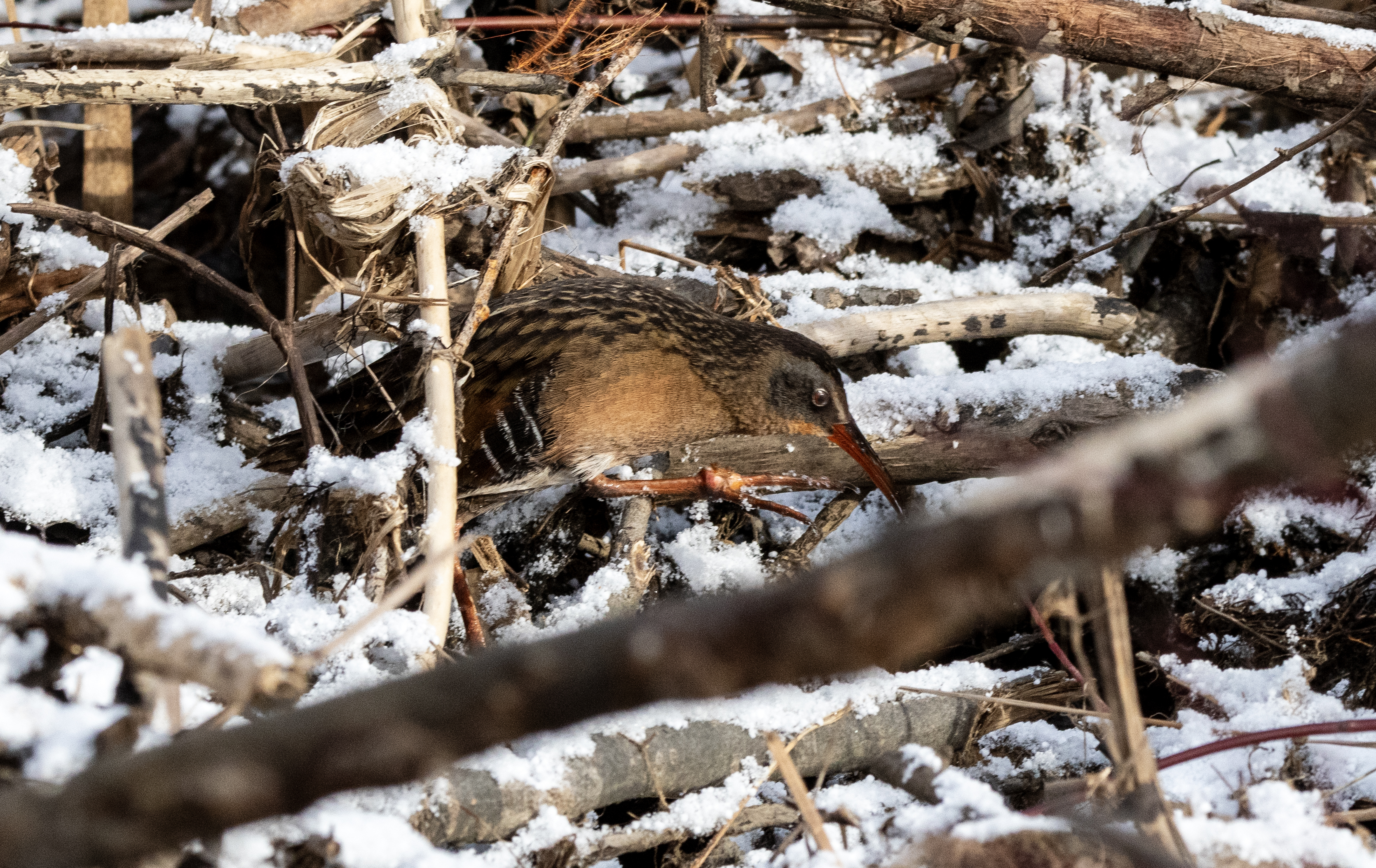
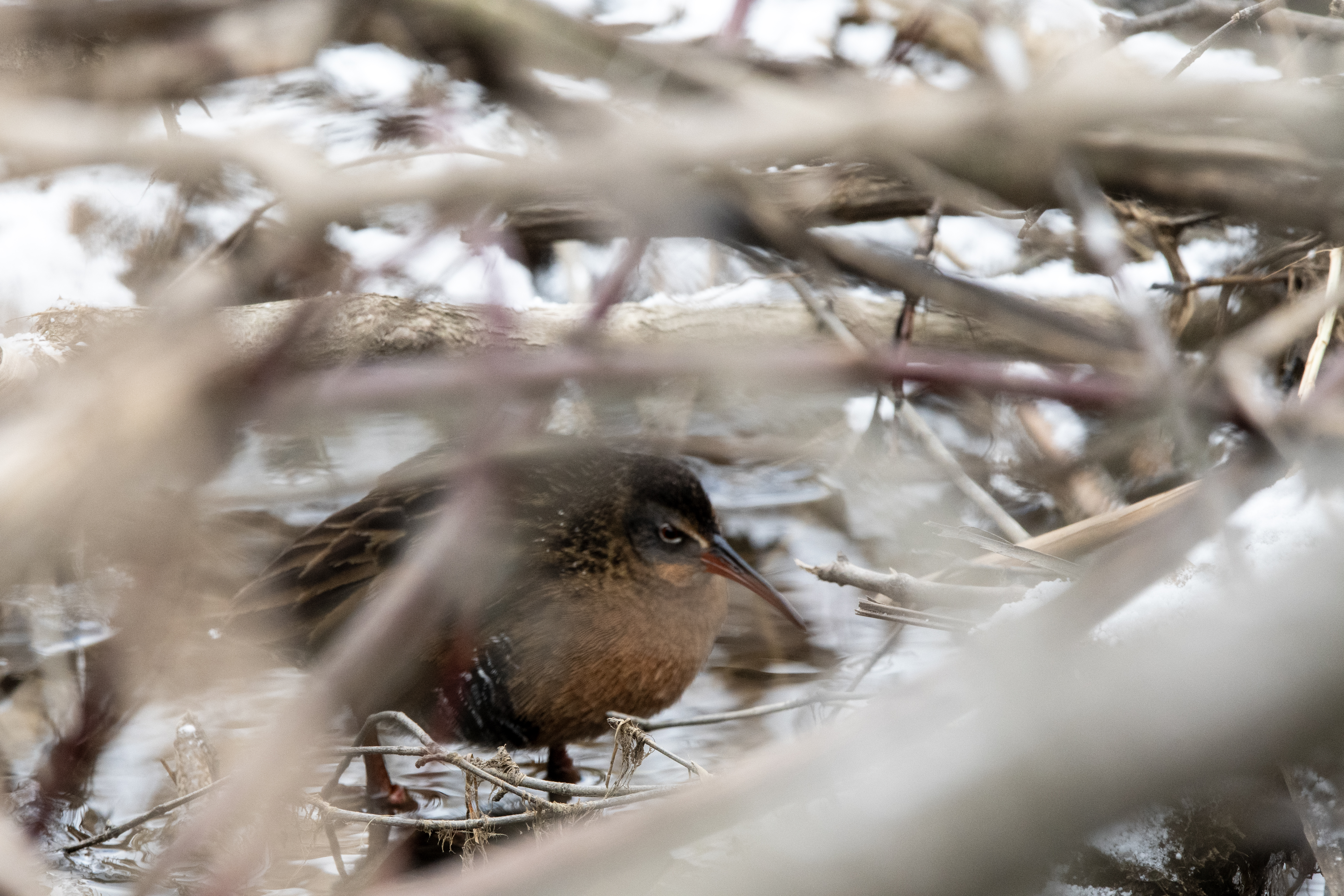
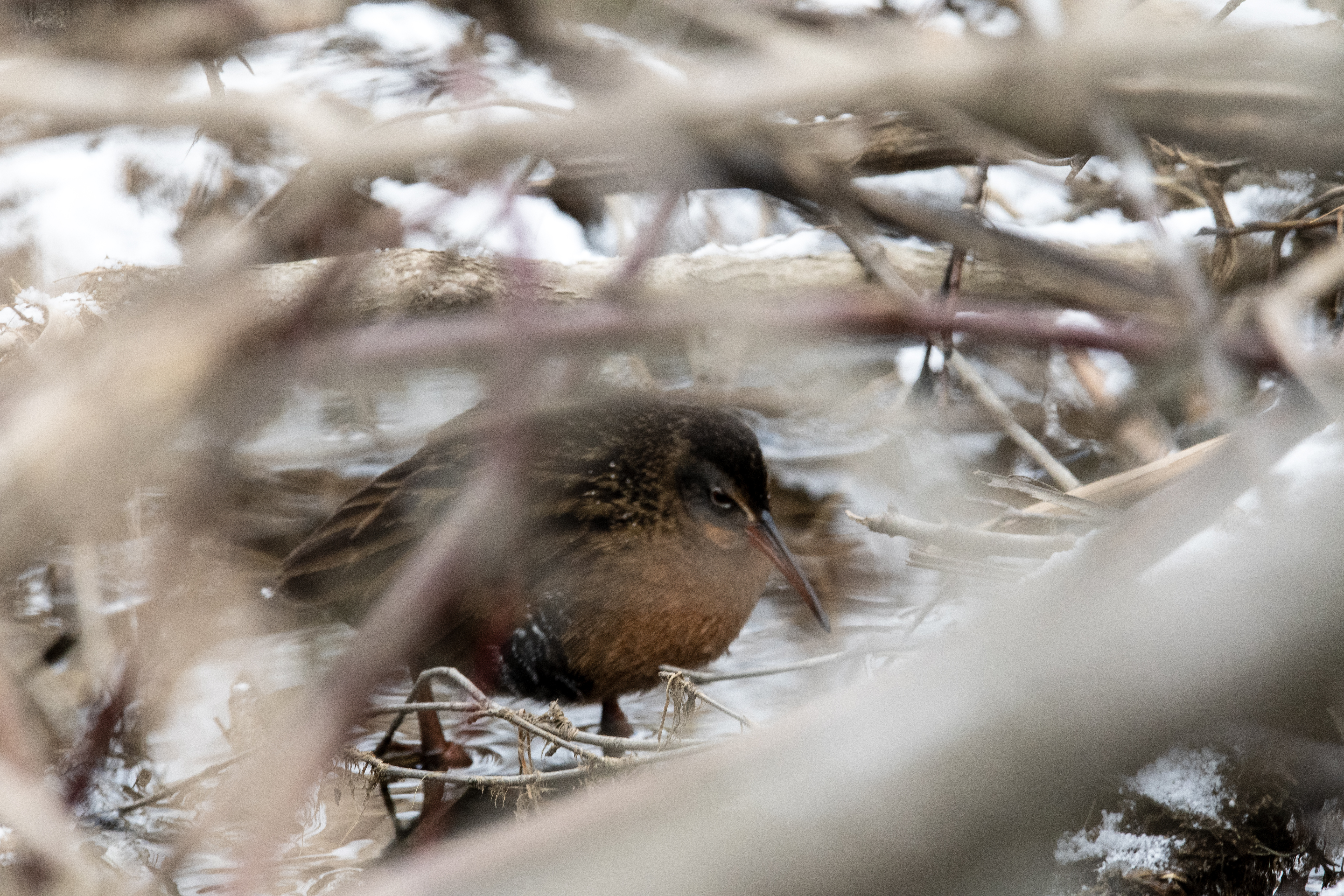
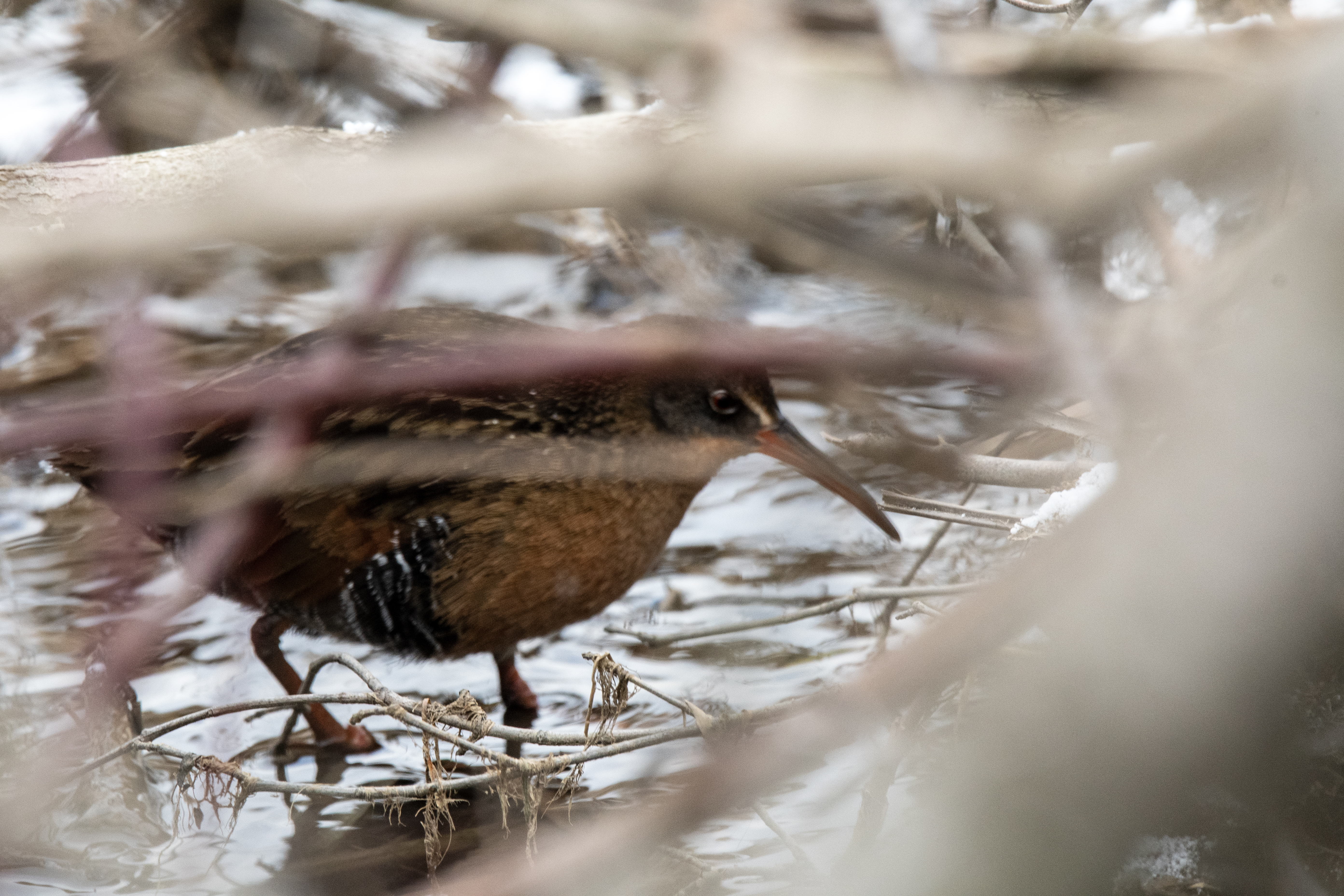
| Verbal Narrative & Description of Observation | I spotted the bird out in the open, on top of the sticks near the lodge. We were somewhat surprised, even though we were actively seeking the bird, we weren't expecting it would be that easy to find. It was a quick and simple identification, as we were both familiar with the species and it was clearly visible. Avery Fish's checklist comments: "Stalking around in the running water at the south end of the pond, across from the beaver baffle. It would scurry from the water into the beaver lodge when spooked, but then would pop out farther back and forage in the concealed patches of running water. Small, buffy rail with dark stripes on the flanks, gray cheek, and red downcurved bill. Seen flying once, likely flushed by the weasel that swam in." I concur with Avery's statements regarding the observation and his description. |
| Relative Size & Shape | Small, plump rail with a long, red, decurved bill. Under a foot long, wingspan just over a foot. |
| Head | Dark head with the appearance of a "cap" with gray cheek, and white line fading into gray above eye. Nape dark with buffy colored spots. Throat buffy. |
| Feet & Bill | Long, red, downcurved bill. Brownish red legs. |
| Upper Back | Similar to nape, dark with buffy colored spots. |
| Lower Back & Rump | Dark, with less buffy spotting than upper back. |
| Wings | Chestnut above and dark below. |
| Breast, Belly, Flanks, Under Tail Coverts | Breast and belly had a reddish tone. Black and white banding on flanks. Undertail coverts similar to flanks (using photos for reference). |
| Tail | Upturned tail, similar in coloration to lower back, which is dark and less spotted or streaked. |
| IMPORTANT: What similar species were eliminated when making the identification and how was this bird different? | Since we'd read the previous report submitted by Tom Doubleday on January 2nd, we were expecting to see this species. Due to the time of year, there should not be any other similar species present in Vermont, and due to the clear visuals, it was easy to rule out any other species. A Sora would be the mostly likely species to occur at this location during the expected season. It would be generally darker and more gray overall, especially underneath, and would have a short, yellow bill, and greenish legs. |
| Other Notes & Comments | This bird appeared to be an adult, but sex was not determined. We were able to observe this bird for an extended period of time, and then we moved on. We returned on our way back, and the bird was present and active again. We were able to obtain several photographs and spend a significant amount of time observing this individual. Please also refer to Avery Fish's checklist https://ebird.org/checklist/S158063682 for additional photos. The report was written from notes taken during the observation, and from memory and by using photos taken during the observation. |
| This report was written from notes taken: | During the Observation |
Vermont Atlas of Life Partners