| Common Name | Ash-throated Flycatcher |
|---|---|
| Scientific Name | Myiarchus cinerascens |
| Type of Report | Rare Species |
| Date of Observation | 12/18/2023 |
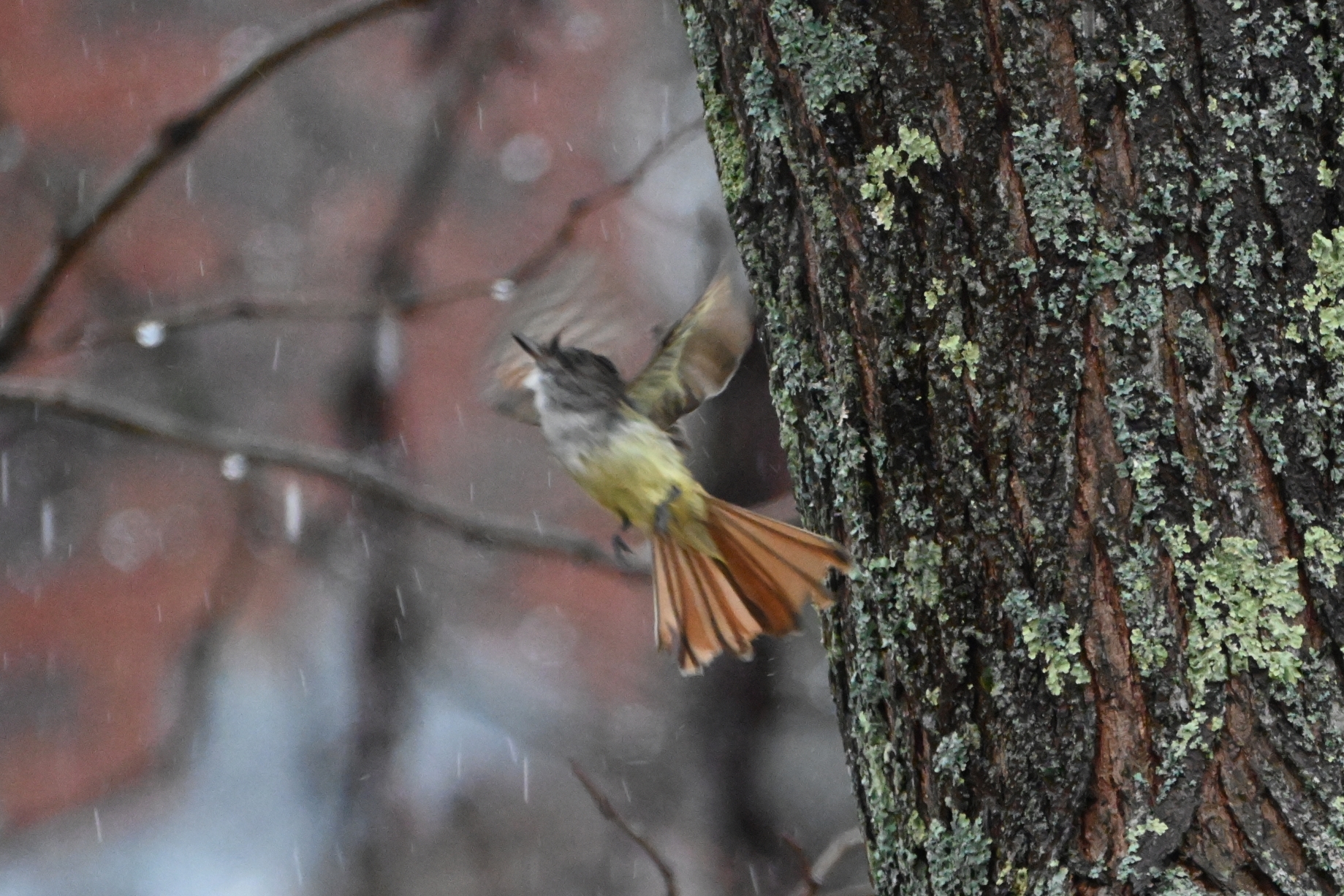
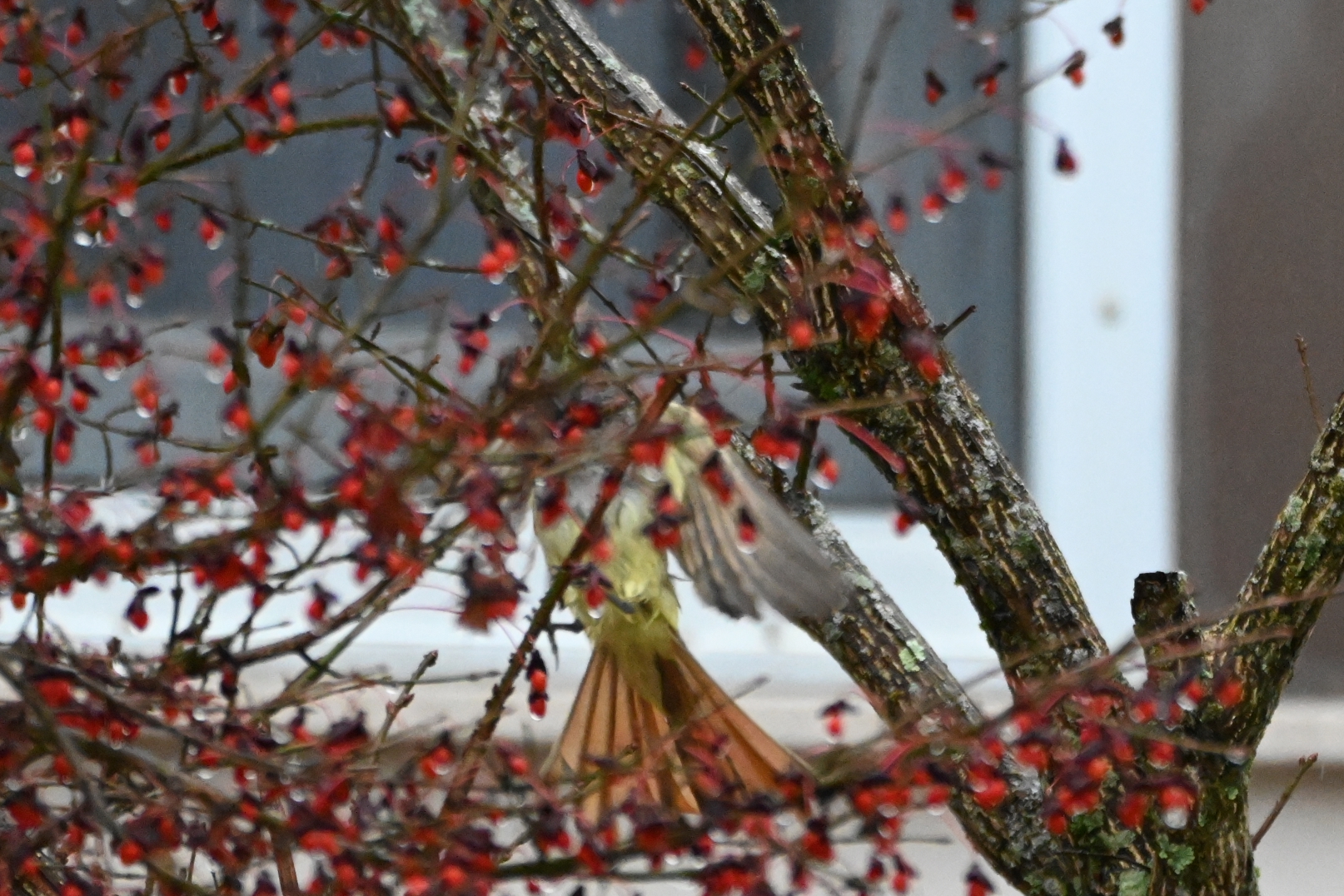
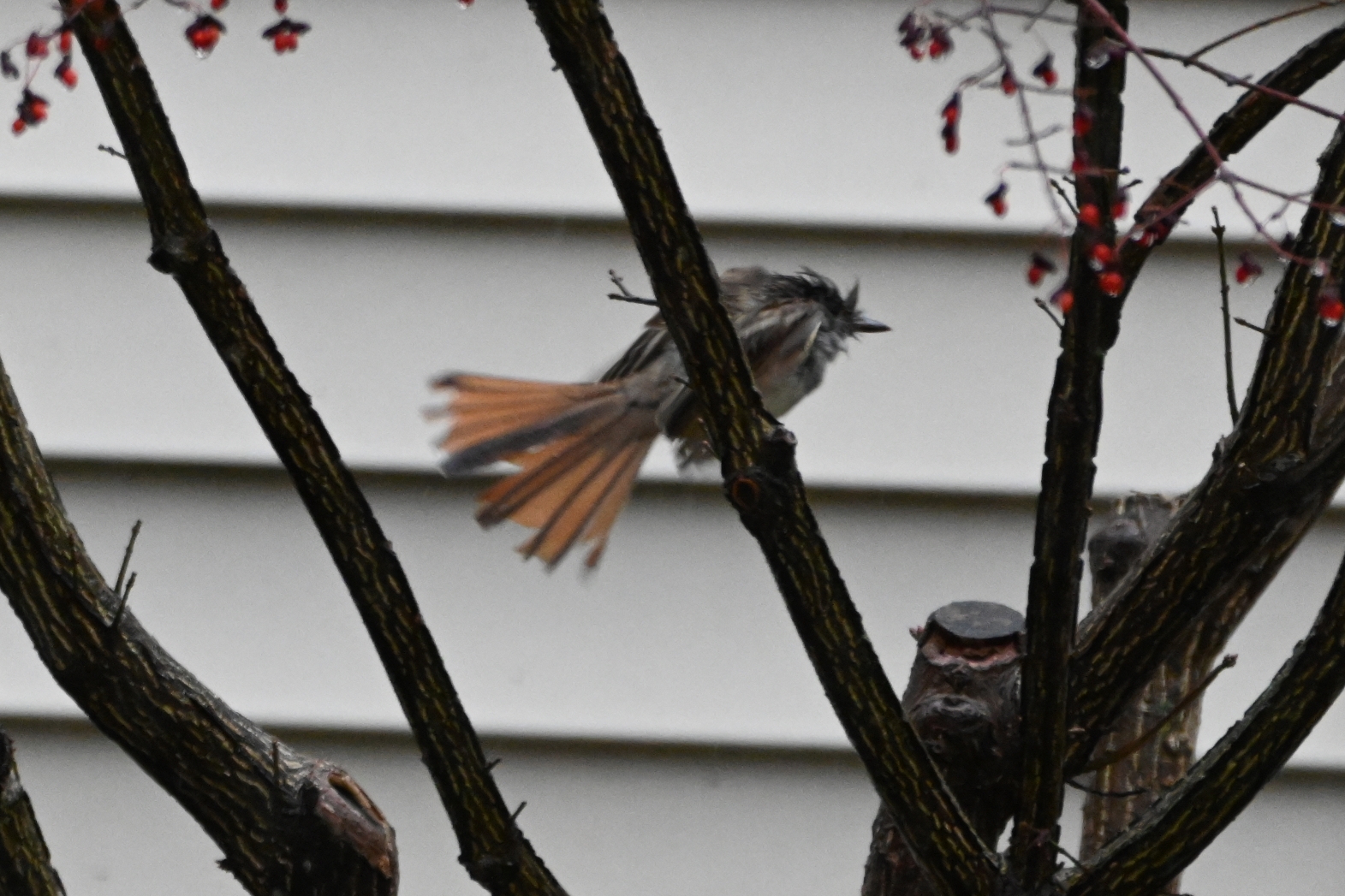
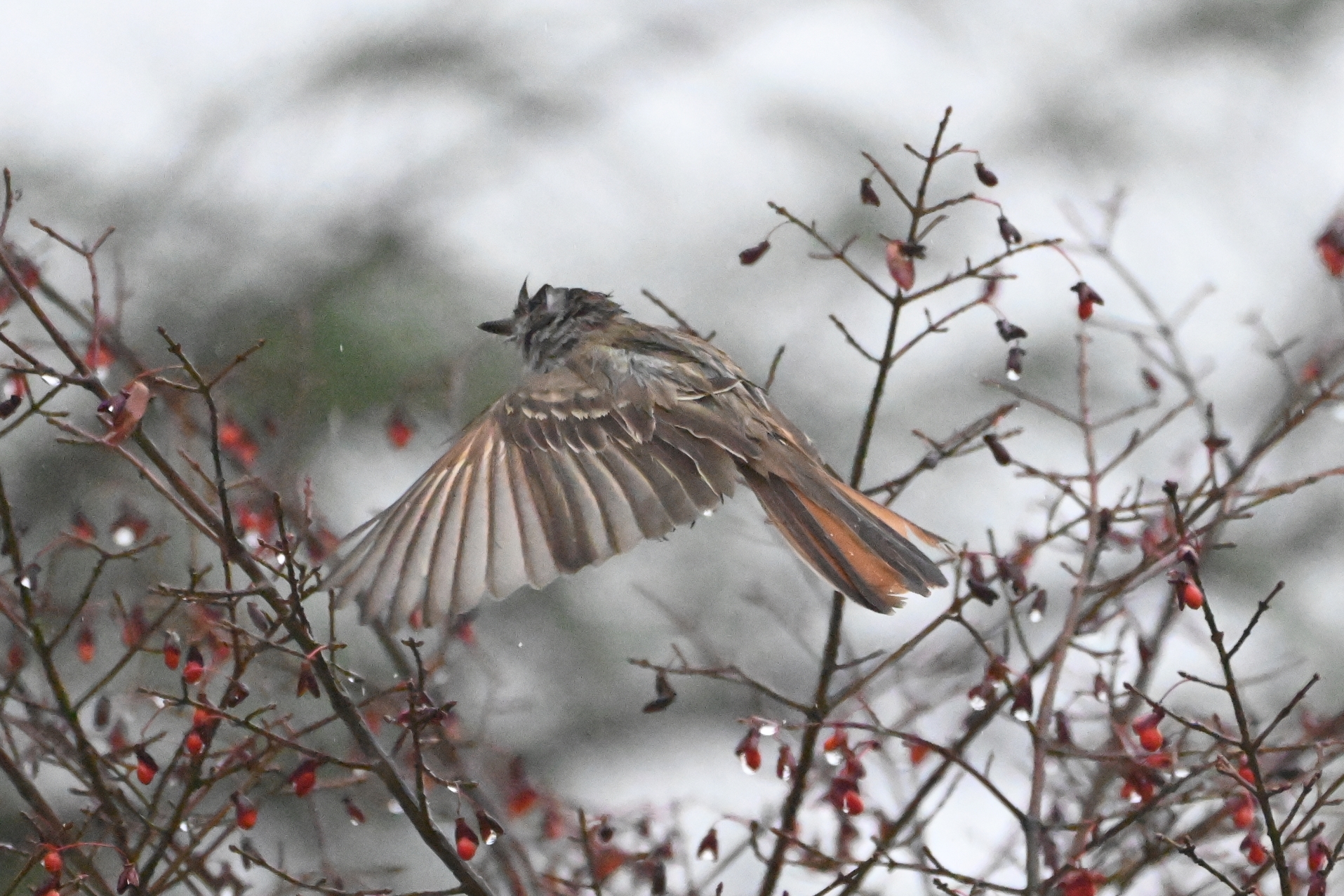
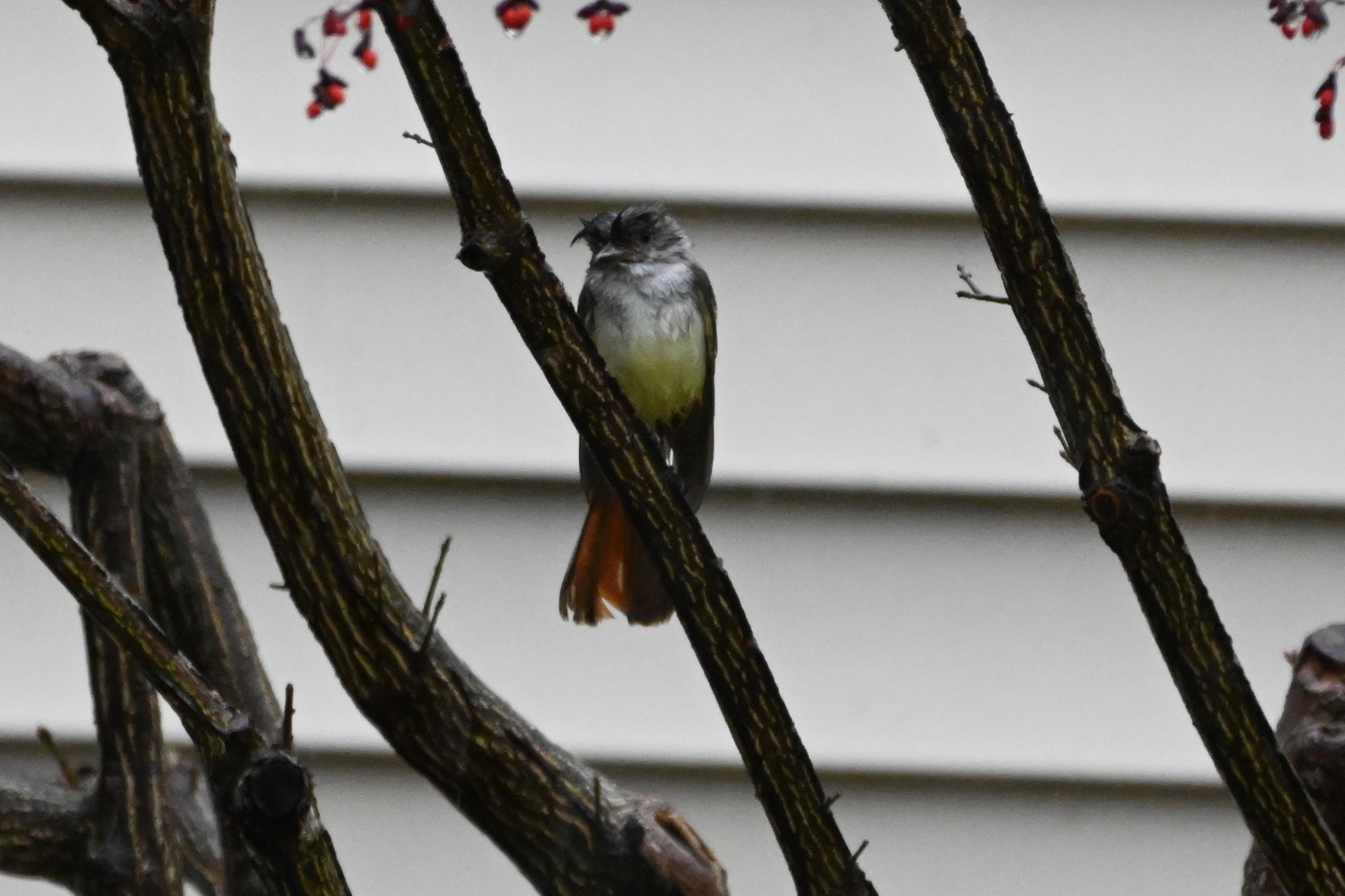
| Media | |
| Number Observed | 1 |
| Reporting Observer's Name | Jim Mead |
| Mailing Address | 798 Metcalf Drive Williston, VT 05495-8813 United States Map It |
| Email hidden; Javascript is required. | |
| Date Completed | 12/20/2023 |
| Names & Emails of Other Contributing Observers | Henry Trombley |
| Latitude of Observation (enter 0 if unable to provide) | 44.013237 |
| Longitude of Observation (enter 0 if unable to provide) | -73.153272 |
| Place Name | Neighborhood on Evergreen Lane |
| Township | Middlebury |
| County | Addison |
| Vermont eBird Checklist URL | ebird.org |
| Time of Day | 09:33 AM |
| Length of Time Observed | about 45 minutes |
| Maximum Estimated Distance from Bird (in feet) | 30' |
| Minimum Estimated Distance from Bird (in feet) | 10' |
| Noteworthy Weather Conditions | Raining steadily, 45-48 degrees F, little to no wind. |
| Optical Equipment Used for Observation | Zeiss Victory SF 10x42 |
| Observer’s Previous Acquaintance With This or Similar Species | I had seen a number of this species in Arizona & Texas several years ago. |
| I certify that any attachments included with this report were captured during this observation event. | |
| Description of Habitat | Neighborhood with several duplexes. Pine trees, some deciduous trees, a few burning bushes & grass (lawns). |
| Behaviors Observed | Even though it was raining this bird was hawking insects and landing back on a branch where it had launched from, to do so. It was quite active most of the time. |
| Description of Vocalizations | Absolutely no vocalizations at all. |
| Verbal Narrative & Description of Observation | We observed the bird flying from tree to tree then to different shrubs, the entire time we were there. The poor thing was very wet but it seemed to have plenty of energy. |
| Relative Size & Shape | Rather compact looking flycatcher with a decently longish tail and a bit smaller than a Great-crested Flycatcher. |
| Head | The crown, cheeks & nape were darkish sort of brown, grayish face, dark eye & the throat was noticeably whitish. |
| Feet & Bill | The feet and legs appeared black. The bill was good sized yet not huge, mostly black but did show some orangish coloration at the base of the lower mandible. |
| Upper Back | The upper back appeared brownish. |
| Lower Back & Rump | The lower back & rump were also brownish. |
| Wings | Rounded tips, primaries showed rufous edges, secondaries showed slight whitish edges and tertials were rather nondescript with slight whitish edges. |
| Breast, Belly, Flanks, Under Tail Coverts | The breast appeared to look light gray but leaning toward whitish in coloration. The belly was pale yellow and terminated about 1/2 way up the front of the bird in an upright posture. The flanks & undertail coverts were also pale yellow. |
| Tail | The tail was of good length. The uppertail was dark and orange. I suspect that if the tail wasn't so wet, which kept the feathers separated, that it would appear darkish overall. The undertail feathers when fanned open showed a rufous coloration on one side of the shaft and a dark coloration on the other side which extended down to the tip and curved around the whole tip of most of the feathers. |
| IMPORTANT: What similar species were eliminated when making the identification and how was this bird different? | I ruled out Great-crested Flycatcher for several reasons. In the field this bird didn't appear to be as large as the many, many GCFL's that I see from spring to fall. Also the yellow on the belly of a GCFL is very bright yellow and terminates about 3/4's of the way up the front of the bird in an upright posture. The throat on a Great-crested Flycatcher is darkish gray not whitish. The upper back on a GCFL is more greenish/olive colored, not brownish. The undertail on a GCFL also has rufous coloration on one side of the shaft as well as dark coloration on the other side which extends down to the tip but does not curve around the whole tip of the feathers. I also ruled out Brown-crested Flycatcher mostly due to it being even larger that a Great-crested Flycatcher. The other 2 to consider would be Dusky-capped Flycatcher and La Sagra's Flycatcher, but they are both even smaller than the Ash-throated Flycatcher. |
| Other Notes & Comments | I'm unsure how to age or sex this bird so neither were determined. This particular species (rare as it is for VT) is the most likely myiarchus flycatcher to be in this area during December, according to my research on eBird. I didn't think that information was enough to go on, being that this if the very first Ash-throated Flycatcher ever seen in VT. That is why I tried to point out precise details of this bird while ruling out other potentials, to get a positive ID. Details written above were found while perusing many of Henry's photos, some of mine and of course all of the time watching it in the field. |
| This report was written from notes taken: | During the Observation |

Vermont Atlas of Life Partners