| Common Name | Pied-billed Grebe |
|---|---|
| Scientific Name | Podilymbus podiceps |
| Type of Report | Rare Nesting Species |
| Date of Observation | 08/24/2022 |
| Media | 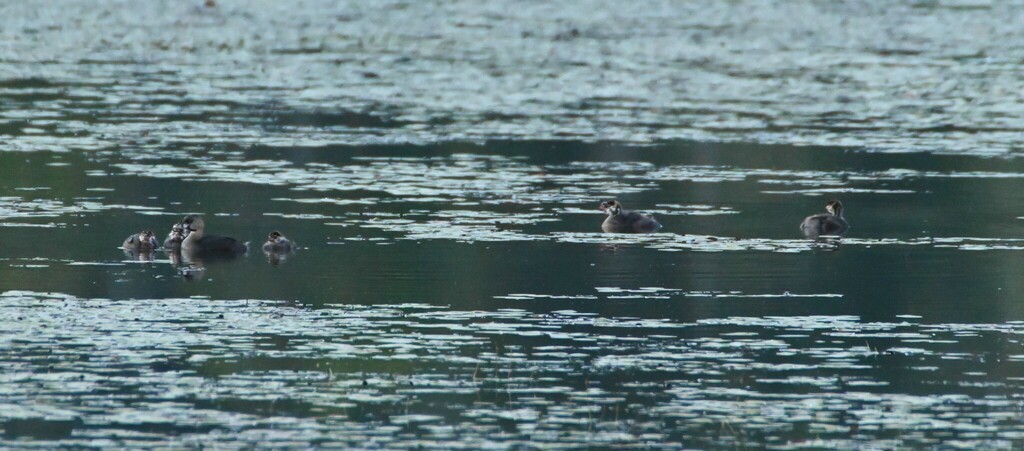 |
| Number Observed | 8 |
| Reporting Observer's Name | John Jose |
| Mailing Address | 137 Barre Street Apt 2 Montpelier, VT 05602 United States Map It |
| Email hidden; Javascript is required. | |
| Date Completed | 12/28/2022 |
| Latitude of Observation (enter 0 if unable to provide) | 44.334388° |
| Longitude of Observation (enter 0 if unable to provide) | -72.501732° |
| Place Name | Adamant Pond |
| Township | Calais |
| County | Washington |
| Time of Day | 06:00 PM |
| Length of Time Observed | 1.5 hrs. |
| Maximum Estimated Distance from Bird (in feet) | 400 |
| Minimum Estimated Distance from Bird (in feet) | 600 |
| Optical Equipment Used for Observation | Celestron Nature DX 8x42 binoculars and Bushnell Spacemaster 15-45 x 60mm spotting scope. |
| Observer’s Previous Acquaintance With This or Similar Species | Observed this species in 2020, 2021, and 2022 on this pond and nearby Sodom Pond. |
| I certify that any attachments included with this report were captured during this observation event. | |
| Description of Habitat | Adamant Pond is approximately 60 acres and includes portions of open water, potions supporting emergent and submerged aquatic vegetation, and immediately adjacent wetland habitats (occurring primarily on the western and northern edges of the pond). It is a relatively shallow water body and during the summer, floating leaved aquatic vegetation covers extensive portions of the pond, to the point of inhibiting exploration by watercraft. Historically, granite quarrying took place immediately adjacent to the pond and piles of grout left behind spill into the pond in places, particularly on the northern and western edges. This pond is the result of both a beaver dam and a human-constructed dam occurring at its southern terminus. Adamant Village lies at the southern terminus of the pond and this is where the majority of buildings and houses (a church, private residences, the Adamant Cooperative, and the Adamant Music School), associated with the pond, are located. Quarry Road runs along the eastern edge of the pond, but a forest buffer between the pond and road exists and the small houses and cabins located along the road are primarily buildings owned by the music school and see only seasonal use. Land immediately adjacent to the western and northern portions of the pond is generally undeveloped and forested. |
| Verbal Narrative & Description of Observation | On July 17, 2022, I observed a pair of adult pied-billed grebes on Adamant Pond, and on July 24th I observed a well-developed chick, indicating spring nesting by this species had taken place. The presence of this chick was the first definitive evidence I witnessed of breeding by this species on this pond this season. On August 24th, the enclosed image was taken during an evening observation on Adamant Pond. Originally, I had been watching an adult grebe accompanied by 4 chicks, which could be heard begging food and were observed being fed by the adult. Toward the end of my observation, I became aware of another adult grebe accompanied by two chicks on another area of the pond. The adult with four chicks and the adult accompanied by two chicks began swimming toward one another. Eventually, the two groups of grebes came together with the adults vocalizing as they met. After a brief period, one adult moved off leaving the other adult with all six chicks (see enclosed image). During a virtual meeting I held with Martin Muller, an authority on pied-billed grebes, I described the nature of the interaction between the two adults when they came together. Based on my description of their behavior, Mr. Martin thought the two adults represented a mated pair. However, a close examination of the included image reveals a size differential between the chicks, with two larger chicks appearing on the right side of the image, compared to the four smaller chicks in proximity to the adult (it is difficult to see one of the smaller chicks in the image, as it is almost entirely obscured by the adult in front of it). This raises the question of whether the two adults did actually represent a mated pair, or if the size differential between the chicks indicates two different broods and possibly some other form of relationship between the two adults. Based on all the aforementioned, including the observation of a well-developed chick on July 24th (evidence of nesting that took place in the spring), and the observation of the 6 chicks a month later, on August 24th (evidence of mid-summer nesting that took place, based on the size and plumage exhibited by the chicks), I believe that at least two broods and possibly 3 (based on the size differential of the chicks in the image) were produced on Adamant Pond this season. |
| IMPORTANT: What similar species were eliminated when making the identification and how was this bird different? | Distinctive black stripe running perpendicular to the long axis of the relatively short, compact, gray-colored mandibles used to identify the adults of this species and to rule out other similar waterfowl that might occur (e.g. female hooded mergansers). |
| This report was written from notes taken: | Written from Memory |
Vermont Atlas of Life Partners