| Common Name | Trumpeter Swan |
|---|---|
| Scientific Name | Cygnus buccinator |
| Type of Report | Rare Species |
| Date of Observation | 11/24/2022 |
| Media | |
| Number Observed | 4 |
| Reporting Observer's Name | Jim Mead |
| Mailing Address | 798 Metcalf Drive Williston, VT 05495-8813 United States Map It |
| Email hidden; Javascript is required. | |
| Date Completed | 12/08/2022 |
| Latitude of Observation (enter 0 if unable to provide) | 44.9204032 |
| Longitude of Observation (enter 0 if unable to provide) | -73.1594396 |
| Place Name | Maquam WMA/Swanton Town Beach |
| Township | Swanton |
| County | Franklin |
| Vermont eBird Checklist URL | ebird.org |
| Time of Day | 02:33 PM |
| Length of Time Observed | 25 minutes |
| Maximum Estimated Distance from Bird (in feet) | 2000 feet |
| Minimum Estimated Distance from Bird (in feet) | 2000 feet |
| Noteworthy Weather Conditions | 41°F, wind SE @ 4 mph and mostly sunny. I was facing mostly west but a bit toward the north and the sun was coming from the SW. It was on my left. |
| Optical Equipment Used for Observation | Kowa TSN-884 88mm Straight Prominar Flourite Spotting Scope, 20x60 zoom eyepiece |
| Observer’s Previous Acquaintance With This or Similar Species | This is my 7th time seeing at least 1 Trumpeter Swan in VT. |
| I certify that any attachments included with this report were captured during this observation event. | |
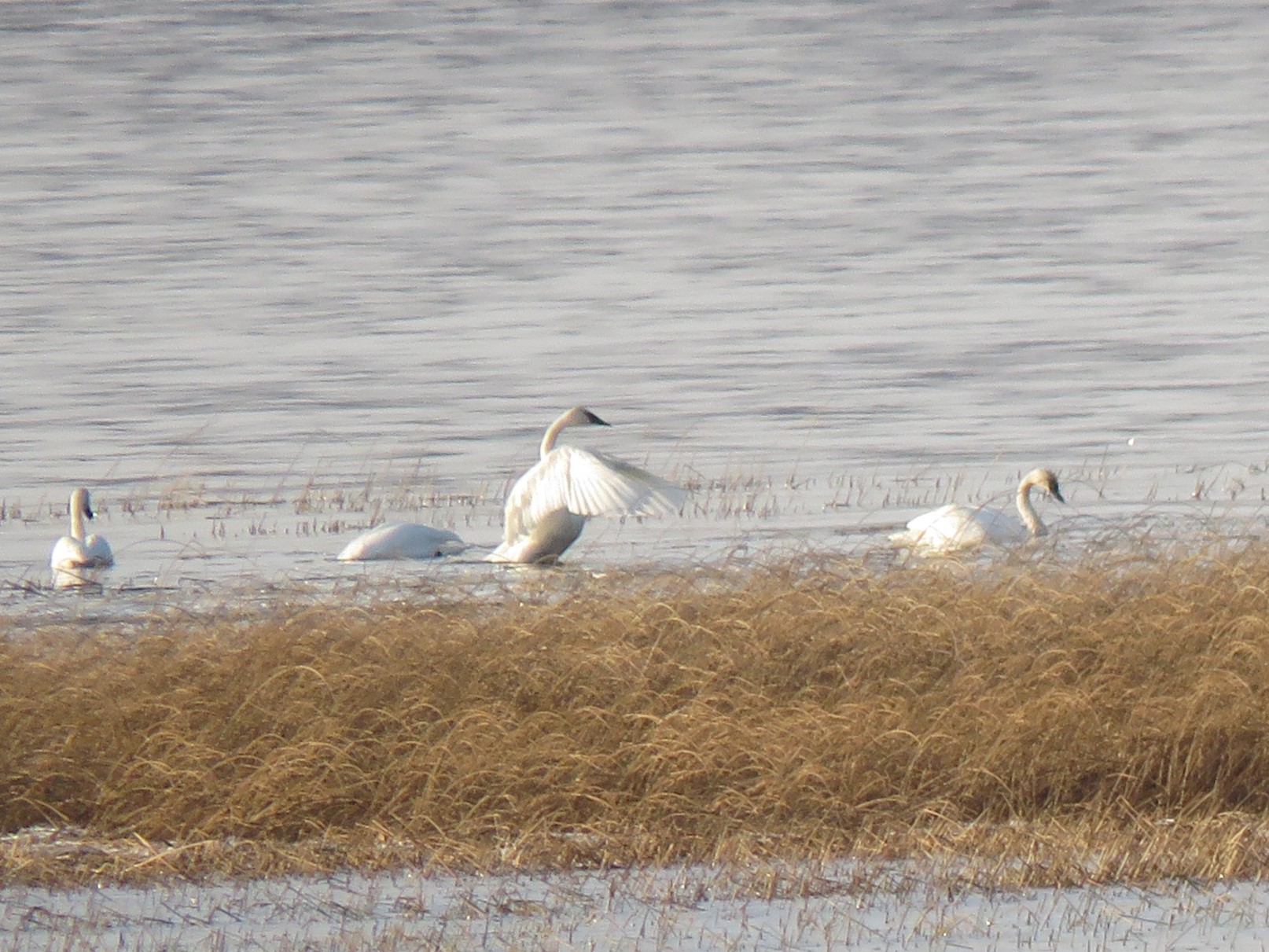
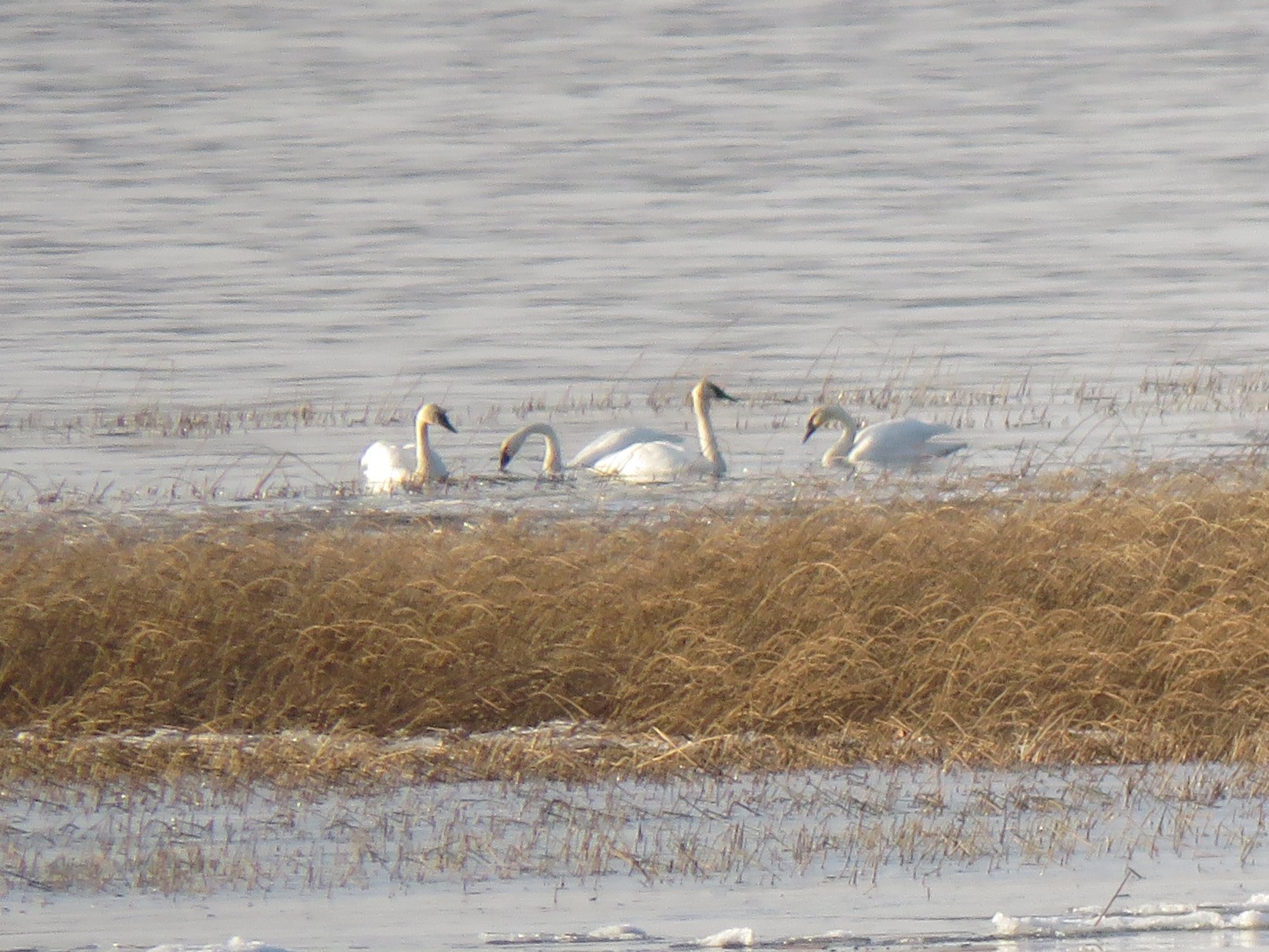
| Description of Habitat | Maquam Bay on Lake Champlain with shallow enough water depth to let these 4 swans feed near tall grass sticking out of the water. There were Common Goldeneyes & Bufflehead feeding nearby as well. |
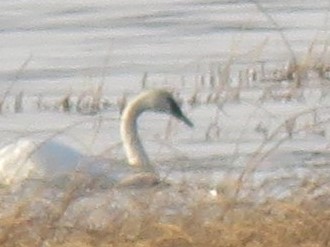
| Behaviors Observed | All 4 birds were mostly feeding with their heads and necks submerged and were also gently paddling back & forth while doing so. One did a standing flap. |
| Description of Vocalizations | I did not hear any sounds coming from the swans. |
| Verbal Narrative & Description of Observation | I spotted all 4 of them together and was able to get really great looks at them through my scope. They were completely white (except for their bills & eyes) and very large birds. I looked at each bird carefully and saw that they all showed black lores (with no yellow in them) at least as wide as their eyes (not pinched), a distinct V-shape at the base of their bills where they meet the foreheads (not a U-shape) and a fairly straight line along the edge of their bills, between their eyes and gapes. |
| Relative Size & Shape | Very large all white birds with big bodies and very long necks. |
| Head | The head, face, throat nape & neck were completely white. The tops of their heads did show a very slightly darker tone on them. Perhaps they were stains from feeding. . . |
| Feet & Bill | I never saw the legs or feet on any of these birds during my observation. Their bills were all black and showed a V-shape at the base of the bill where it meets the forehead. Their black lores were at least as wide as their black colored eyes. There was a fairly straight line along the side of their bills between their eyes and gapes. |
| Upper Back | Their upper backs were all white. |
| Lower Back & Rump | Their lower backs & rumps were all white. |
| Wings | Their wings were long, wide and all white. |
| Breast, Belly, Flanks, Under Tail Coverts | Their breasts, bellies, flanks and undertail coverts were all white. |
| Tail | Their tails were all white and short. |
| IMPORTANT: What similar species were eliminated when making the identification and how was this bird different? | Tundra Swan would be the one swan to eliminate as a possibility comparing them to these 4 Trumpeter Swans. Tundra would have been much smaller (14.4 lbs vs 23 lbs). |
| Other Notes & Comments | All 4 birds appeared to be adults because they were all white with black bills. Younger birds would have shown grayish coloration and a bi colored bill. I was able to make an accurate ID in the field but also used my photos to assist in m y descriptions. On 12/4/22 I added 2 more photos to help confirm the ID, which showed the V-shape at the base of the bill and the lores being at least as wide as the eye. |
| This report was written from notes taken: | Written from Memory |
Vermont Atlas of Life Partners