| Common Name | Pink-footed Goose |
|---|---|
| Scientific Name | Anser brachyrhynchus |
| Type of Report | Rare Species |
| Date of Observation | 03/22/2022 |
| Media | |
| Number Observed | 1 |
| Reporting Observer's Name | Scott Morrical |
| Mailing Address | 7 Baycrest Drive South Burlington, VT 05403 United States Map It |
| Email hidden; Javascript is required. | |
| Date Completed | 03/22/2022 |
| Latitude of Observation (enter 0 if unable to provide) | 44.1819151 |
| Longitude of Observation (enter 0 if unable to provide) | -73.099978 |
| Place Name | Bristol Pond Fishing Access |
| Township | Bristol |
| County | Addison |
| Vermont eBird Checklist URL | ebird.org |
| Time of Day | 11:45 AM |
| Length of Time Observed | 55 minutes |
| Maximum Estimated Distance from Bird (in feet) | 200 ft. |
| Minimum Estimated Distance from Bird (in feet) | 100 ft. |
| Noteworthy Weather Conditions | Sunny, wind from northwest ~15-20 mph, temperature ~44 degrees F. |
| Optical Equipment Used for Observation | Nikon Fieldscope with 30x lens, Nikon Monarch 5 8x42 binoculars, Canon EOS Rebel T3i DSLR camera with Canon EF 100-400mm 1:4.5-5.6 L IS zoom lens. |
| Observer’s Previous Acquaintance With This or Similar Species | Previous field experience with 1 other Pink-footed Goose - seen, studied, and documented on 4/11/2014 in Salisbury, VT. |
| I certify that any attachments included with this report were captured during this observation event. | |
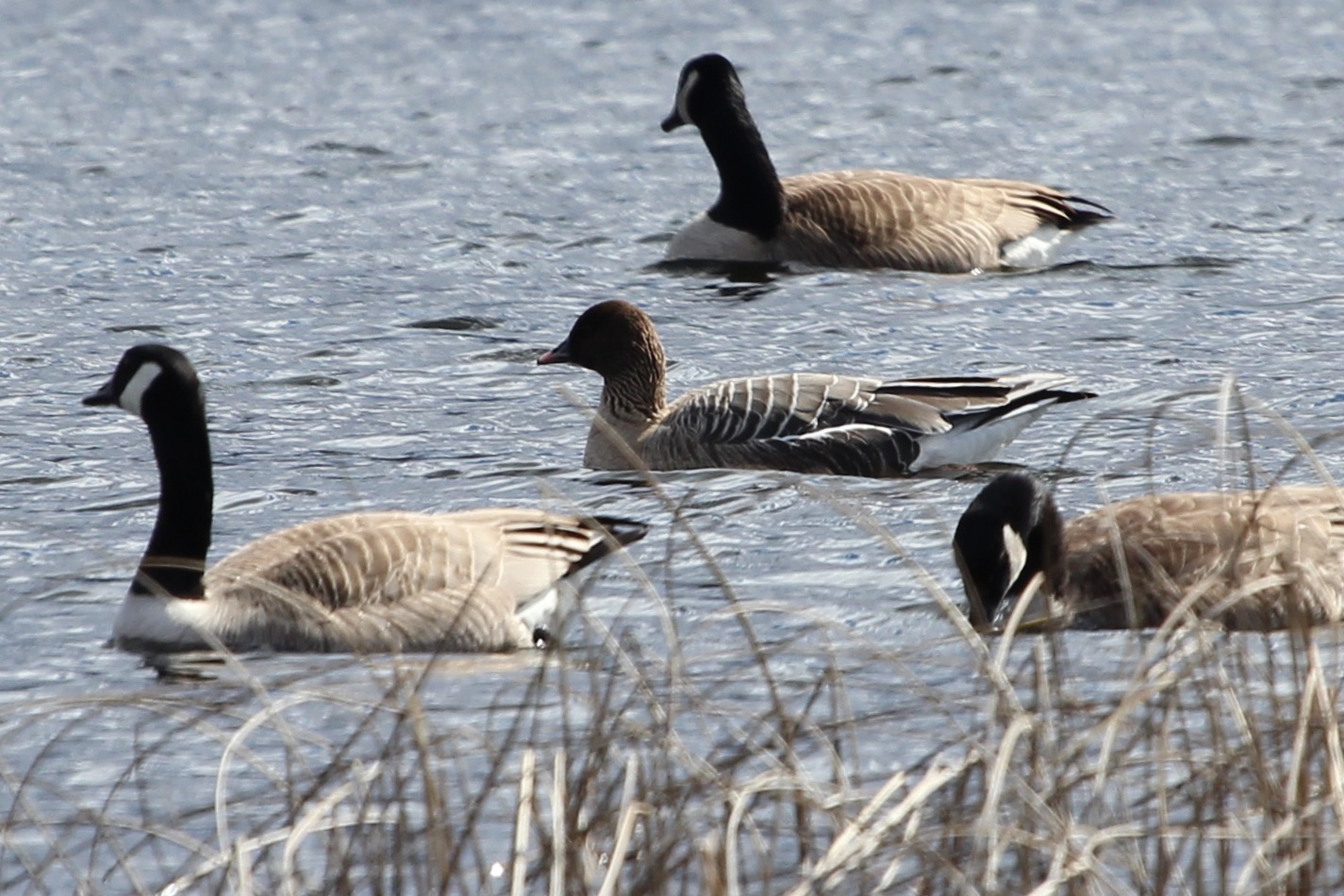
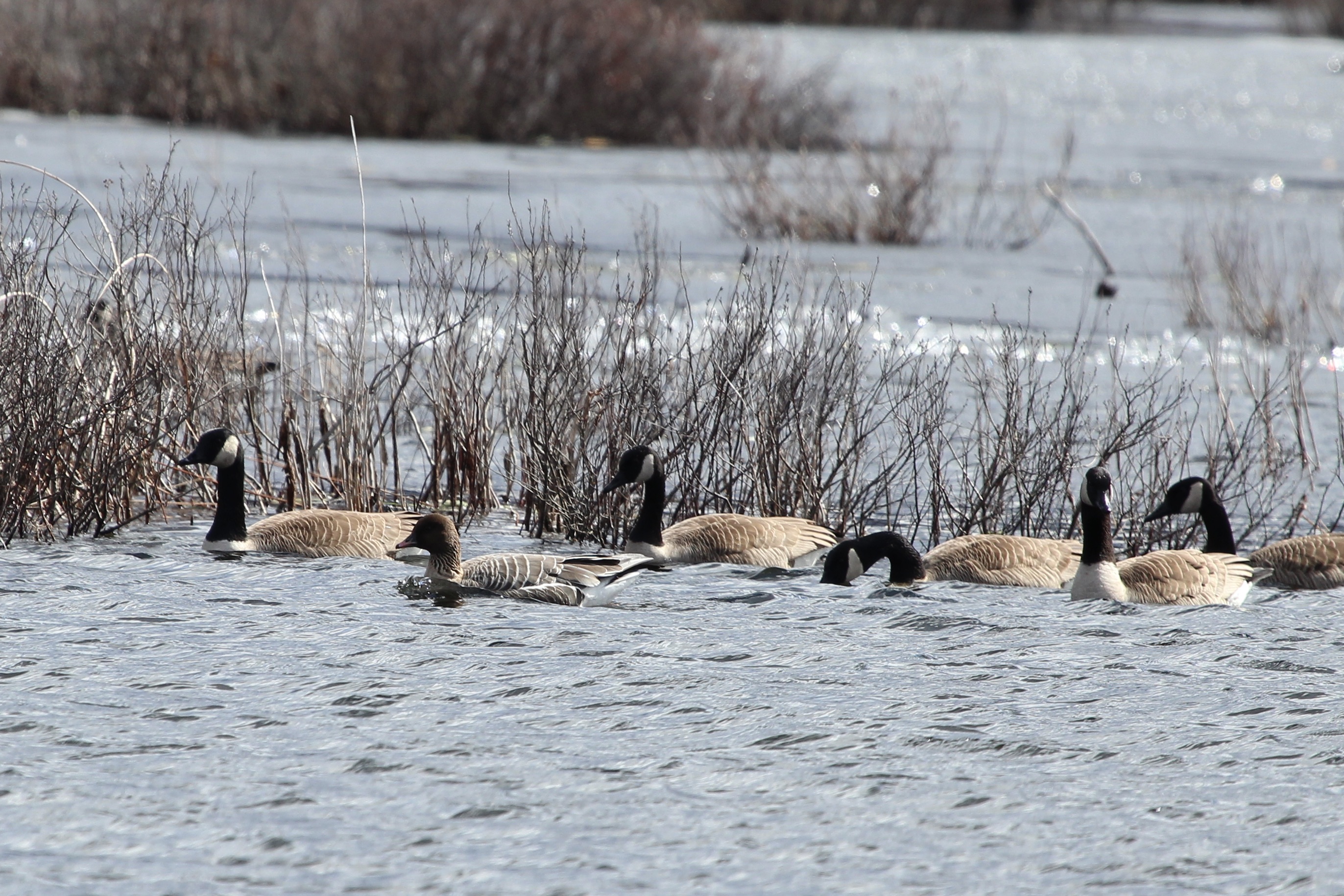
| Description of Habitat | Open water and scattered, flooded marsh vegetation at the north end of Bristol Pond. Bird was associated with a flock of ~ 70 Canada Geese, with perhaps more CAGOs hiding deeper in the marsh. |
| Behaviors Observed | Swimming only, usually in the company of several CAGO. No flight or feeding behavior observed. Peacefully integrated with CAGOs. No reaction to me or to other observers present. |
| Description of Vocalizations | None observed. |
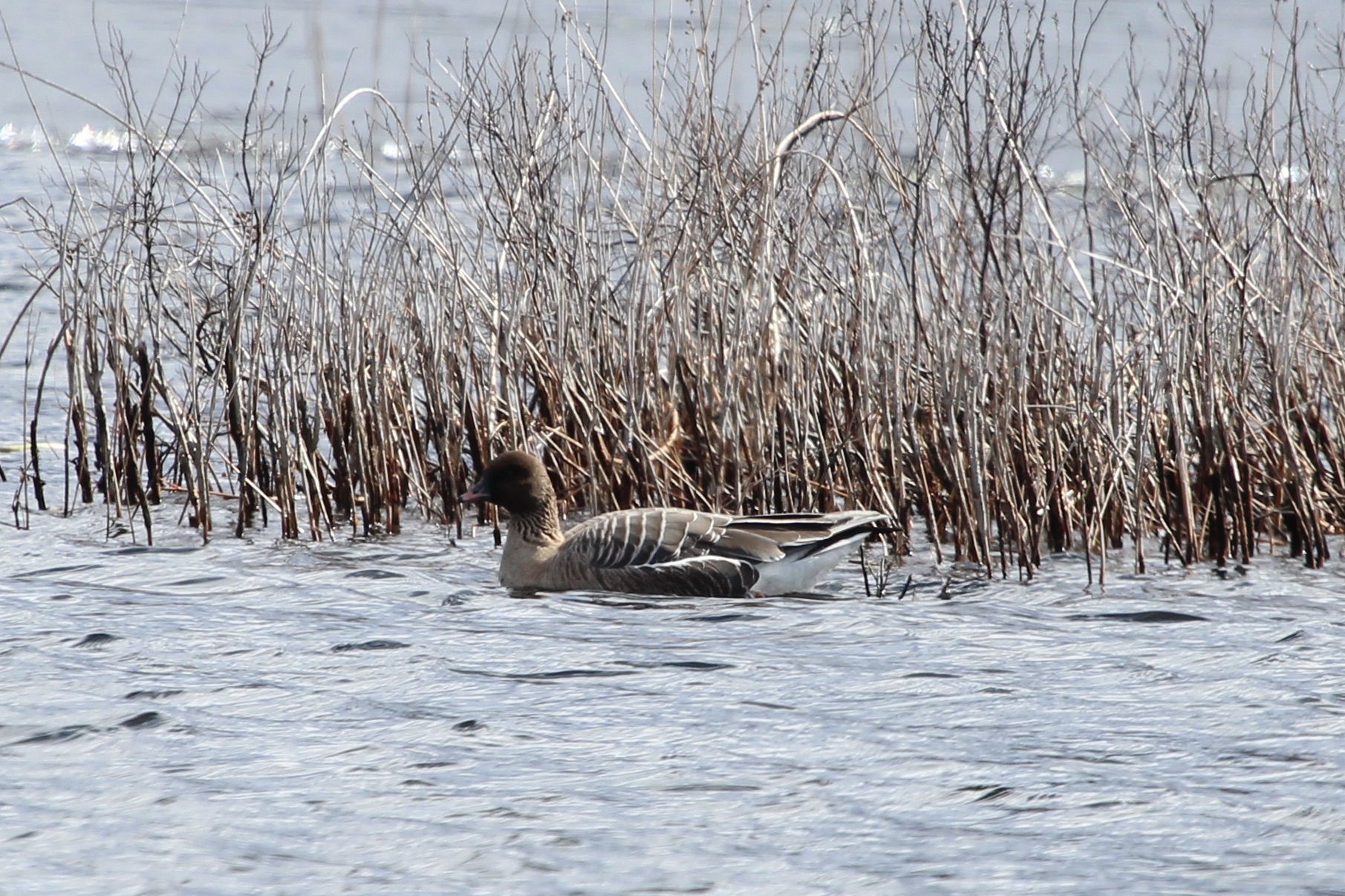
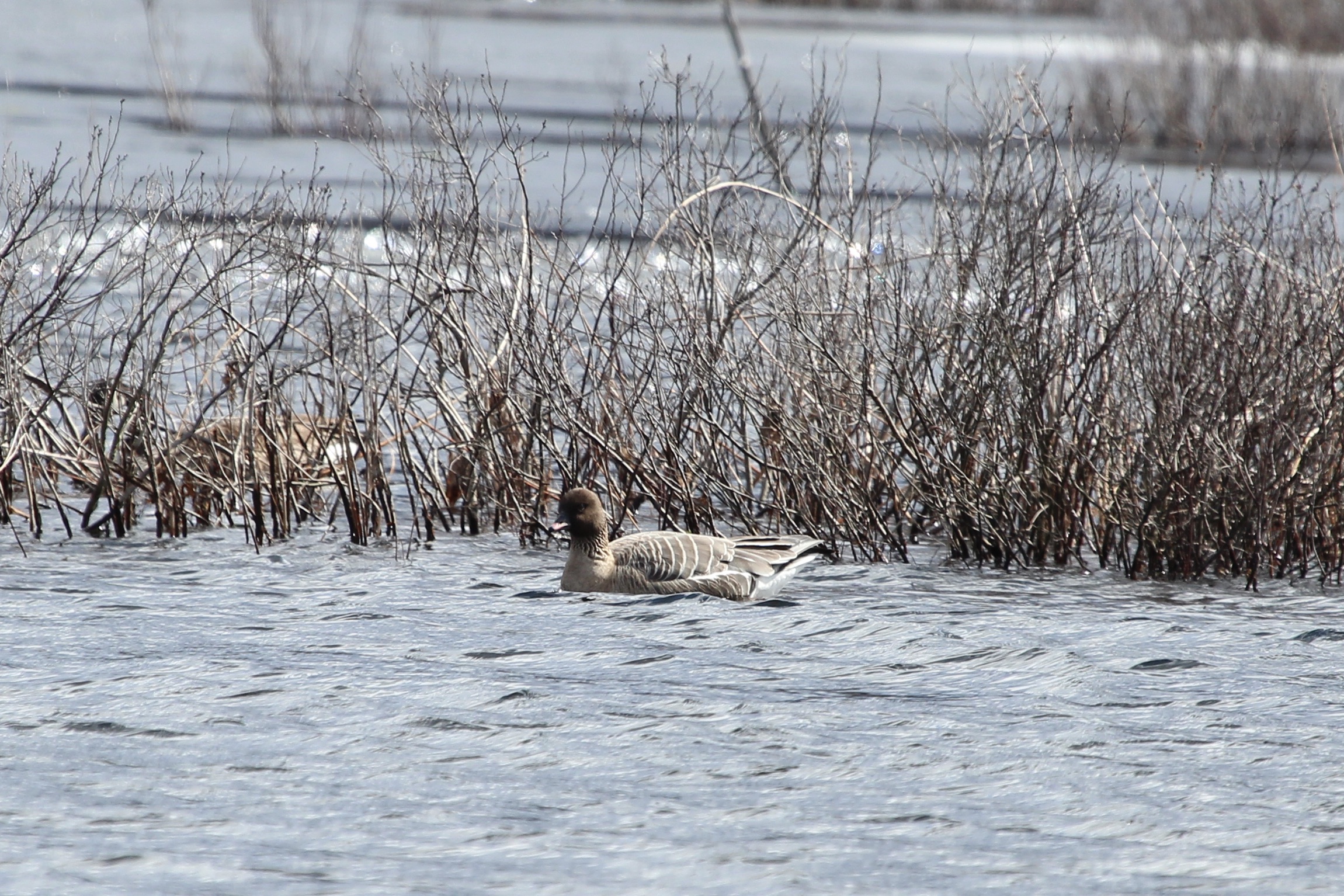
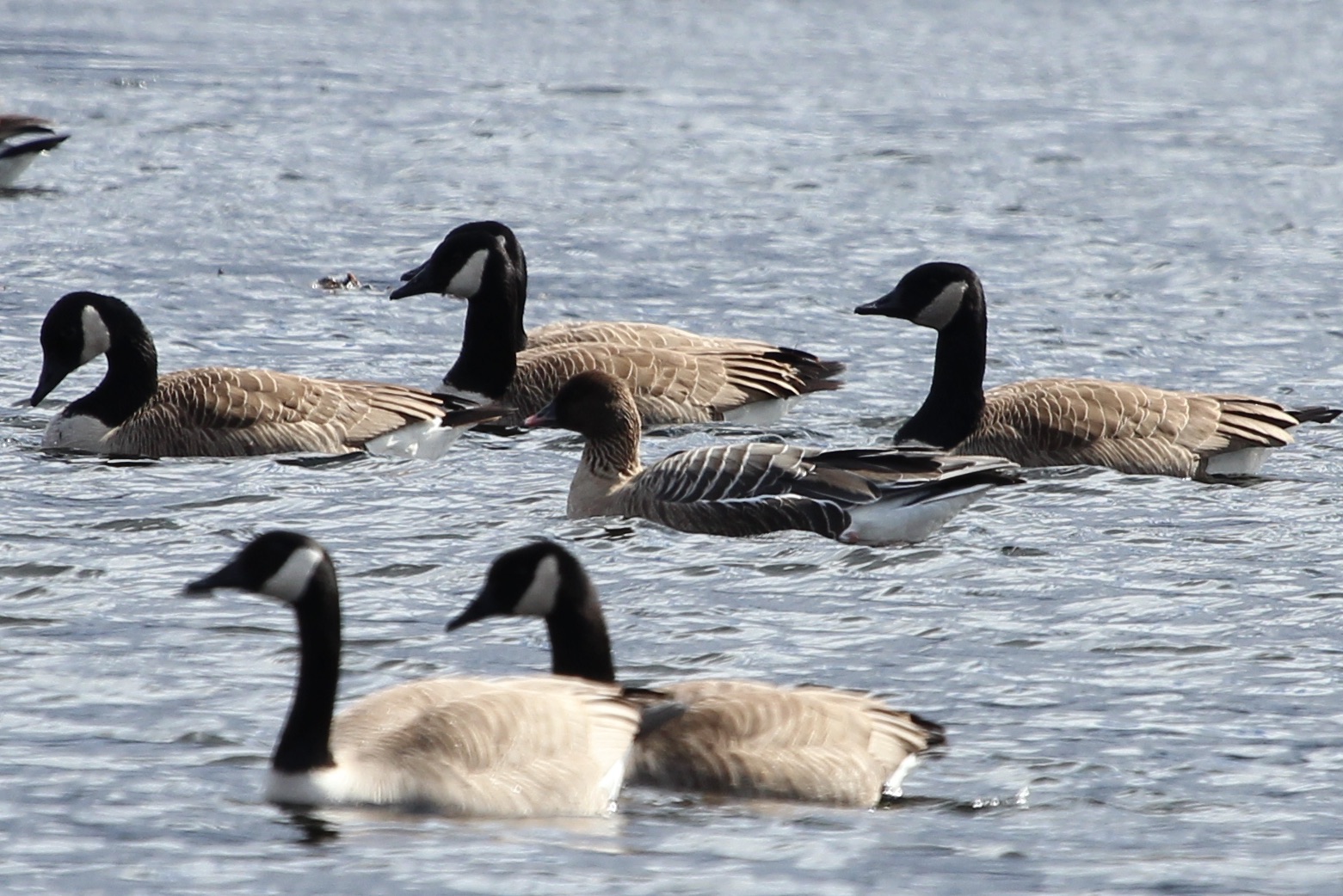
| Verbal Narrative & Description of Observation | I heard of the bird 3rd hand before any online reports had appeared (that I was aware of). I arrived at 11:45 AM and Clem Nilan was there who assured me that the bird was still present. It was easy to spot out on the open water with the CAGO flock. I noticed right away the small size, small bicolored bill with bright pink, boldly barred upperparts, and white side/flank stripe - marks characteristic for Pink-footed Goose. |
| Relative Size & Shape | Smaller, more slender, and with much shorter neck, smaller head, and smaller bill than CAGOs. |
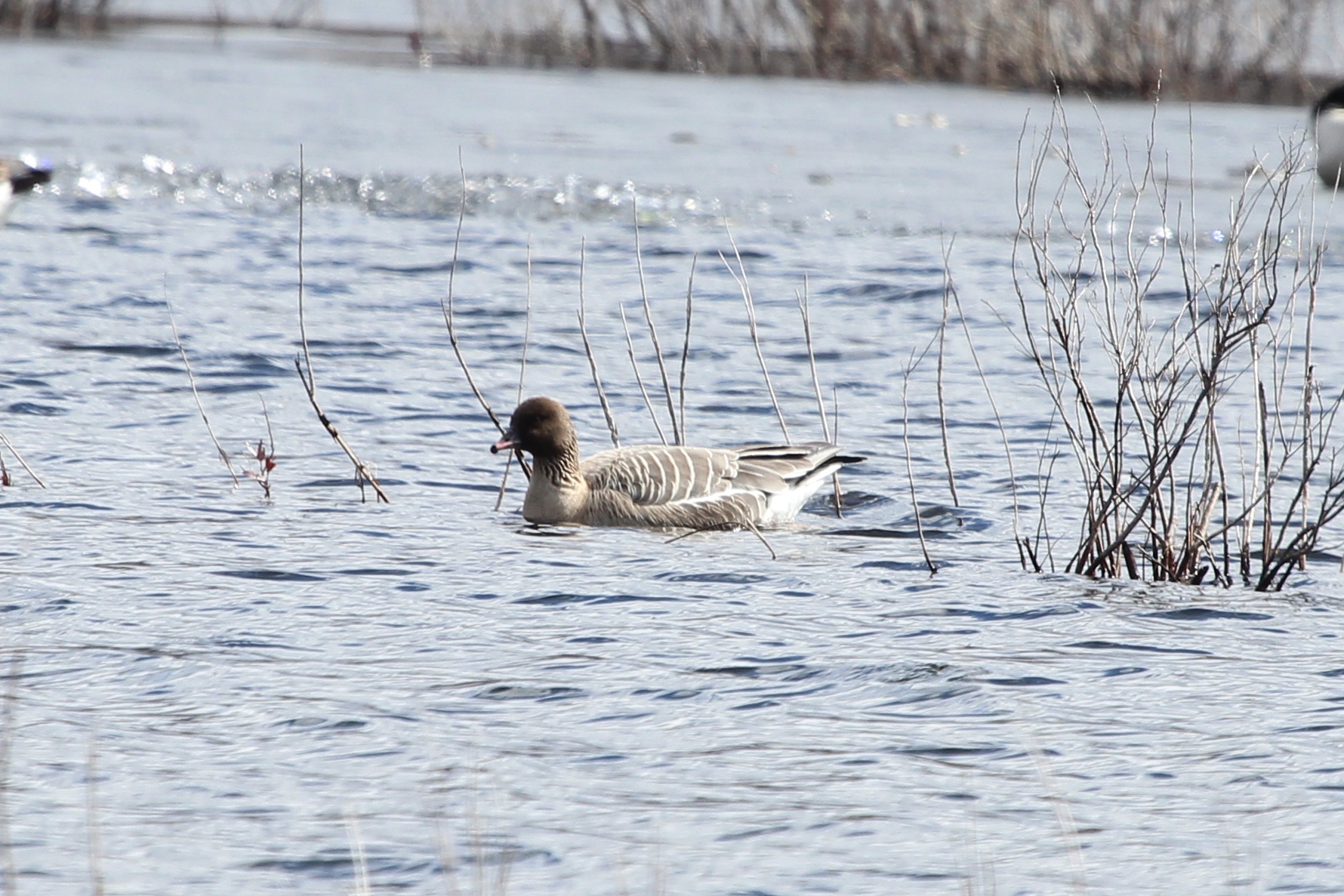
| Head | Small round head, brown incolor overall overall, appearing darker brown around eye and around base of bill and chin area. Dark eye. Sides of neck plus nape and throat distinctly furrowed with dark brown and pale tan stripes. |
| Feet & Bill | Bill small and short, bicolored in zones. Outer bill bright pink but with dark tip; base of bill dark gray. Legs and feet were not seen well in the field, but some of my photos show glimpses of bright pink legs. |
| Upper Back | Upper and lower back showed bold barring pattern due to sharply defined white tips on grayish-brown feathers. More contrastingly scalloped and a grayer shade of brown than on upperparts of Canada geese. |
| Lower Back & Rump | The rump was not observed. See above for back pattern. |
| Wings | The wings were always tucked away. Exposed tertials and primaries appeared grayish-brown with thin white edges. |
| Breast, Belly, Flanks, Under Tail Coverts | The breast was pale tan in color, and the undertail coverts were white. Most of the belly could not be seen. The flanks showed a bold white, horizontal stripe along the top edge, and otherwise were grayish-brown with a fainter version of the barring pattern seen on the back. |
| Tail | The tail could only be seen from the side. It appeared dark-centered, but with wide white edges on the outer tail feathers. |
| IMPORTANT: What similar species were eliminated when making the identification and how was this bird different? | Pink coloration on the bill and what could be seen of the legs eliminates both Tundra and Taiga Bean geese. So does the greater contrast between brown head and grayish-brown back of this bird (good for Pink-footed), versus the more uniformly brown head and back of Tundra or Taiga Bean based on field guide descriptions. (I have no field experience with Tundra or Taiga Bean Goose.) smaller, shorter bill structure and the more grayish brown Upperparts |
| Other Notes & Comments | Apparent adult. |
| This report was written from notes taken: | During the Observation |

Vermont Atlas of Life Partners