| Common Name | American Pipit |
|---|---|
| Scientific Name | Anthus rubescens |
| Type of Report | Out-of-Season |
| Date of Observation | 01/22/2022 |
| Media | |
| Number Observed | 1 |
| Reporting Observer's Name | Susan Elliott |
| Mailing Address | 62 Heather Ln Rutland, VT 05701 United States Map It |
| Email hidden; Javascript is required. | |
| Date Completed | 01/22/2022 |
| Names & Emails of Other Contributing Observers | Marvin Elliott, |
| Latitude of Observation (enter 0 if unable to provide) | 44.06031 |
| Longitude of Observation (enter 0 if unable to provide) | -73.382032 |
| Place Name | Jersey St South |
| Township | Addison |
| County | Addison |
| Vermont eBird Checklist URL | ebird.org |
| Time of Day | 02:30 PM |
| Length of Time Observed | 20 minutes |
| Maximum Estimated Distance from Bird (in feet) | 20' |
| Minimum Estimated Distance from Bird (in feet) | 10' |
| Noteworthy Weather Conditions | good viewing: bright sun, but lighting the bird from the side; no wind; temperature ~15 degrees F |
| Optical Equipment Used for Observation | Vortex Razor 8x32 (S Elliott); Vortex Viper 8x32 (M Elliott) |
| Observer’s Previous Acquaintance With This or Similar Species | seen in Vermont about five times; ID'd and photographed in Panton on Oct 30, 2014 and Island Pond on Sept 20, 2020; other sightings fleeting; sightings over the years in Texas, Utah and New Mexico |
| I certify that any attachments included with this report were captured during this observation event. | |
| Description of Habitat | grassy edge of road, about 2' wide, next to snow bank and snowy open field |
| Behaviors Observed | very actively feeding on the grassy edge of the road, oblivious to us sitting in the car, flipping its tail constantly; held itself in a somewhat upright position when its head wasn't down picking up food; it flew up a very short distance when a car approached from the opposite direction, but quickly returned to the same area; no other bird species in the immediate area |
| Description of Vocalizations | heard once briefly when it flew up, a two-part 'spit spit' |
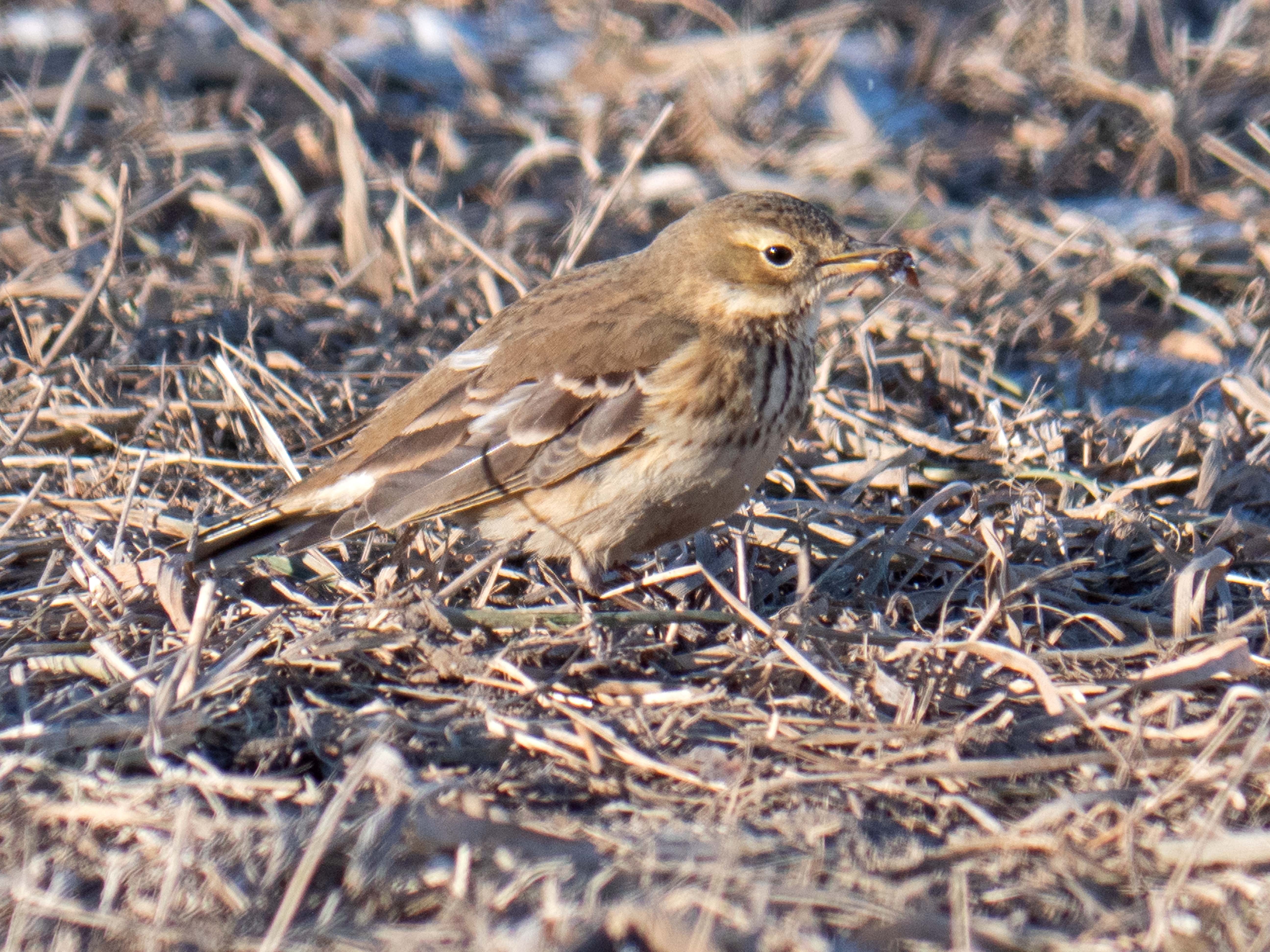
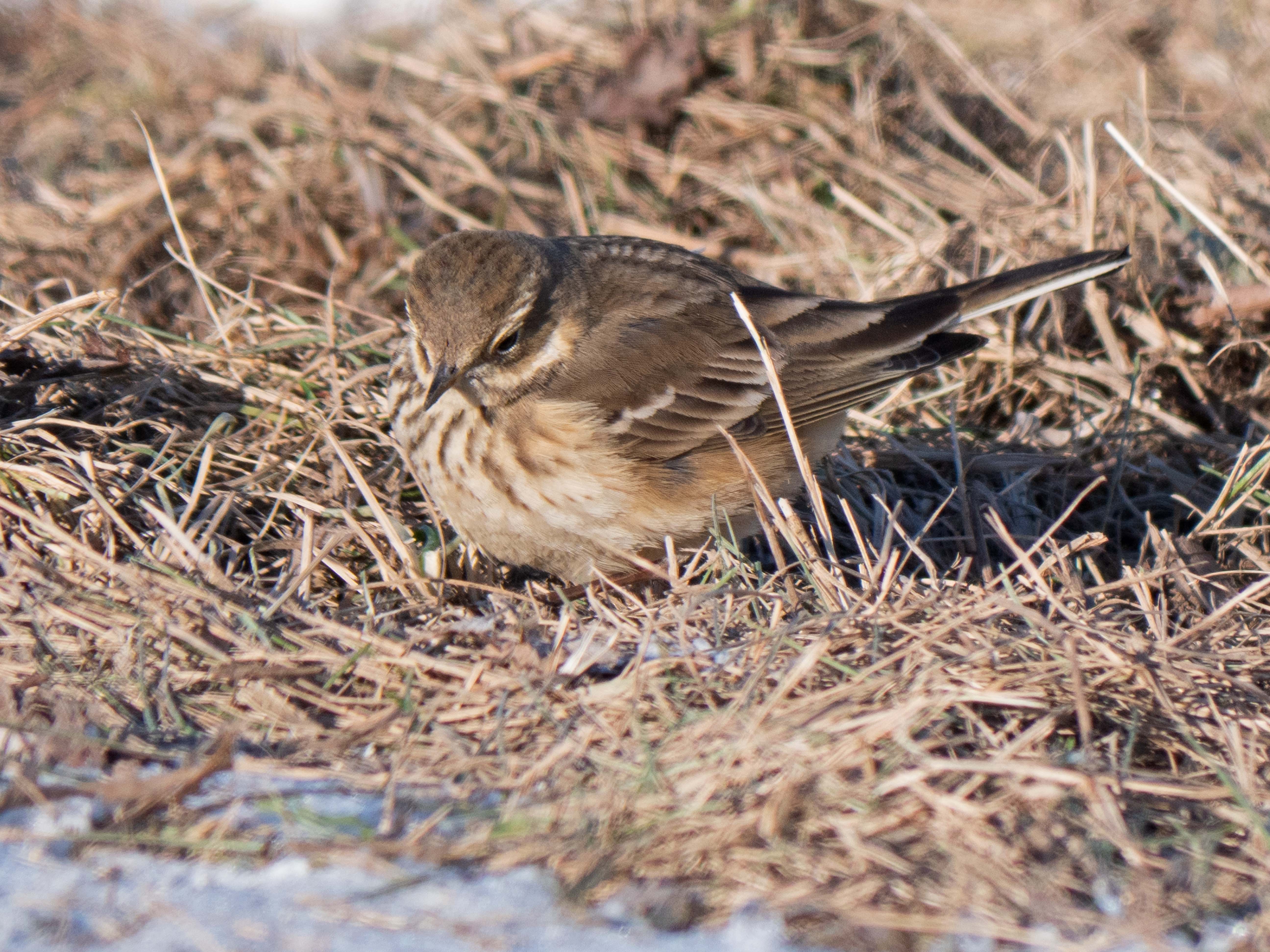
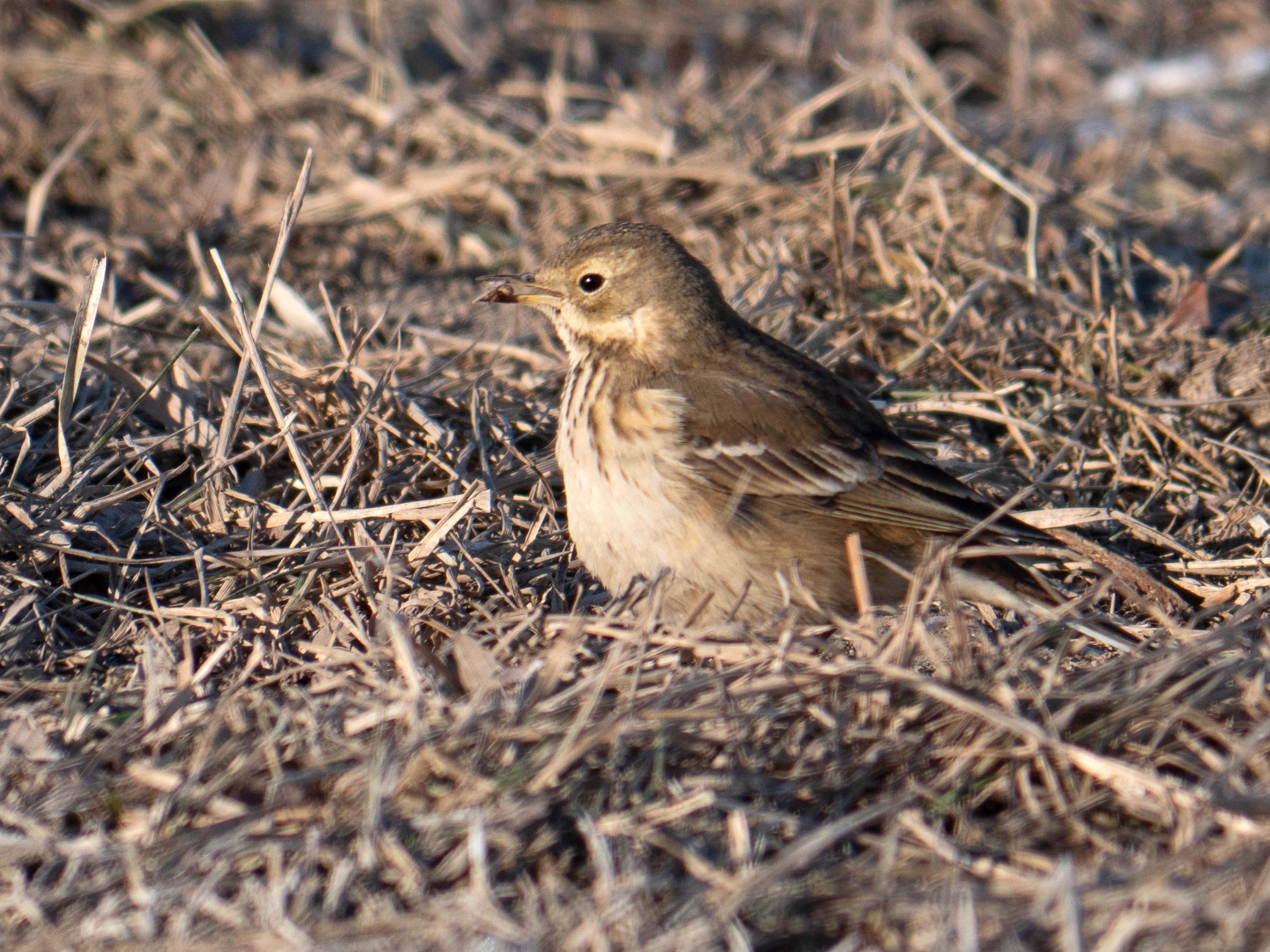
| Verbal Narrative & Description of Observation | The American Pipit was feeding non-stop in the weedy grass on the edge of the road, scouring the area quite thoroughly and only covering a few feet. The constant movement and flicking, long tail is what initially caught our attention. We watched and photographed it for several minutes before a second car came by and it flew off over the snowy field. |
| Relative Size & Shape | long, narrow appearance; held itself upright when not feeding |
| Head | dusty gray-brown head, nape same color with no markings; dusty gray-brown cheek with indistinct, creamy eye brow; eye dark; creamy throat |
| Feet & Bill | did not get a good view of the legs and feet as they were hidden in the grass; bill thin, upper bill looked dark, while lower bill was light yellow |
| Upper Back | dusty gray-brown, not obviously marked (some faint streaking) |
| Lower Back & Rump | same as upper back |
| Wings | hint of buffy wing bars; looked short compared to length of body |
| Breast, Belly, Flanks, Under Tail Coverts | breast creamy with thin vertical streaks; belly creamy and unmarked; flanks a buffier color brown than than of the back; did not see under tail coverts |
| Tail | tail long, white on edges particularly noticeable when it flew up |
| IMPORTANT: What similar species were eliminated when making the identification and how was this bird different? | first thought (expected) when initially spotted from a distance a female Horned Lark as Horned Lark is an expected species along road sides this time of year; behavior especially and shape ruled that out as well as lack of neck band |
| This report was written from notes taken: | Immediately After |
Vermont Atlas of Life Partners