| Common Name | Razorbill |
|---|---|
| Scientific Name | Alca torda |
| Type of Report | Rare Species |
| Date of Observation | 11/03/2021 |
| Media | |
| Number Observed | 1 |
| Reporting Observer's Name | Allan Strong |
| Mailing Address | 9 Sebring Road South Burlington, VT 05403 United States Map It |
| Email hidden; Javascript is required. | |
| Date Completed | 11/03/2021 |
| Names & Emails of Other Contributing Observers | Clem Nilan - |
| Latitude of Observation (enter 0 if unable to provide) | 44.268052 |
| Longitude of Observation (enter 0 if unable to provide) | -73.305187 |
| Place Name | Thompson's Point |
| Township | Charlotte |
| County | Chittenden |
| Time of Day | 08:08 AM |
| Length of Time Observed | 14 minutes |
| Maximum Estimated Distance from Bird (in feet) | 0.4 mi |
| Minimum Estimated Distance from Bird (in feet) | 0.5 mi |
| Noteworthy Weather Conditions | Partly cloudy, a little hazy as the air temp was cooler than the water. |
| Optical Equipment Used for Observation | 15-60x Kowa TSN-82 |
| Observer’s Previous Acquaintance With This or Similar Species | I have seen thousands of Razorbills on the east coast. I have seen thousands of Common Murres on the west coast. I have only seen a few Thick-billed Murres. |
| I certify that any attachments included with this report were captured during this observation event. | |
| Description of Habitat | Open water (Lake Champlain) |
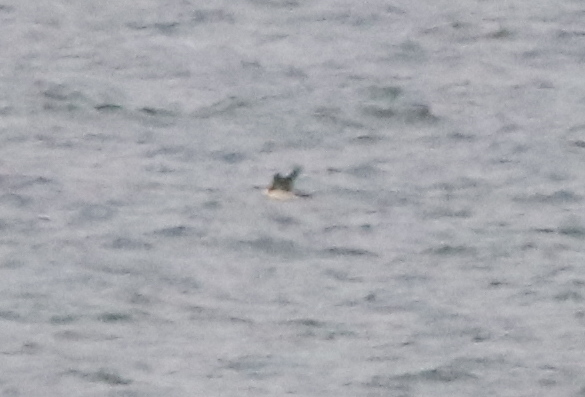
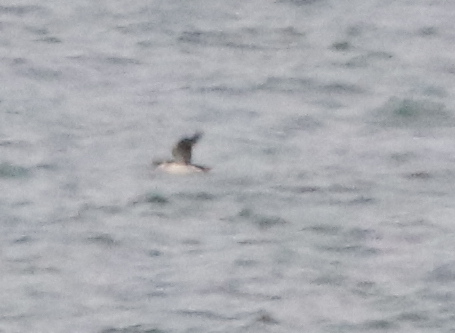
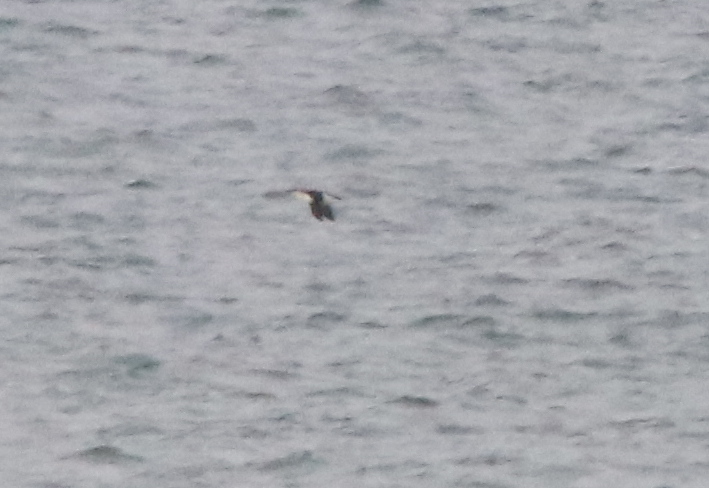
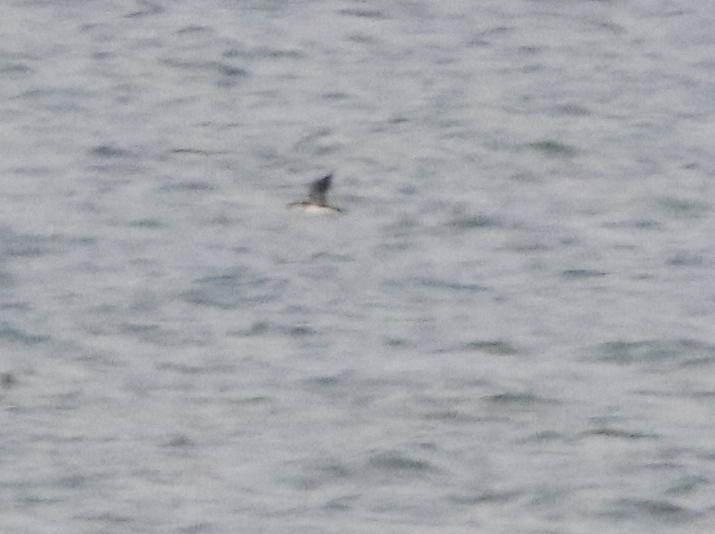
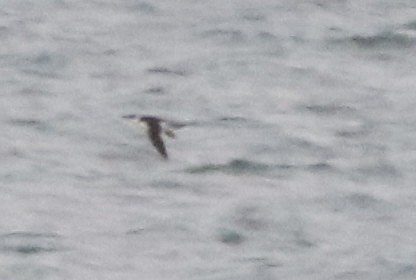
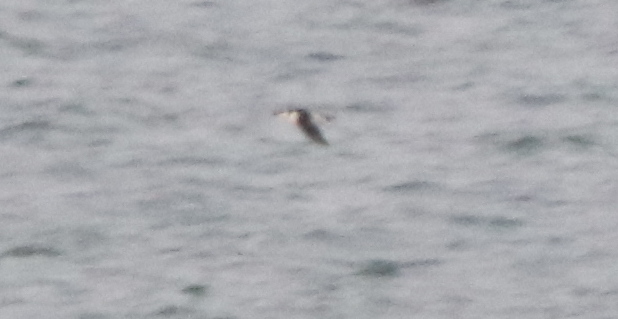
| Behaviors Observed | Jim Mead first spotted the bird flying into view from the north. It landed on the water and he was able to get all of us on the bird. It dove several times during this period, but we were all able to get looks at the bird through spotting scopes. The bird then got up and flew south and out of site. Pictures were taken as the bird flew past us to the south. |
| Description of Vocalizations | None |
| Verbal Narrative & Description of Observation | The key ID features that we noticed during the observation were noted in the eBird submission. Although we were able to get a nice view of the bird in flight and get some record photos, watching the bird on the water provided the most diagnostic field marks. As you can see from the admittedly poor photos, we clearly had a large alcid, one of three species - Razorbill, Common Murre, or Thick-billed Murre. We outline the key features that led us to the ID of Razorbill below. |
| Head | (Also adding some notes on the neck here). Although distant, we were able to watch the bird on the water off and on for ~10 minutes. The bird's posture was typical of a Razorbill, which often sit on the water with their head held above the horizontal, somewhat reminiscent of a RTLO. Importantly, the bill was clearly deep and not particularly long, unlike a Common Murre, which would have a thinner, narrower bill. Again, our look was distant, but we clearly got the impression of a shorter, stouter bill. The head markings were consistent with Razorbill in that we could see a dark cap contrasting with white cheeks. We did not observe a dark stripe leading back from the eye, which would be present on Common Murre. The pictures are certainly not diagnostic, but we could not see the Common Murre eyestripe on any of the pictures. The pattern on the face rules out Thick-billed Murre, which have much less contrast (essentially a smudgy gradation) between the black nape and white chin and throat. Our bird had very sharp contrast between the dark cap and nape and the white chin and throat. Although the bill of a Thick-billed Murre would be more similar to a Razorbill, the sharp demarcation between head/nape and throat/chin that we observed should completely eliminate TBMU (which we don't address any further in this RSD). |
| Feet & Bill | Bill was dark, appearing black. We could not make out any markings on the bill. |
| Upper Back | Black |
| Lower Back & Rump | Black |
| Wings | In flight, the wings were paddle-like. One feature distinguishing Common Murre from Razorbill is that the underwing coverts are pure white in RAZO, but show some duskiness in COMU, particularly where the underwing coverts meet the sides and belly. That one of the pictures (8772) clearly shows a white underwing that does not contrast with the white belly is (weak) evidence pointing to Razorbill. |
| Breast, Belly, Flanks, Under Tail Coverts | We could not see any barring or streaking on the flanks while the bird was sitting on the water. The contrast between the back and folded wings and the white belly and flanks appeared to be very sharp. Again, a distant look, but this feature rules out Common Murre, which should have some barring or streaking in the flanks, making the contrast between the wings and back and the belly less contrasting. |
| Tail | Nothing significant noted. Although Razorbills often cock their tail when sitting on the water, we did not note this feature. |
| IMPORTANT: What similar species were eliminated when making the identification and how was this bird different? | In addition to the points noted above, we saw aspects of the general shape of the bird in flight as helping to eliminate Common Murre. In flight, Razorbills tend to show a very smooth arc from the bill to the tail, with the middle of the back being the highest part of the bird and no sharp angles from the bill to the tail. Common Murres show a similar general shape, but their longer, narrow bill tends to create an angle with the forehead, and they tend to crook their neck in flight, such that the back and the base of the neck meet at an angle, rather than in a smooth arc. The smooth arc was noted by us while the bird was in flight and again, the pictures are not great, but can be seen on 8758 and 8769. |
| This report was written from notes taken: | Written from Memory |



Vermont Atlas of Life Partners