| Common Name | Western Sandpiper |
|---|---|
| Scientific Name | Calidris mauri |
| Type of Report | Rare Species |
| Date of Observation | 09/25/2021 |
| Media | |
| Number Observed | 1 |
| Reporting Observer's Name | Scott Morrical |
| Mailing Address | 7 Baycrest Drive South Burlington, VT 05403 United States Map It |
| Email hidden; Javascript is required. | |
| Date Completed | 09/27/2021 |
| Names & Emails of Other Contributing Observers | David Guertin - all photo credits belong to Dave. Note: This bird was still present on the morning of 9/26/21 according to an eBird report by Tim Blanshard (checklist S95210044), whom I have not spoken with. |
| Latitude of Observation (enter 0 if unable to provide) | 44.149982 |
| Longitude of Observation (enter 0 if unable to provide) | -73.321562 |
| Place Name | Dead Creek - Panton Road Crossing |
| Township | Panton |
| County | Addison |
| Vermont eBird Checklist URL | ebird.org |
| Time of Day | 08:05 AM |
| Length of Time Observed | ~20 min, + ~20 min starting at ~9:00 AM |
| Maximum Estimated Distance from Bird (in feet) | 40 |
| Minimum Estimated Distance from Bird (in feet) | 150 |
| Noteworthy Weather Conditions | Clear, temperature ~60 degrees F, light winds. This was the morning after a significant rainstorm and front passage on the previous day. |
| Optical Equipment Used for Observation | SM - 30X Nikon Fieldscope. DG - spotting scope and digital SLR camera with telephoto lens. JE - equipment not known to reporting observer. |
| Observer’s Previous Acquaintance With This or Similar Species | Reporting observer has seen thousands of Western Sandpipers while a resident of and/or visitor to the San Francisco Bay Area and other shorebird hotspots in western North America. All three observers are familiar with small shorebirds common to Vermont including Semipalmated Sandpiper, Least Sandpiper, Dunlin, Baird's Sandpiper, White-rumped Sandpiper, etc. |
| I certify that any attachments included with this report were captured during this observation event. | |
| Description of Habitat | Low water in recent weeks has led to the exposure of significant mudflat areas around the Panton Rd. crossing of Dead Creek. These mudflats have attracted relatively large numbers of shorebirds of considerable diversity. The Western Sandpiper was seen on the mudflats closest to the boat launch on the southeast side of the bridge. It was walking on the mud at the edge of a small channel of water coming in from the east, which is called Holcomb Slang Creek on some maps, I believe. It moved around and behind some small clumps of weeds, but mostly stayed in the open muddy areas while it was in view. The bird was solitary, not associating with any other shorebirds although there were several Lesser and Greater Yellowlegs that it walked past, as well as 2 Pectoral Sandpipers in the slang. No other small peeps were present in the slang, although a small mixed flock of Semipalmated and Least Sandpipers was frequenting mud flats much further out (well south of the bridge). |
| Behaviors Observed | Neither I nor any of the other observers saw the bird in flight, as far as I know. Feeding actions consisted of deliberate pecking and shallow probing in the mud with the tip of its bill. The bird mostly stayed on the mud and rarely waded out into the water. There was no reaction to the observers as it was always at least 40 feet away and separated from our location by a stretch of shallow water. The bird was not interacting with other birds although a few larger shorebirds were present in the same general area. |
| Description of Vocalizations | None observed. |
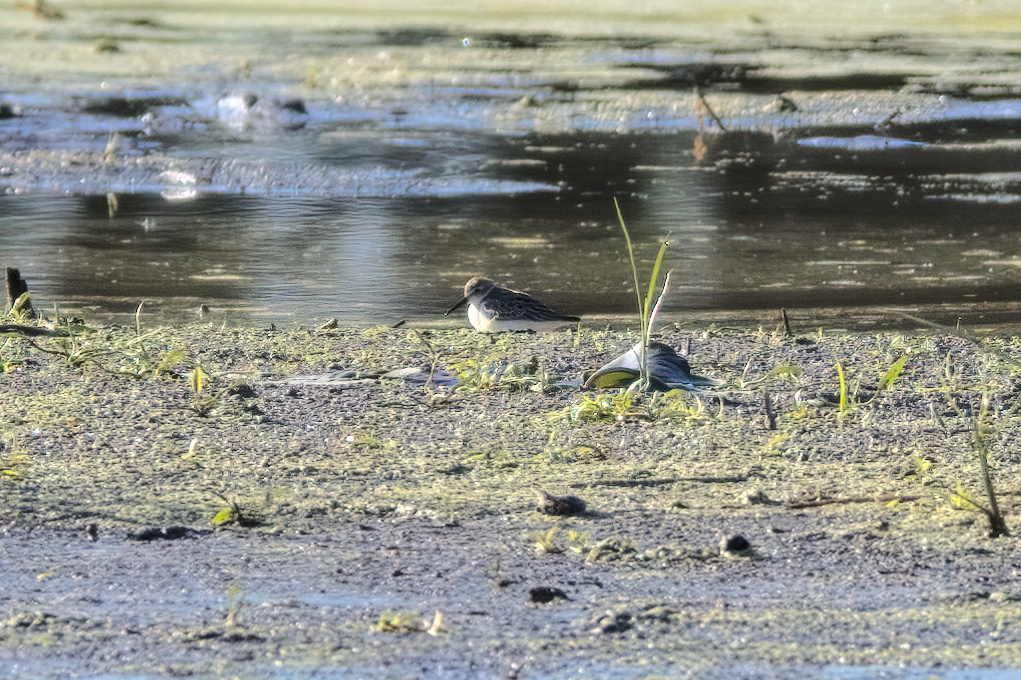
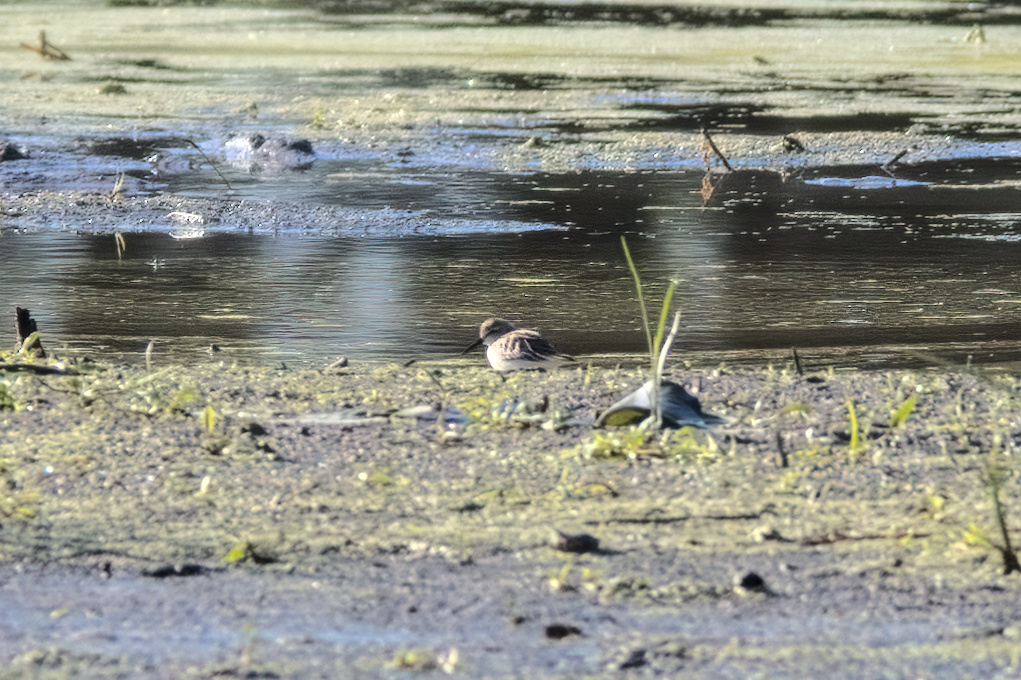
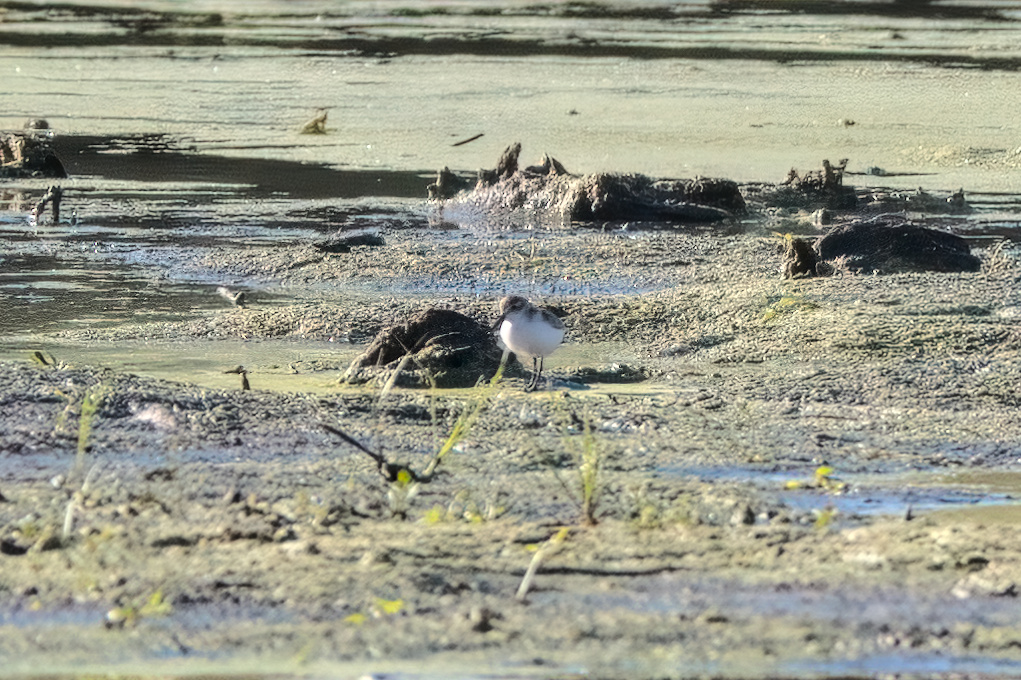
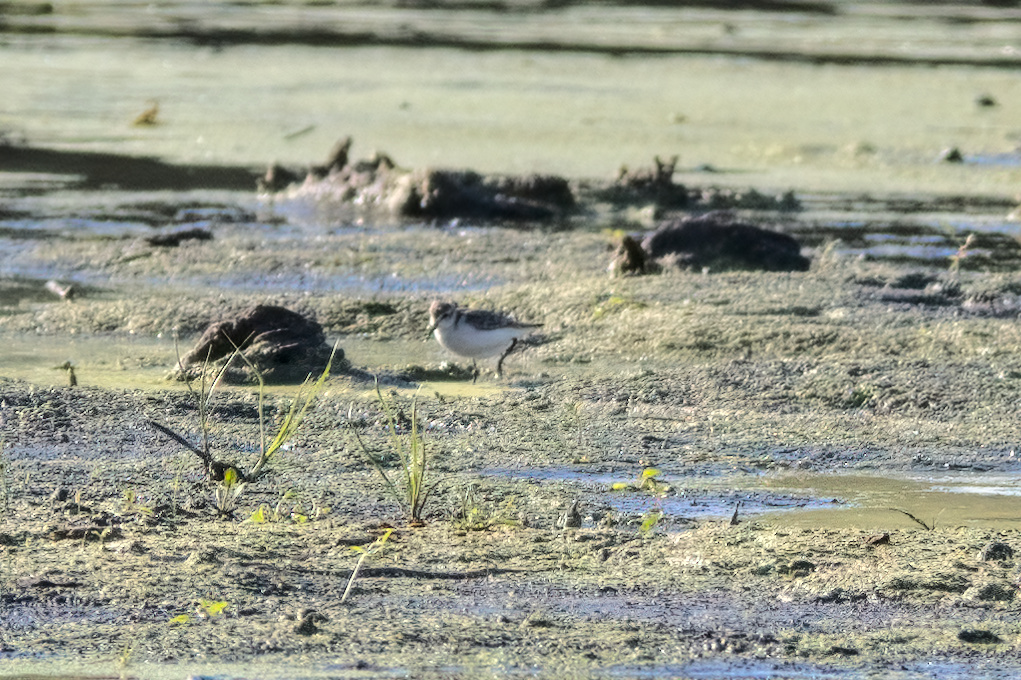
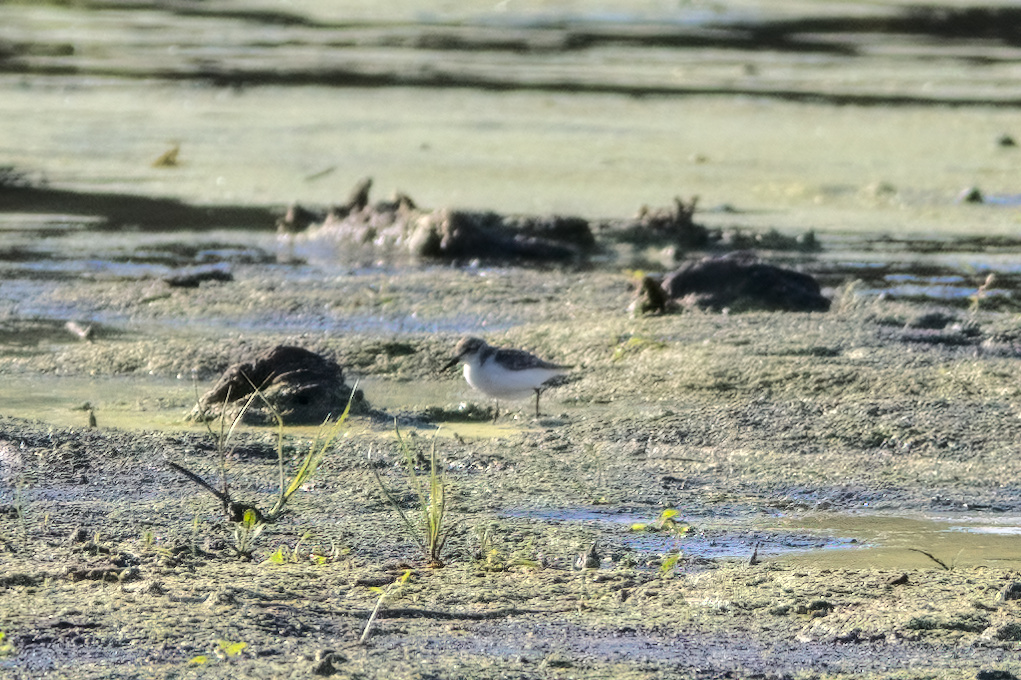
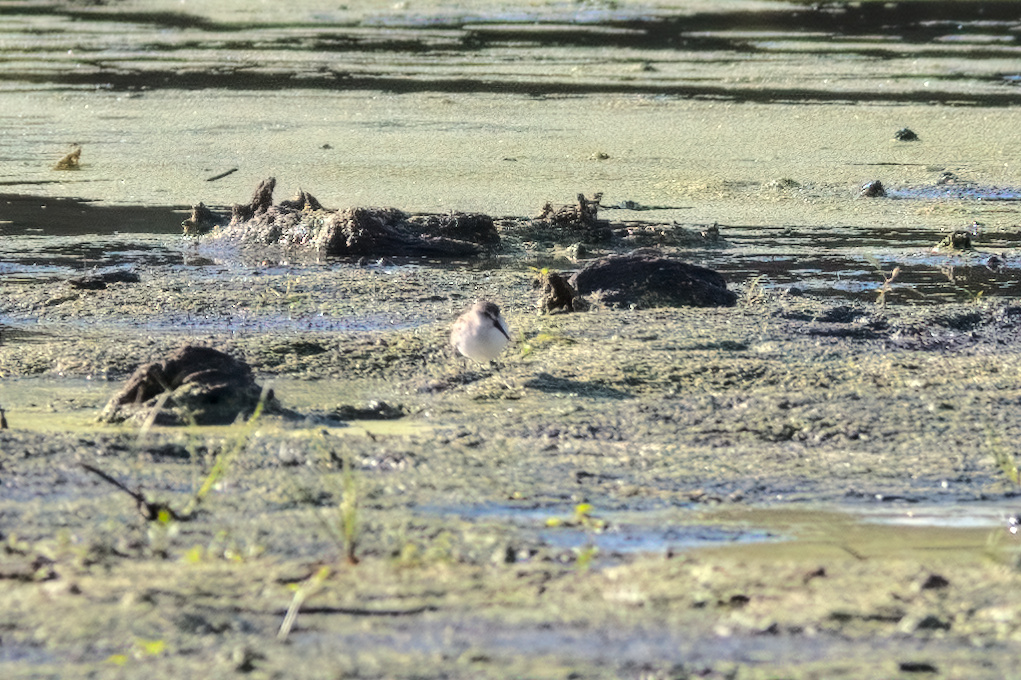
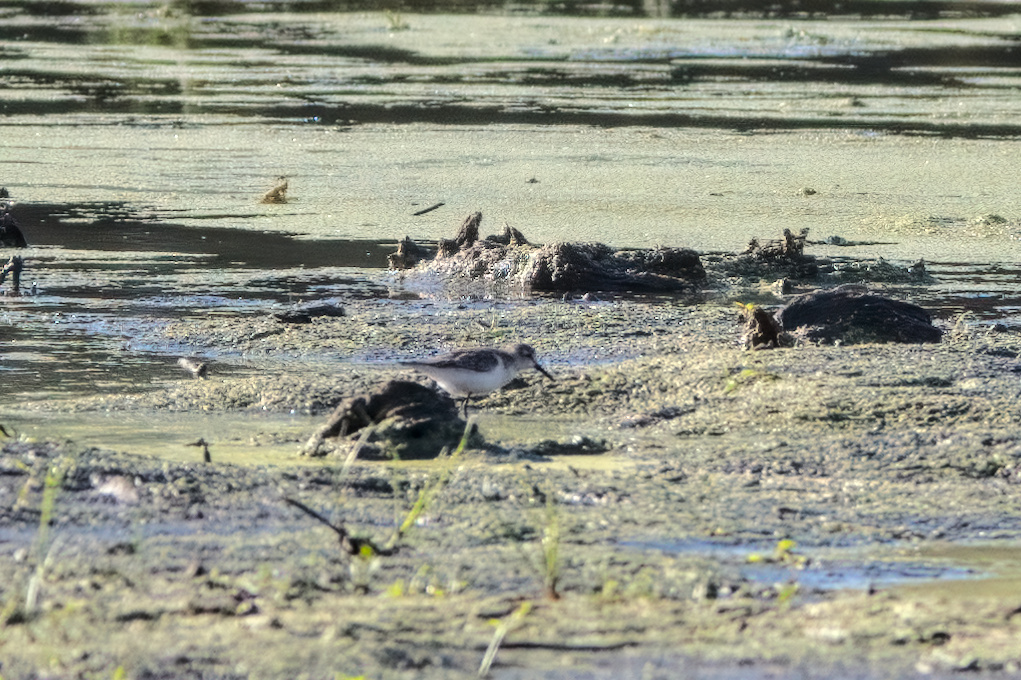
| Verbal Narrative & Description of Observation | I arrived at 8:00 AM, and found the bird almost immediately with my spotting scope, on the nearest mudflat about 40 ft. away. I watched it for ~20 min as it slowly worked its way eastward up the slang and out of view. My observations to that point had convinced me that the bird was almost certainly a Western Sandpiper, and that I could eliminate the most similar species, Semipalmated Sandpiper, by multiple field marks. I continued birding and checked the slang area every few minutes but did not relocate the bird. Dave Guertin arrived at ~8:45 AM and I informed him that I had seen what I thought was a Western Sandpiper. We both looked for it without success for several minutes, then Dave found it with his scope, back in the same area where I had first seen it. Dave was able to get several good photos of the bird (included with this report), which we continued to observe for ~20 minutes before I left. We discussed the bird and the photos, and both of us felt certain that this was a Western Sandpiper and not an outlier Semipalmated Sandpiper. Later, I learned that Jon Erickson had seen this bird at the same location before I had arrived that morning. However, Jon was uncertain of the ID until he talked to Dave later in the day and looked at Dave's photos. Most recently, I saw Tim Blanshard’s eBird report stating that he saw what was surely the same bird in the same location on the morning of 9/26/21, the day after we saw it. |
| Relative Size & Shape | The bird was clearly a small calidrid or "peep". My first impression was that it seemed relatively large and rounded in appearance compared to our common peeps, Least and Semipalmated Sandpipers. Its center of mass appeared to be shifted forward compared to the typical posture of the more slender Semipalmated Sandpiper. |
| Head | The crown, cheek, and nape were gray in color. There was a paler, elongated stripe on the face that that extended over the cheek patch and eye, onto the lores, and to the base of the bill. The throat was white, and the white color extended up onto the sides of the neck to create a collared effect. |
| Feet & Bill | The feet and legs were solid black and relatively long for a small peep. The bill was black and long, with a drooping tip that was easy to pick up in the scope, and which shows clearly in Dave's photos. The bill tapered to a relatively fine tip. |
| Upper Back | The upper back was slightly darker gray than the crown. Feathers had pale edges in scope views. No rufous color was visible. |
| Lower Back & Rump | Scapulars, wing coverts, and tertials all appeared gray with distinct pale edges. The edges were whitish, not buffy or rufous. The gray color of the lower back contrasted with the slightly lighter gray color of the nape and crown, which made the pale edges stand out. The rump was not seen by me, nor by other observers as far as I know. |
| Wings | The bird was not seen in flight by an observer, to the best of my knowledge. Tips of primaries were sometimes visible on the walking or resting bird, and they were blackish in color. Wing coverts and tertials were gray with pale linings as described above. There were no wingbars, rather an overall scaly effect. |
| Breast, Belly, Flanks, Under Tail Coverts | The breast, belly, flanks, and undertail coverts were mostly clean white in color, with the exception of a small area of fine streaks that extended down from the upper back onto the sides of the upper breast. The streaks did not extend across the center of the breast, which appeared to be clean white in both scope views and in the photos. |
| Tail | The tail was not seen by this observer or by the others, to the best of my knowledge. |
| IMPORTANT: What similar species were eliminated when making the identification and how was this bird different? | LEAST SANDPIPER was easily eliminated by this bird's black legs, by its relatively large size and rounded shape, and by its clean white throat and breast. |
| Other Notes & Comments | I believe that careful observations by Dave, Jon, and myself, augmented by the high quality photographs taken by Dave, clearly establish that this bird was a Western Sandpiper. I initially reported the bird as a juvenile molting into non-breeding plumage, but after further research and examining Dave's photos carefully, I believe it was just in adult non-breeding plumage. I believe so because there were no hints of any rufous in the upper scapulars and no contrast with the lower scapulars. This report was written from notes and discussions that Dave and I had during and immediately after our observations, and from my thoughts upon studying Dave's photos and sources including Hayman et al.'s "Shorebirds: An Identification Guide to the Waders of the World" (Houghton-Mifflin, 1986). |
| This report was written from notes taken: | During the Observation |
Vermont Atlas of Life Partners