| Common Name | Western Sandpiper |
|---|---|
| Scientific Name | Calidris mauri |
| Type of Report | Rare Species |
| Date of Observation | 09/11/2021 |
| Media | |
| Number Observed | 1 |
| Reporting Observer's Name | Martha McClintock |
| Mailing Address | 10 Forest Ln Westford, VT 05494-9783 United States Map It |
| Email hidden; Javascript is required. | |
| Date Completed | 09/27/2021 |
| Names & Emails of Other Contributing Observers | Bill McClintock |
| Latitude of Observation (enter 0 if unable to provide) | 45.00569281377633 |
| Longitude of Observation (enter 0 if unable to provide) | -73.1612105 |
| Place Name | Location Missisquoi NWR--Tip of delta, West Branch |
| Township | Swanton, VT |
| County | Franklin |
| Vermont eBird Checklist URL | ebird.org |
| Time of Day | 10:30 AM |
| Length of Time Observed | at least one half hour |
| Maximum Estimated Distance from Bird (in feet) | 50 ft |
| Minimum Estimated Distance from Bird (in feet) | 15 ft |
| Noteworthy Weather Conditions | Partly to mostly sunny but very windy. Many birds were hunkered down behind grass hummocks for shelter. |
| Optical Equipment Used for Observation | Nikon Monarch 10 x 42, Canon EOS Rebel T6i with 400 mm zoom, Celestron Regal M2 80ED |
| Observer’s Previous Acquaintance With This or Similar Species | I have seen two before. One last year at the same place. Once at Plum Island where it was pointed out to me by another birdrer |
| I certify that any attachments included with this report were captured during this observation event. | |
| Description of Habitat | At the edge of the sandbar at the west branch of Mississquoi delta. There were a number of loose piles of grasses. |
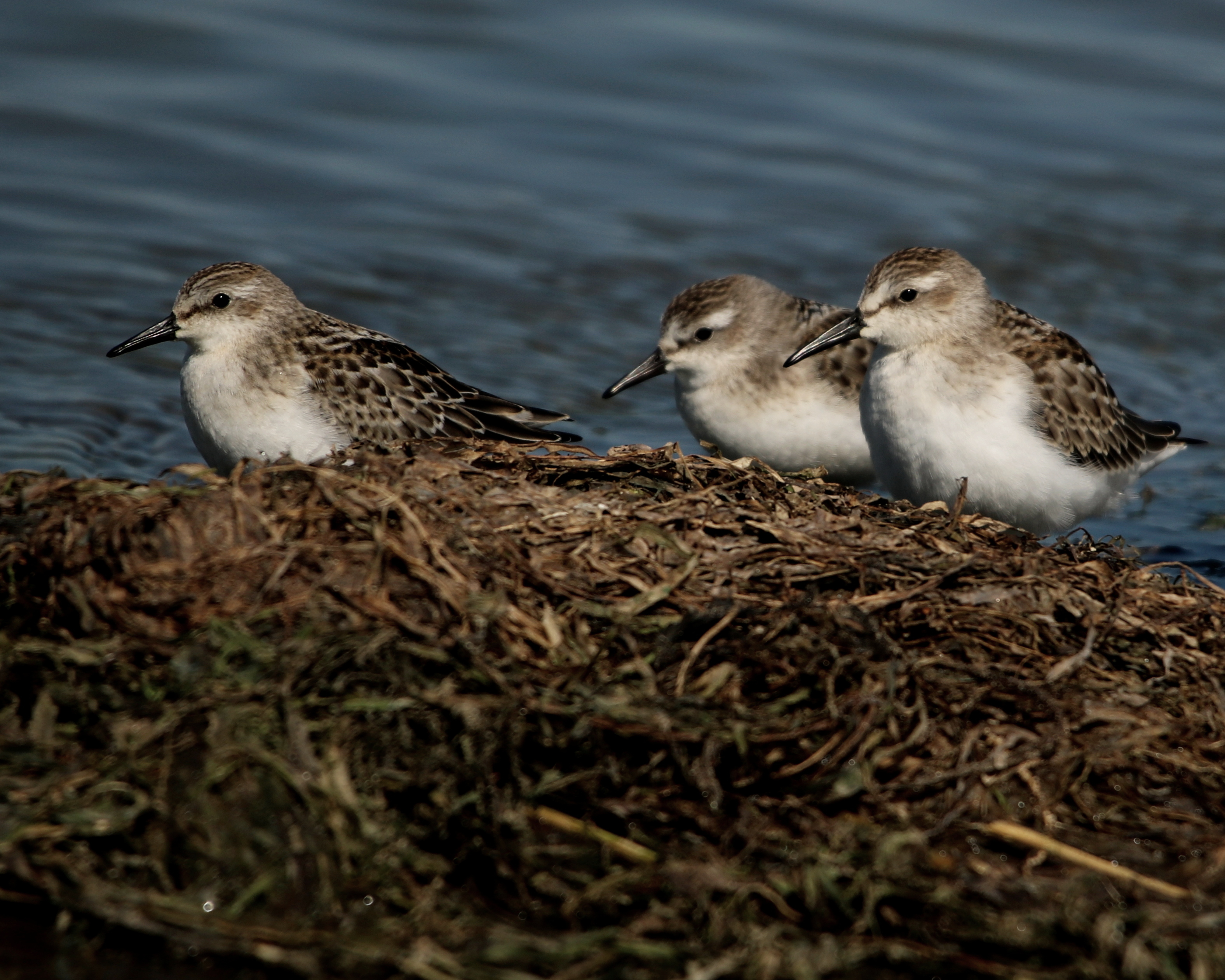
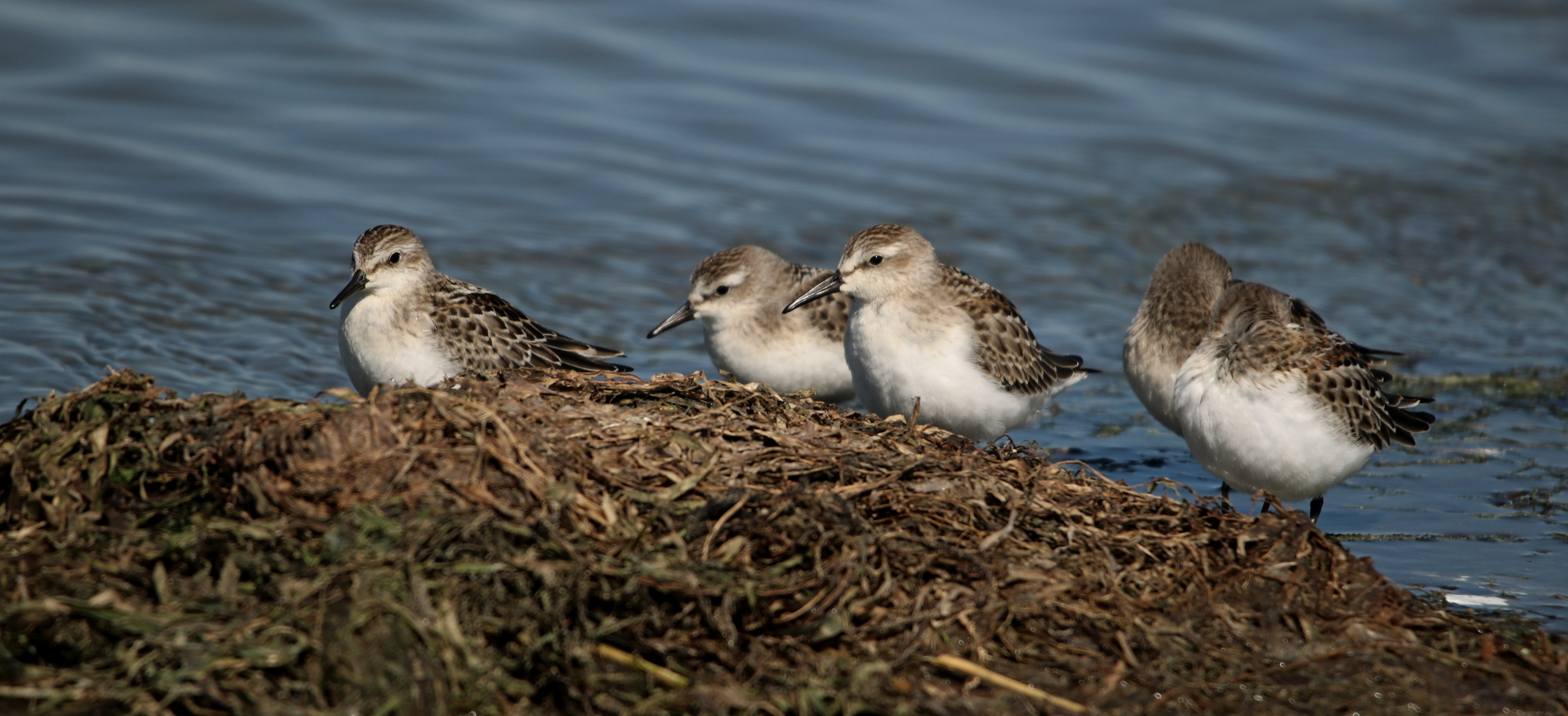
| Behaviors Observed | When first seen, it was huddled, sleeping, with three other birds on the leeward side of a pile of grasses near the water line. I came back and observed it several time and the last time, it was up and moving around but not really feeding. |
| Description of Vocalizations | None heard |
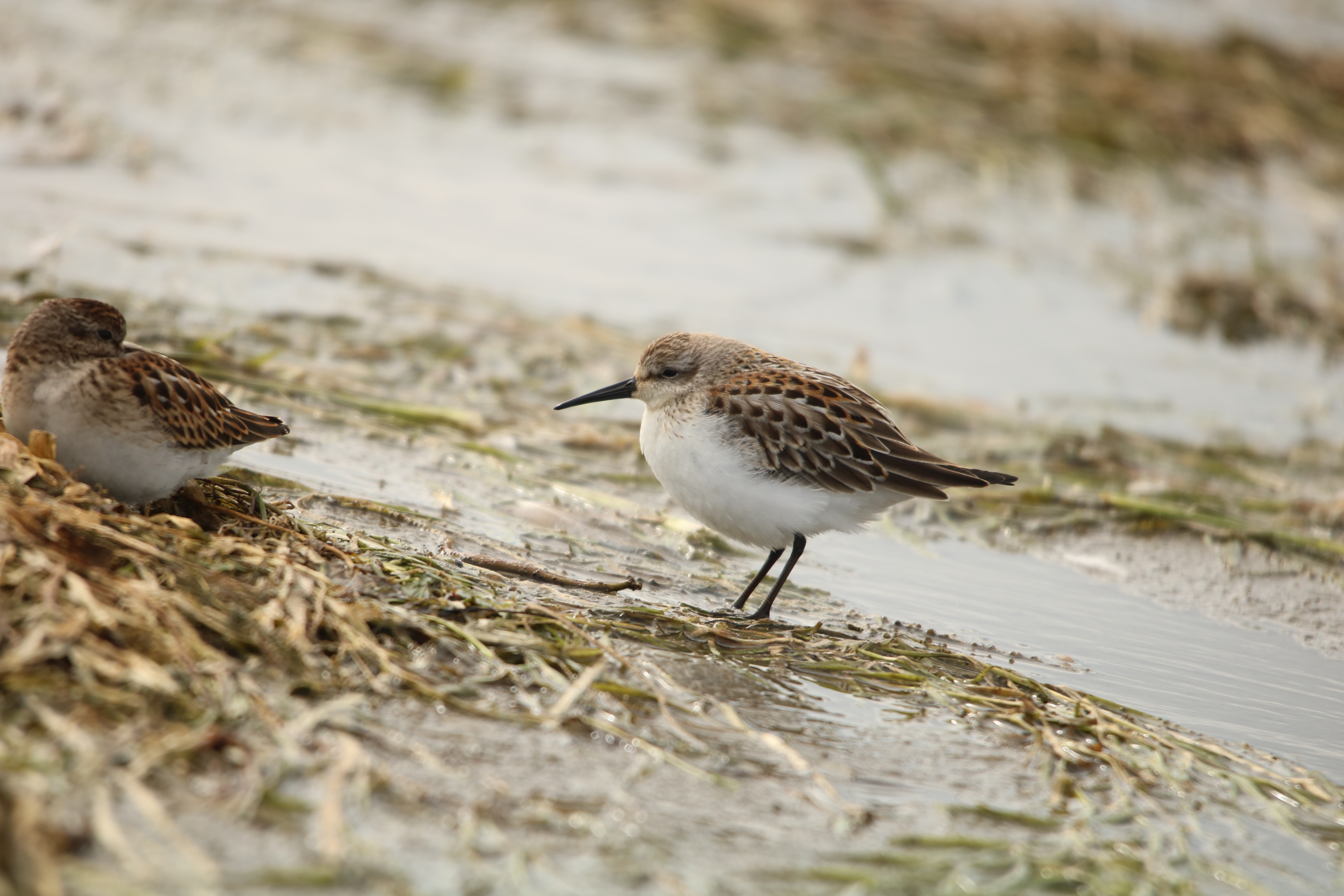
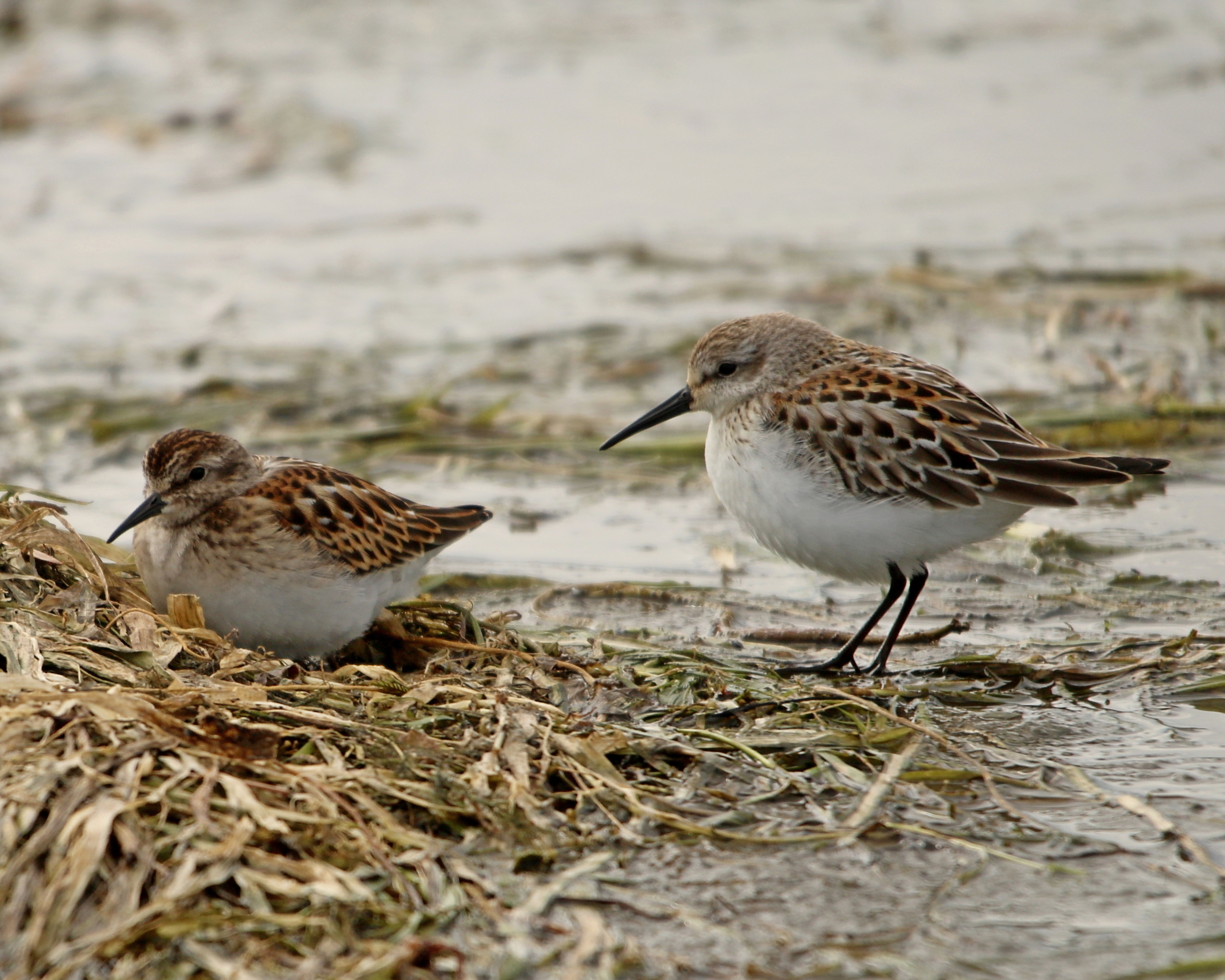
| Verbal Narrative & Description of Observation | Five peeps were sleeping on a hummock, heads tucked in. I only noticed the slight difference in coloration and size at first as I was scanning with scope. A little later, several picked their heads up and I immediately noticed the differences in the bills, two typical SESAs, two LESAs and one bird had a longer bill than the LESA and definitely drooping. I moved closer and could better see the coloration. Bright white breast. Dark legs, a light gray head (the expected reddish spot behind eye was not apparent), gray brown back and wing feathers with white edges. I returned to the area several times to try to see this bird and , later, it was up and walking around. At this point the reddish behind the eye was clear and rufous scapulars more evident. |
| Relative Size & Shape | Seen with LESA and SESA. Definitely a bit larger and plumper. |
| Head | Head was gray. Crown a bit darker. A bit of a dark line in front of eye and a reddish smudge in back of eye. |
| Feet & Bill | Bill was longer and LESA and a bit drooping. Relatively slim and pointy. I thought that it might be a WRSA but there was no red at base of the bill. Legs were definitely dark as seen later when it was walking. |
| Upper Back | Brownish gray feathers with wide white margins. Rather streaky looking at the nape. Strong reddish appearance on scapulars. |
| Lower Back & Rump | Did not get great looks. |
| Wings | Did not see it fly. Does not appear as though wings extend beyond tail. Strong white margins on brownish wing feathers. |
| Breast, Belly, Flanks, Under Tail Coverts | Slight streaking at neck. Otherwise, the breast , flanks and belly look starkly white. Did not see under tail coverts. |
| Tail | Did not see |
| IMPORTANT: What similar species were eliminated when making the identification and how was this bird different? | I thought LESA but the bill was much longer and this bird was too large. I thought SESA but, again, bill was longer and the bird had definite reddish scapulars. (after studying photos, the lack of distinct supercillium is also important) My most likely suspect, at the time was WRSA but the bill clearly lacked a reddish base and the bird was also too plump and short looking, indicating that primary wing tips do not extend as a WRSA do. |
| Other Notes & Comments | I believe that the white breast and belly mean that this bird was a juvenile. |
| This report was written from notes taken: | Immediately After |
Vermont Atlas of Life Partners