| Common Name | Common Ringed Plover |
|---|---|
| Scientific Name | Charadrius hiaticula |
| Type of Report | Rare Species |
| Date of Observation | 09/05/2020 |
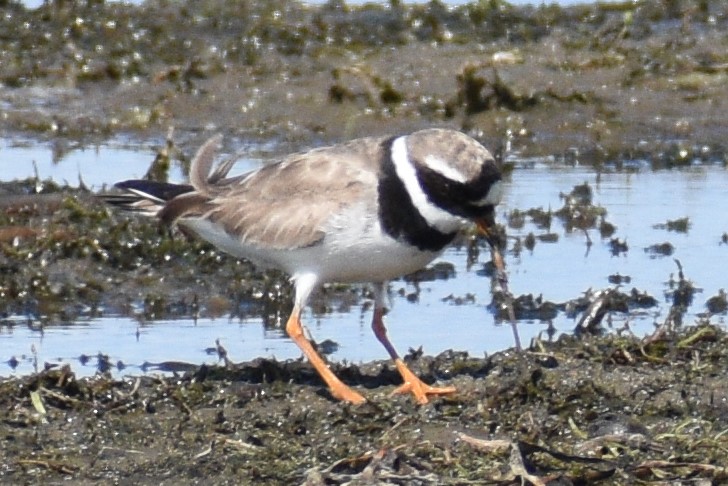
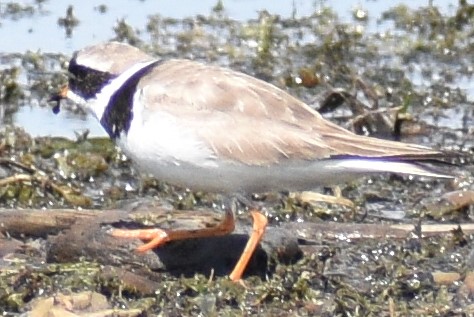
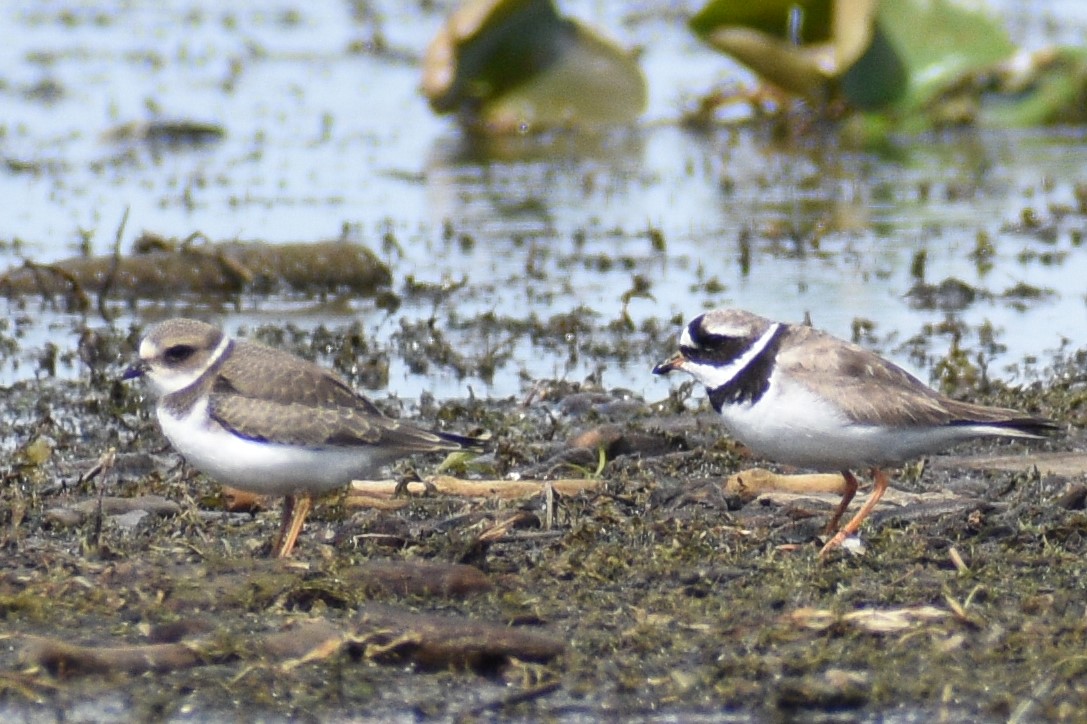
| Media | |
| Number Observed | 1 |
| Reporting Observer's Name | Jacob Crawford |
| Mailing Address | 7 Packard Road Jericho, Vermont 05465 United States Map It |
| Email hidden; Javascript is required. | |
| Date Completed | 11/22/2020 |
| Names & Emails of Other Contributing Observers | Max Carroll, |
| Latitude of Observation (enter 0 if unable to provide) | 45.006852 |
| Longitude of Observation (enter 0 if unable to provide) | -73.166510 |
| Place Name | West Branch of Missisquoi River |
| Township | Highgate |
| County | Franklin |
| Vermont eBird Checklist URL | ebird.org |
| Time of Day | 01:35 AM |
| Length of Time Observed | ~15 minutes |
| Maximum Estimated Distance from Bird (in feet) | 300 |
| Minimum Estimated Distance from Bird (in feet) | 45 |
| Noteworthy Weather Conditions | There were two storms passing by at the time to both the north and the south of the delta at the mouth of the river. As the storms passed, the winds picked up to 15 to 20 MPH out of the WSW and it rained for on and off for about 2 minutes. The clouds soon cleared and the winds died down. Temps 68 to 70 degrees. |
| Optical Equipment Used for Observation | Vortex Diamondback Binoculars 8x42mm, |
| Observer’s Previous Acquaintance With This or Similar Species | While I have not seen CRPL before, I have had a fair amount of experience with SEPLs. I was faintly familiar with this species from eBird and field guides. |
| I certify that any attachments included with this report were captured during this observation event. | |
| Description of Habitat | This bird was observed on an open mud flat at the mouth of the west branch of the Missisquoi River. There was probably just over an acre of exposed mud on this particular flat if not more with isolated pockets of water and scattered weeds and grass growing on the drier portions of sand. This bird was seen associating closely with Sanderling and Semipalmated Sandpipers, but there were also Pectoral Sandpipers, Least Sandpipers and Semipalmated Plovers in the area. |
| Behaviors Observed | This bird was seen flying with a mixed flock of Sanderling and Semipalmated Sandpipers in a low, direct flight close to the mud. The bird was also observed feeding in a similar fashion to SEPL in a stop-and-go running and feeding motion, zig-zagging from side to side as it slowly worked it's way across the mudflat. Preening was observed at one point. |
| Description of Vocalizations | The only vocalizations heard were while the bird was in flight. A soft "twoo-dooloo" was heard, quite different from the sharper "chu-WEE" call notes of the SEPL. |
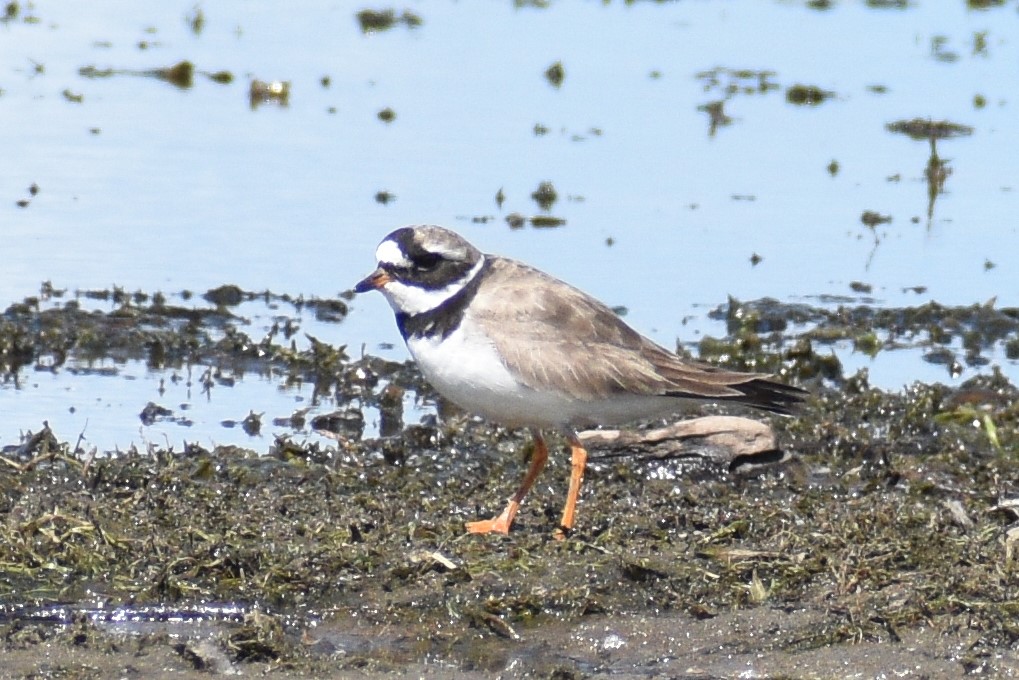
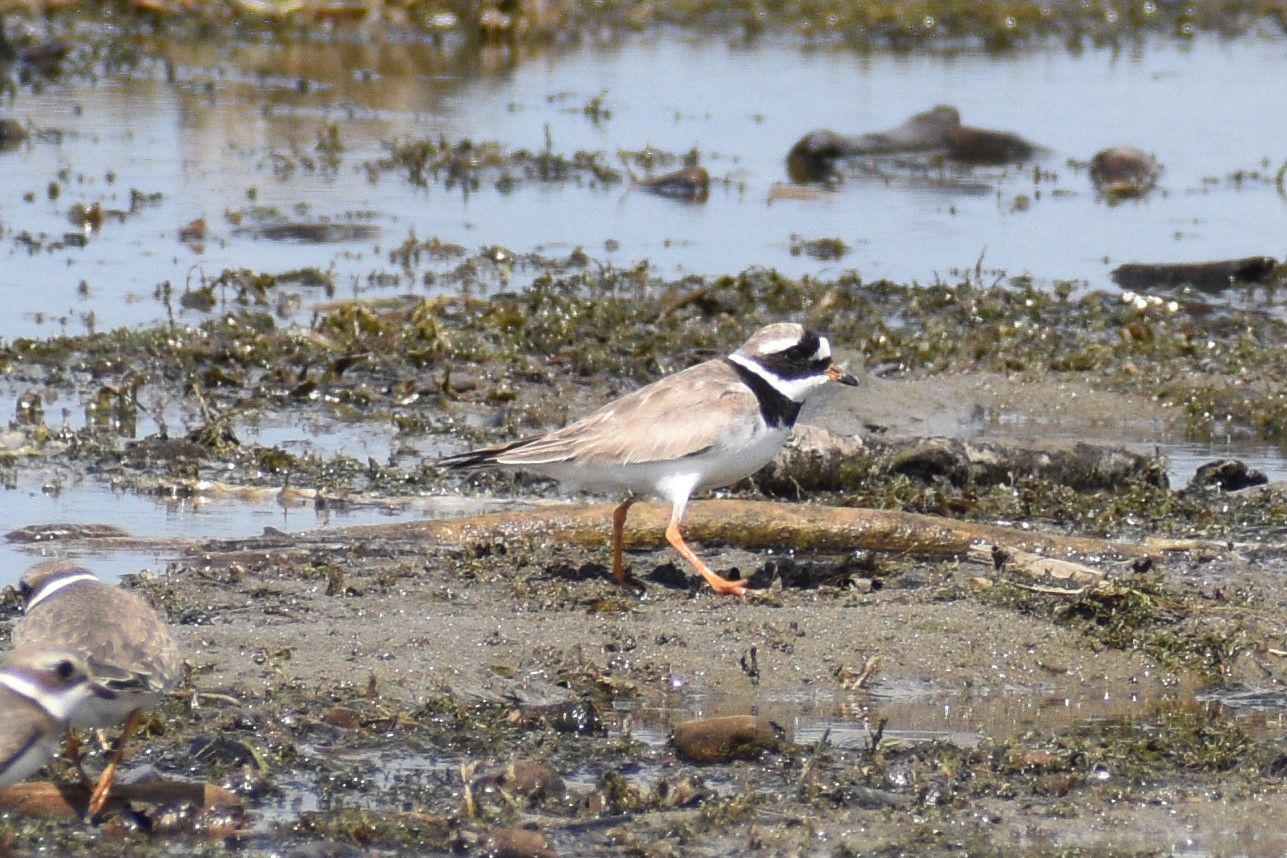
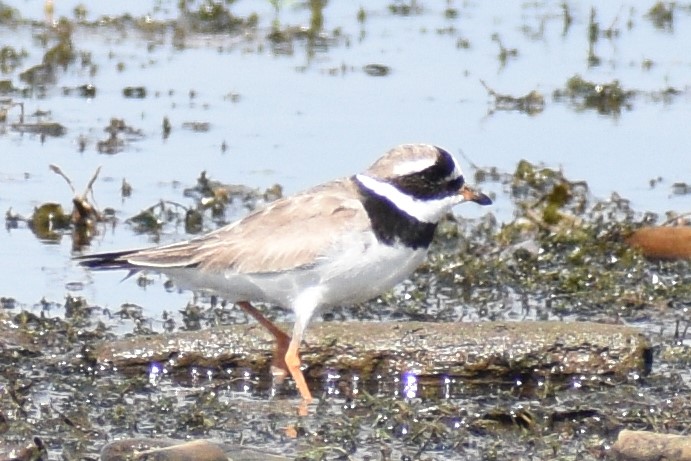
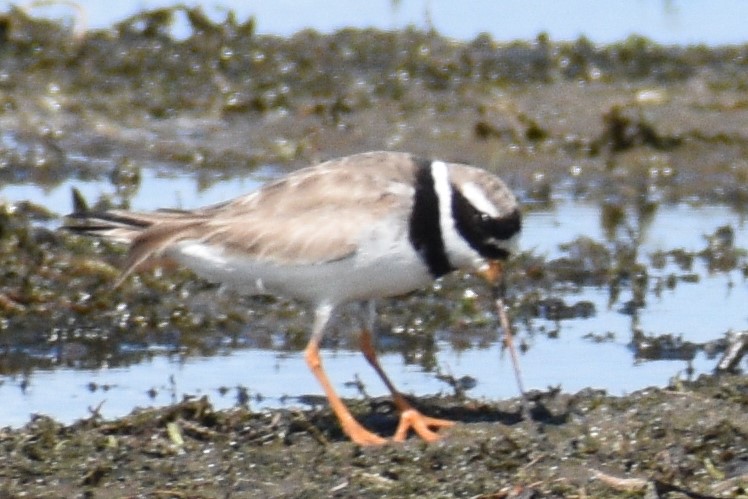
| Verbal Narrative & Description of Observation | Max, Chris and I had just paddled up to the delta for the second time that day and had gotten out of our kayaks and made an initial scan around the flat, noticing that there was even more shorebird activity at this location then there was earlier that day! We saw two strong storms coming our way and luckily were in the perfect position to squeeze between the two storms. After the storms passed, we headed back to retrieve our kayaks, when I noticed a plover running in front of us. I pulled up my binoculars and the first thing I noticed was the extensive amount of black in the bird's "mask," the lighter colored mantle compared to nearby SEPL, and the bright orange, almost reddish colored legs of this bird. I got both Max and Chris onto the bird and requested that someone start taking pictures of the bird immediately as I had to retrieve my own camera from my backpack. Max asked me what I thought it could be while Chris began taking photos. I told Max that I thought there was a chance this bird could be a Common Ringed Plover! After taking multiple pictures of the bird and studying it in our scopes and binoculars, we decided to post our pictures to the "What's This Bird" facebook group to get the opinion of someone with more shorebird experience than us. Preliminary suggestions based on our photos was that the bird was a SEPL and that we would need to get better looks at the webbing, or lack thereof, between the toes of the bird or hear the bird call to confirm it's ID. We then focused on getting good looks and photos of the bird's feet and even walked closer to the bird to get it to fly and get a recording of it's flight call. We watched the bird fly around the flat, feeding, and preening at one point on the mud flat. |
| Relative Size & Shape | Slightly larger than nearby SEPL, but very similar to SEPL in overall shape. |
| Head | Dark colored orbital ring, extensively dark auriculars with dark mask extending all the way to the the white collar. Black mask extending down to the gape of the bird. White supercilium. Large white forehead patch that tucks under the each eye in a fine point. |
| Feet & Bill | Bill length and coloration very similar to SEPL with a dark tip and orange base. Feet of the bird lacked webbing between toes. Orange legs. |
| Upper Back | Light brown back with no noticeable patterning. |
| Lower Back & Rump | Lower back was also a light brown coloration, rump patterning was not documented in our time observing this bird. |
| Wings | Fairly long, pointed wings with a white wing-stripe running the length of the wing seen in flight. |
| Breast, Belly, Flanks, Under Tail Coverts | Dark breast band. Perfectly white belly and under-tail coverts. |
| Tail | Relatively short-tailed. No other observations of the tail were made. |
| IMPORTANT: What similar species were eliminated when making the identification and how was this bird different? | The call note, lack of webbing between the toes, black mask extending to the gape and the black auriculars extending completely back to the white neck band were the best and most clear field marks that allowed us to ID this bird as a Common Ringed Plover and not a SEPL. The behavior of the bird also signified that this bird was not a SEPL as when all the SEPL would take off, this bird would still be feeding calmly. When the Sanderling and SESAs would take off, this bird would follow them, completely dissociating from nearby SEPLs. |
| Other Notes & Comments | This was a lifer for me and was viewed by others in the coming days following our initial report. It was confirmed by eBird reviewers. |
| This report was written from notes taken: | Immediately After |
Vermont Atlas of Life Partners