| Common Name | King Rail |
|---|---|
| Scientific Name | Rallus elegans |
| Type of Report | Rare Species |
| Date of Observation | 05/21/2020 |
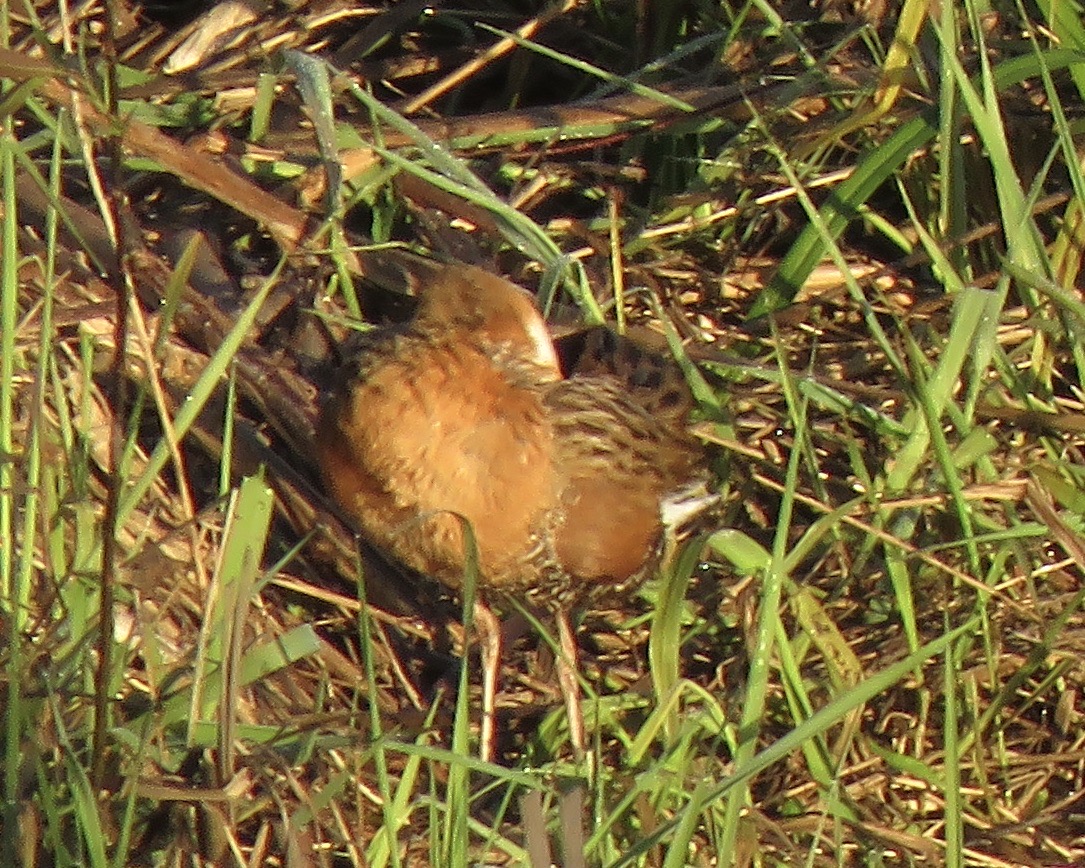
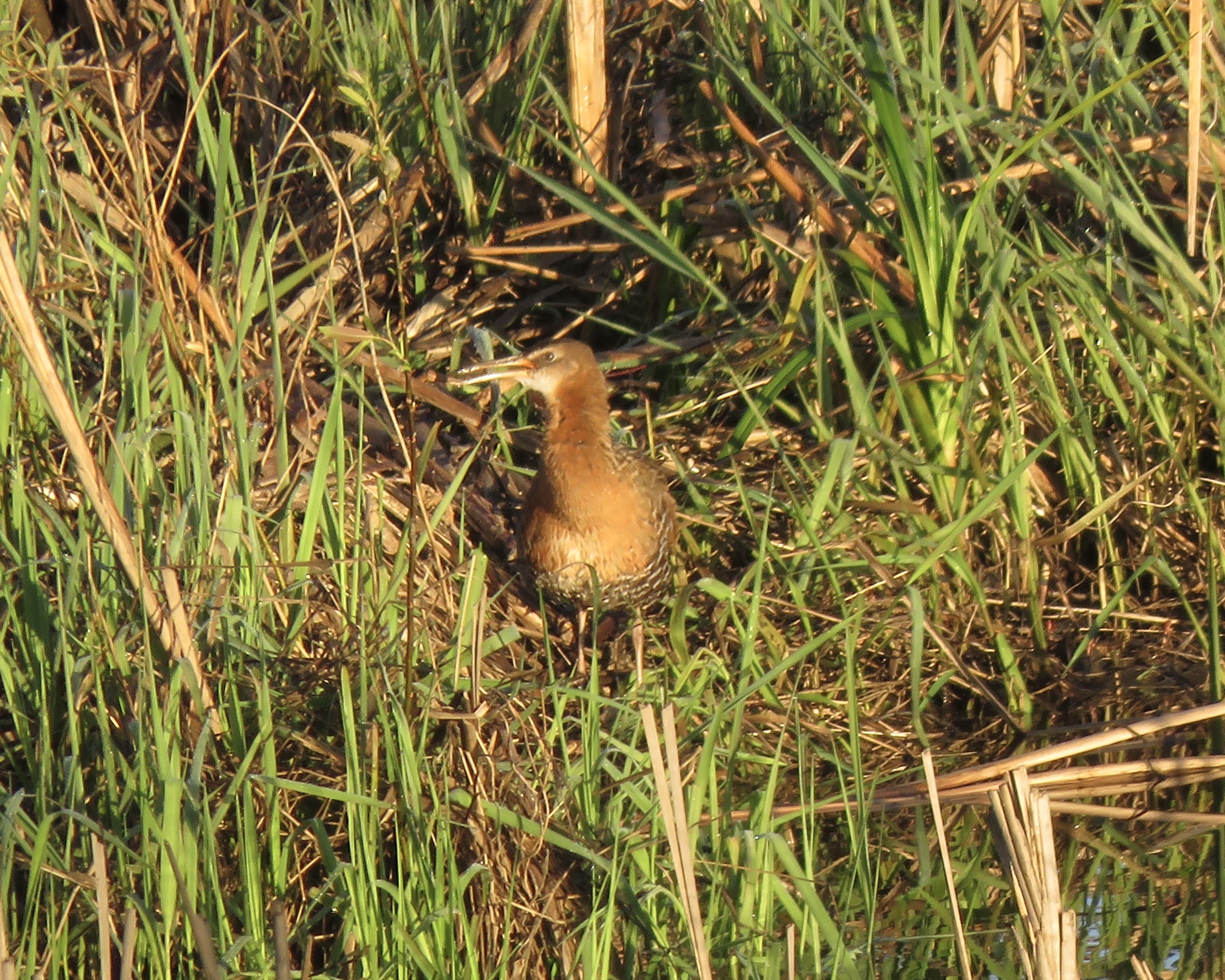
| Media | |
| Number Observed | 1 |
| Reporting Observer's Name | Jim Mead |
| Mailing Address | 798 Metcalf Drive Williston, VT 05495 United States Map It |
| Email hidden; Javascript is required. | |
| Date Completed | 05/21/2020 |
| Names & Emails of Other Contributing Observers | Henry Trombley, |
| Latitude of Observation (enter 0 if unable to provide) | 43.9952535 |
| Longitude of Observation (enter 0 if unable to provide) | -72.1192145 |
| Place Name | Waits River- Conn. River confluence |
| Township | Bradford |
| County | Orange |
| Vermont eBird Checklist URL | ebird.org |
| Time of Day | 06:12 AM |
| Length of Time Observed | 15-20 minutes |
| Maximum Estimated Distance from Bird (in feet) | 150' |
| Minimum Estimated Distance from Bird (in feet) | 40' |
| Noteworthy Weather Conditions | Blue skies, sunny, no wind & sun was behind us. |
| Optical Equipment Used for Observation | KOWA TSN-884 88mm Straight Prominar Flourite Spotting Scope & |
| Observer’s Previous Acquaintance With This or Similar Species | This was a life bird for me but I have seen Clapper Rail in Culebra, Puerto Rico. |
| I certify that any attachments included with this report were captured during this observation event. | |
| Description of Habitat | Swamp land of confluence, cattails from last year, Virginia Rail, Least Bittern, Pied-billed Grebe and many songbirds including Willow Flycatcher & Swamp Sparrow. |
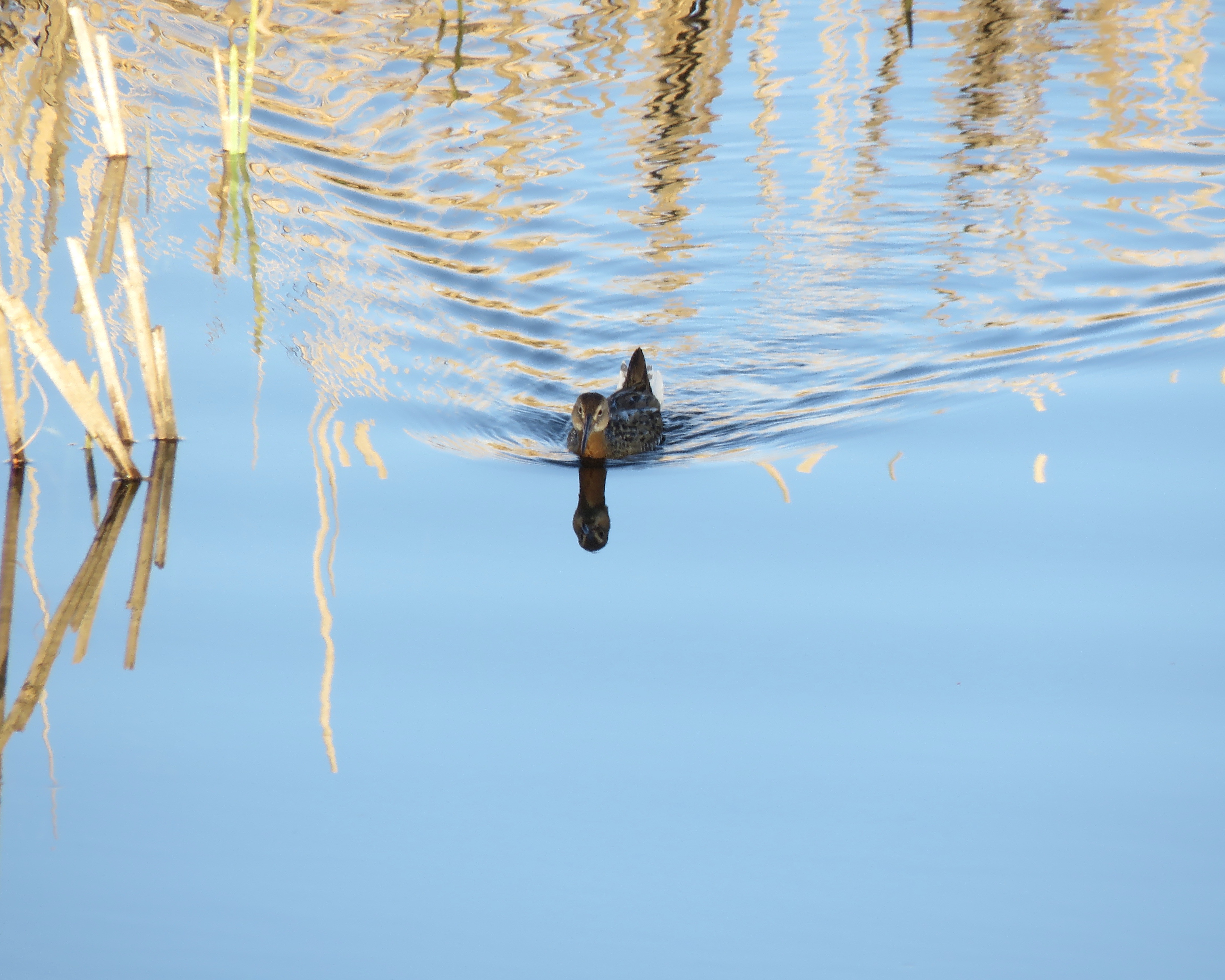
| Behaviors Observed | I did not see it feed but did see it out in the open, walking in shallow water, in open areas, on bent over cattails, also saw it swim & saw it fly for about 3 seconds. I also watched it call using the kik,kik,kik, calls several times. It definitely saw us but didn't seem to care about us. It flew from the edge of the cattails and touched back down along the edge of cattails about 20' from where it started. |
| Description of Vocalizations | It kept calling using its' kik,kik,kik,kik,kik, calls. *Listen to recording attached. |
| Verbal Narrative & Description of Observation | We first heard the rail then saw it across the open water in front of us about 150' away. It then flew & walked along the edge of the cattails getting closer and closer to us until it was about 40' away. Henry actually climbed down the bank and was on the water's edge and got within 8-10' from the rail. |
| Relative Size & Shape | This bird is quite similar in looks and shape to a Virginia Rail but it is about 4 times larger. |
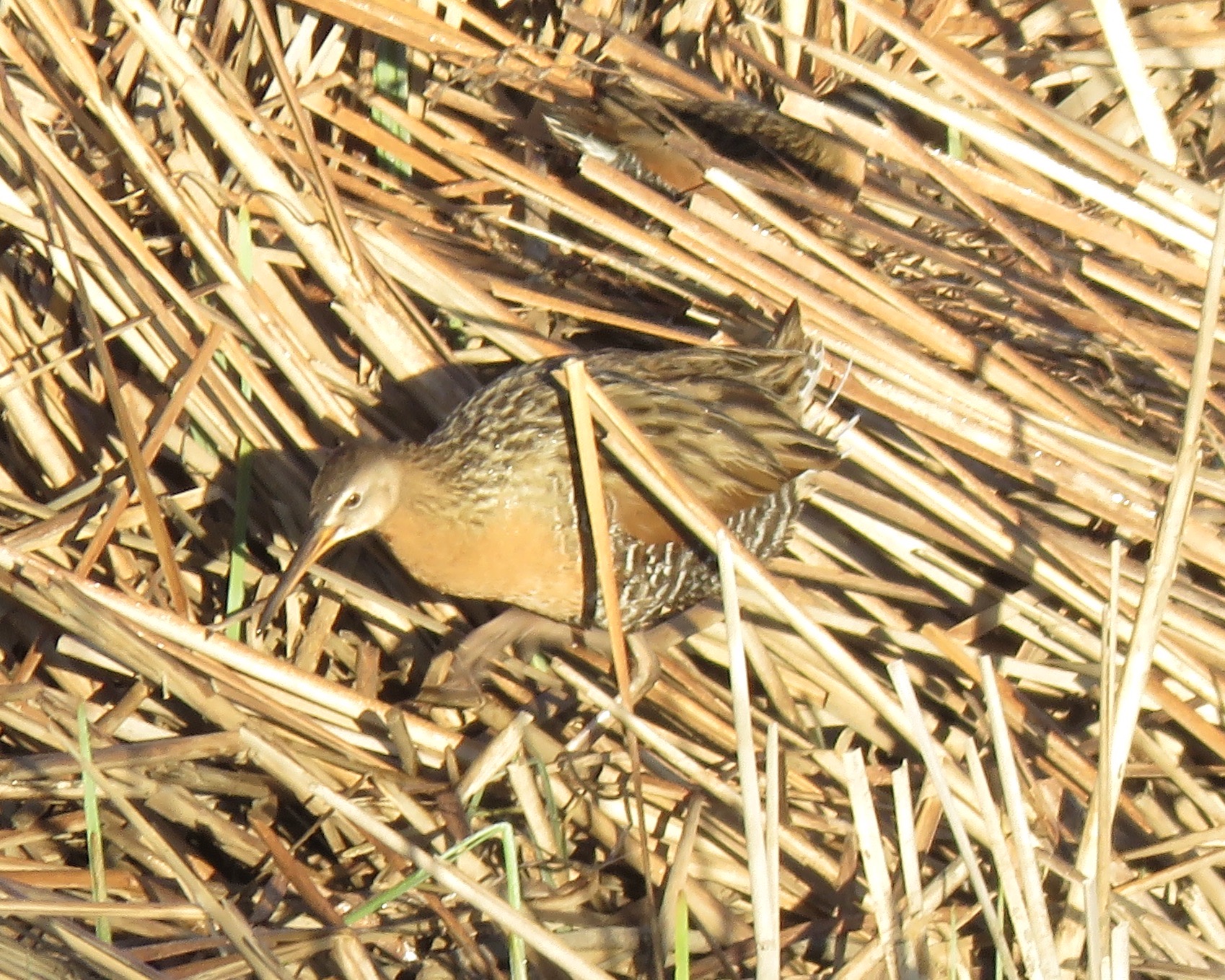
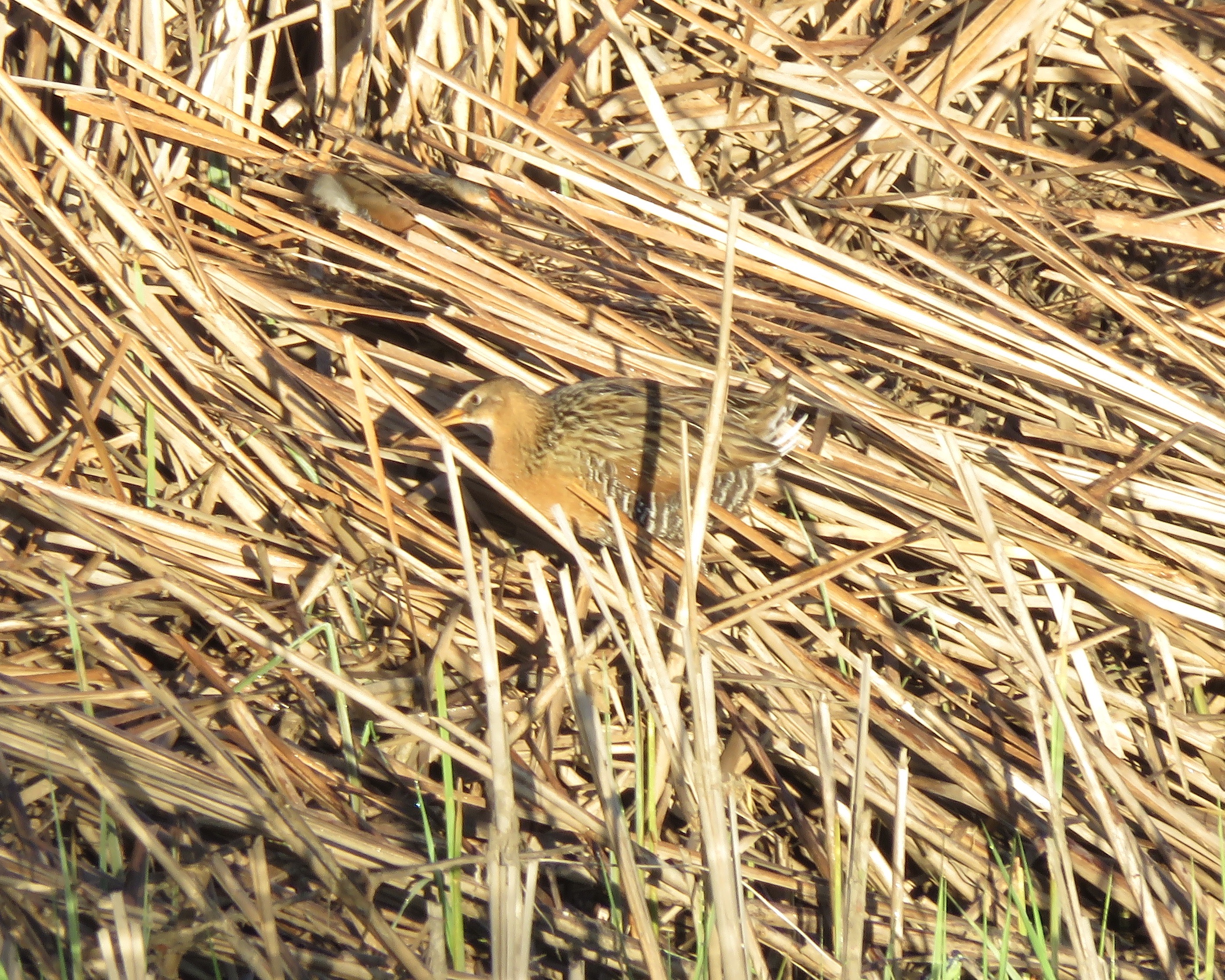
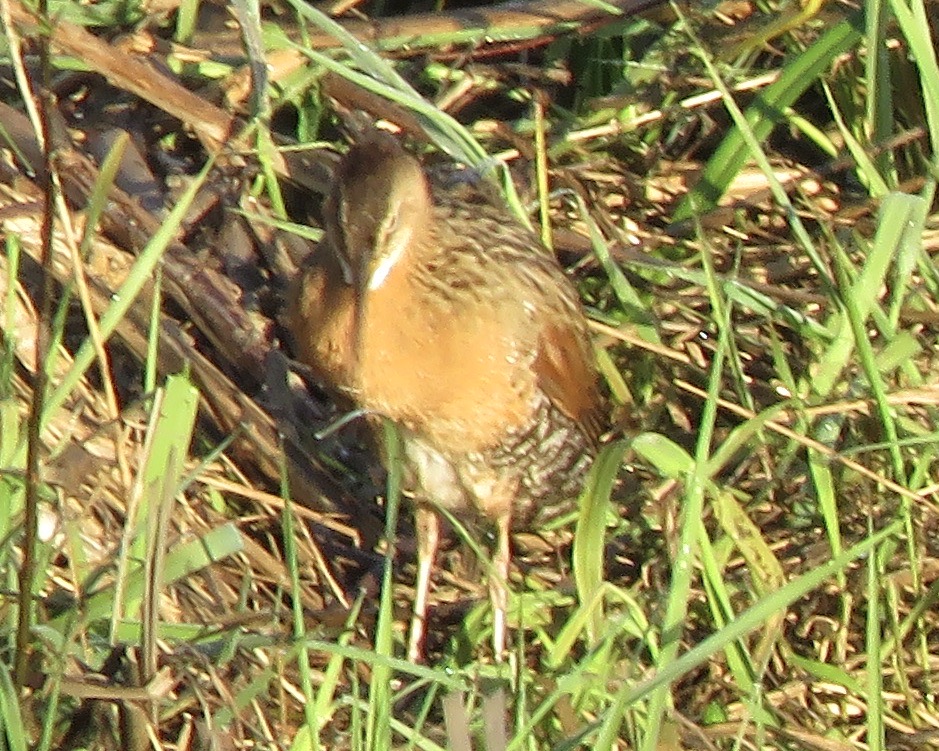
| Head | The crown was dark gray, the cheeks were oranges, the eye looked brownish with a black pupil, throat was white & the nape was a dark shade similar to the crown. |
| Feet & Bill | The feet were sort of pale colored with very long toes and sturdy legs. |
| Upper Back | The upper back showed feathers that had dark centers surrounded by light colored to sort of tawny colored edges. |
| Lower Back & Rump | Same thing with the lower back but did not see the rump. |
| Wings | The wings while in flight were sort of rounded at the tips but the coloration during flight was not discernible due to it being kind of dark where it flew. I did notice after looking at some of my photos that there was a pretty brightly rufous colored upper wing patch. |
| Breast, Belly, Flanks, Under Tail Coverts | The breast & neck were bright orange. The belly & flanks showed brownish/blackish bars that were about twice as wide as the fairly wide white bars separating them.the under tail covert were white with black splotches. |
| Tail | The top of the short tail had the same coloration as the upper feathers and it was lifted up most of the time. |
| IMPORTANT: What similar species were eliminated when making the identification and how was this bird different? | The most difficult bird to rule out is the Clapper Rail. The Clapper Rail is more grayish looking overall, shows gray and white bars on the flanks & belly, shows smaller & lighter darkish centers in the feathers and does not have a bright rufous colored upper wing patch. |
| Other Notes & Comments | I think this was an adult male due the the barring on the flanks & belly being brownish/black & white with no reddish/rufous barring and it was very bright orange instead of muted orange. |
| This report was written from notes taken: | During the Observation |
Vermont Atlas of Life Partners