| Common Name | Baltimore oriole |
|---|---|
| Scientific Name | Icterus galbula |
| Type of Report | Out-of-Season |
| Date of Observation | 12/07/2016 |
| Media | |
| Number Observed | 1 |
| Reporting Observer's Name | Cynthia Kenyon |
| Mailing Address | 175 Upper Dummerston Rd Brattleboro, VT 05301 United States Map It |
| Email hidden; Javascript is required. | |
| Date Completed | 12/07/2016 |
| Latitude of Observation (enter 0 if unable to provide) | 0 |
| Longitude of Observation (enter 0 if unable to provide) | 0 |
| Place Name | Home |
| Township | Brattleboro |
| County | Windham |
| Time of Day | 09:00 AM |
| Length of Time Observed | All day |
| Maximum Estimated Distance from Bird (in feet) | 40 |
| Minimum Estimated Distance from Bird (in feet) | 4 |
| Noteworthy Weather Conditions | Snow |
| Optical Equipment Used for Observation | None |
| Observer’s Previous Acquaintance With This or Similar Species | Thru the years, we might see an oriole during migration in early May. Several years ago, a pair nested in our yard. This single oriole has spent every winter with us since 2016. |
| I certify that any attachments included with this report were captured during this observation event. | |
| Description of Habitat | Many winter birds one would normally see: juncos, chickadees, song sparrows, goldfinches, purple finches, house finches, blue jays, bluebirds, cardinals, woodpeckers:Downy, Hairy, red bellied...titmice, pine siskins, cedar waxwings, Carolina wrens, |
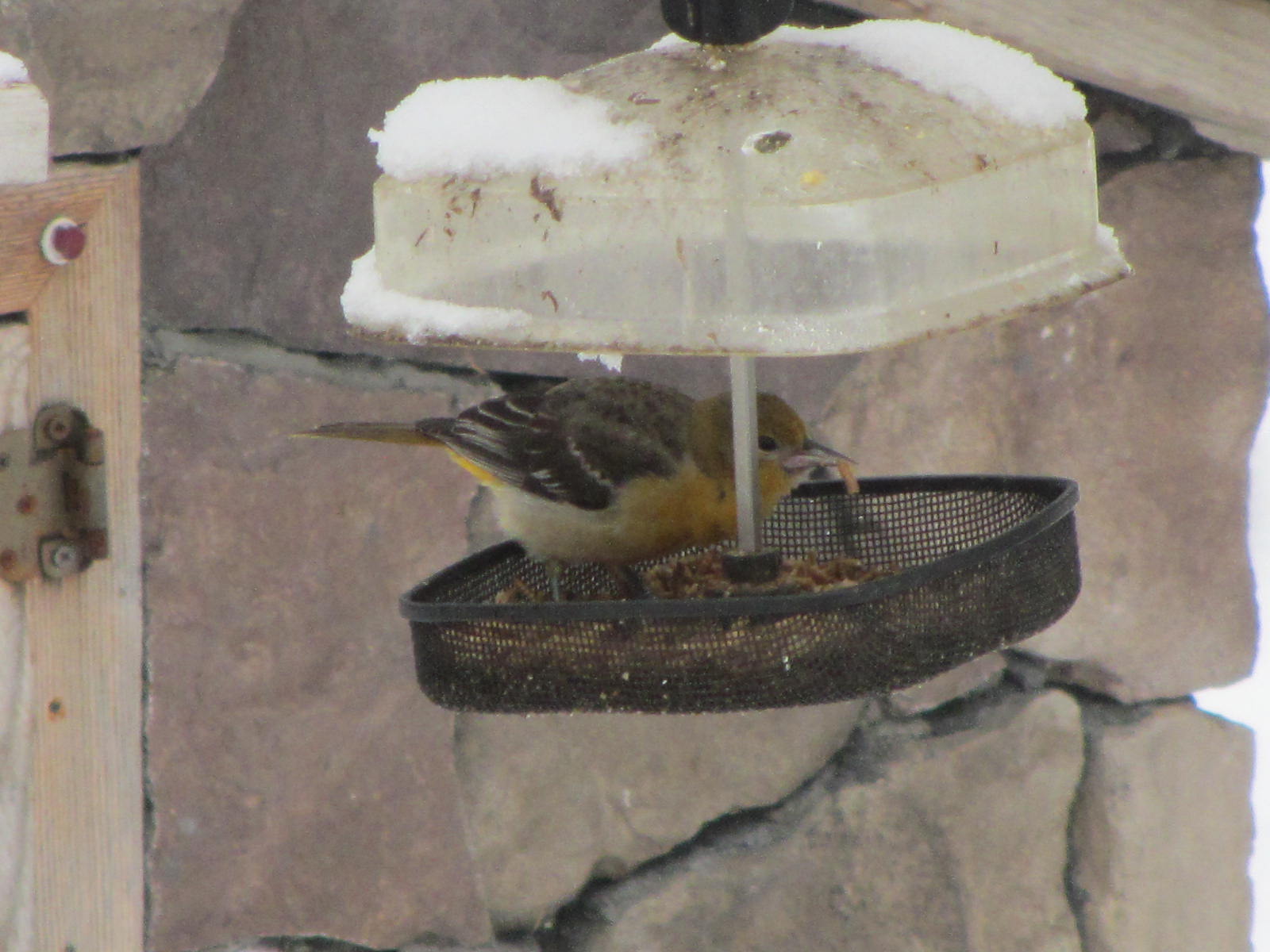
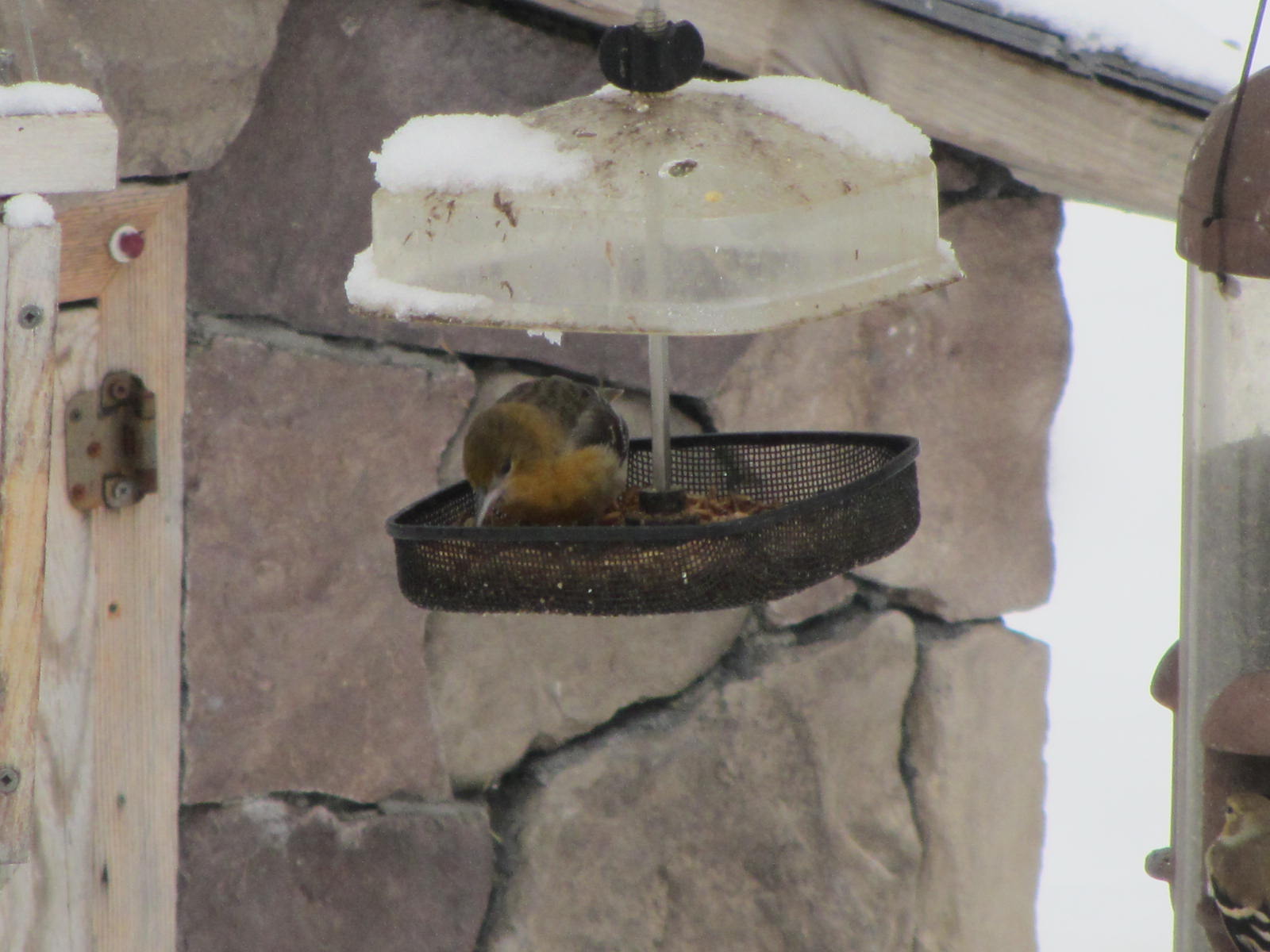
| Behaviors Observed | He eats peanut butter, home made suet, and dried mealworms. He hangs with the bluebirds. |
| Description of Vocalizations | He starts in early May, just before he disappears for the summer. He does the single note call or the typical song. |
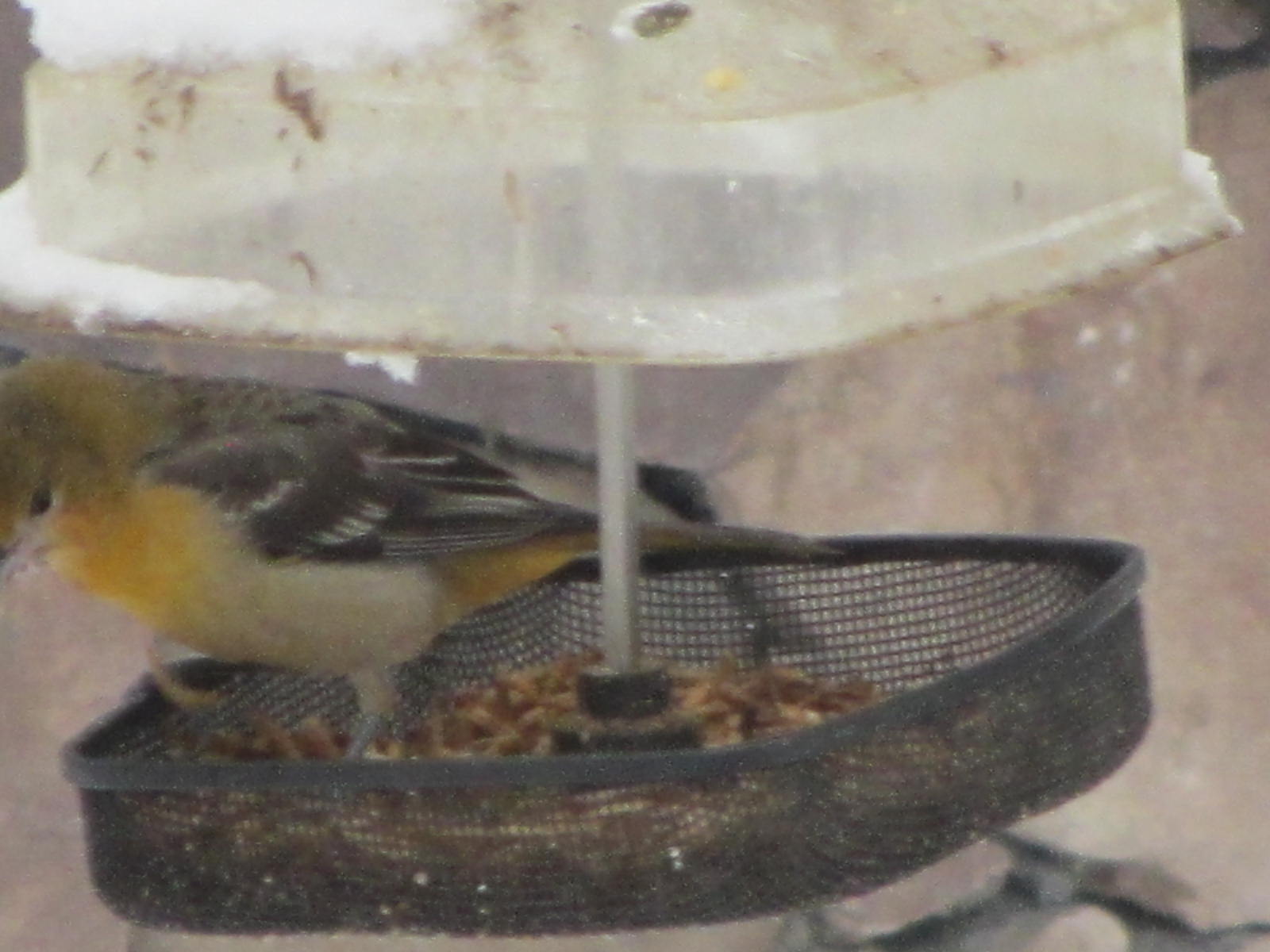
| Verbal Narrative & Description of Observation | The bird was a juvie when he first came to our yard. I had a friend ID him because I am no expert, and he gave a positive ID. |
| IMPORTANT: What similar species were eliminated when making the identification and how was this bird different? | You can see by the pictures that it is a young oriole. |
| This report was written from notes taken: | Written from Memory |
Vermont Atlas of Life Partners