| Common Name | Say's Phoebe |
|---|---|
| Scientific Name | Sayornis Nigricans |
| Type of Report | Rare Species |
| Date of Observation | 11/24/2019 |
| Media | |
| Number Observed | 1 |
| Reporting Observer's Name | Coleen Lawlor |
| Mailing Address | 211 DARBY HILL RD Rockingham, Vermont 05101-3113 United States Map It |
| Email hidden; Javascript is required. | |
| Date Completed | 11/24/2019 |
| Names & Emails of Other Contributing Observers | Don Clark |
| Latitude of Observation (enter 0 if unable to provide) | 0 |
| Longitude of Observation (enter 0 if unable to provide) | 0 |
| Place Name | Allen's Brother's Marsh |
| Township | Westminster |
| County | Vermont |
| Vermont eBird Checklist URL | ebird.org |
| Time of Day | 08:52 AM |
| Length of Time Observed | 1 hour |
| Maximum Estimated Distance from Bird (in feet) | 75 feet |
| Minimum Estimated Distance from Bird (in feet) | 30 feet |
| Noteworthy Weather Conditions | overcast, at times raining, 33 degrees |
| Optical Equipment Used for Observation | Leica binoculars 8x42 |
| Observer’s Previous Acquaintance With This or Similar Species | I am familiar with Eastern Phoebe, Eastern Kingbird, Alder flycatcher, Willow Flycatcher, Eastern wood peewee, Olive sided flycatcher. Pacific slope flycatcher, Tropical Flycatcher and American Robin |
| I certify that any attachments included with this report were captured during this observation event. | |
| Description of Habitat | On the edge of the marsh perching on small shrubs and branches. |
| Behaviors Observed | fly-catching, perching, tail bobbing, flaring tail. Avoided attack by accipiter during observation |
| Description of Vocalizations | plaintive call. I listened to recording and verified matching call. |
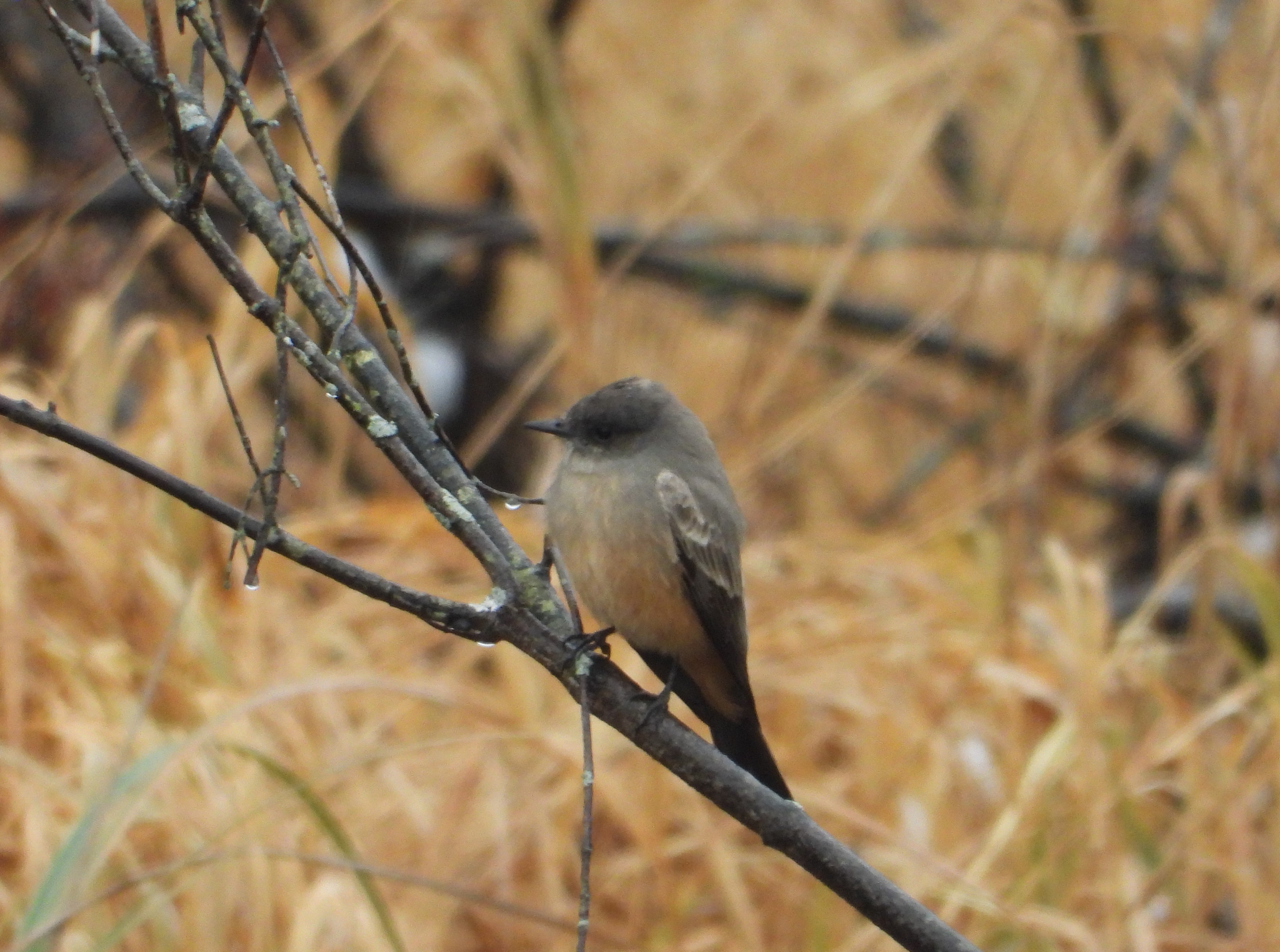
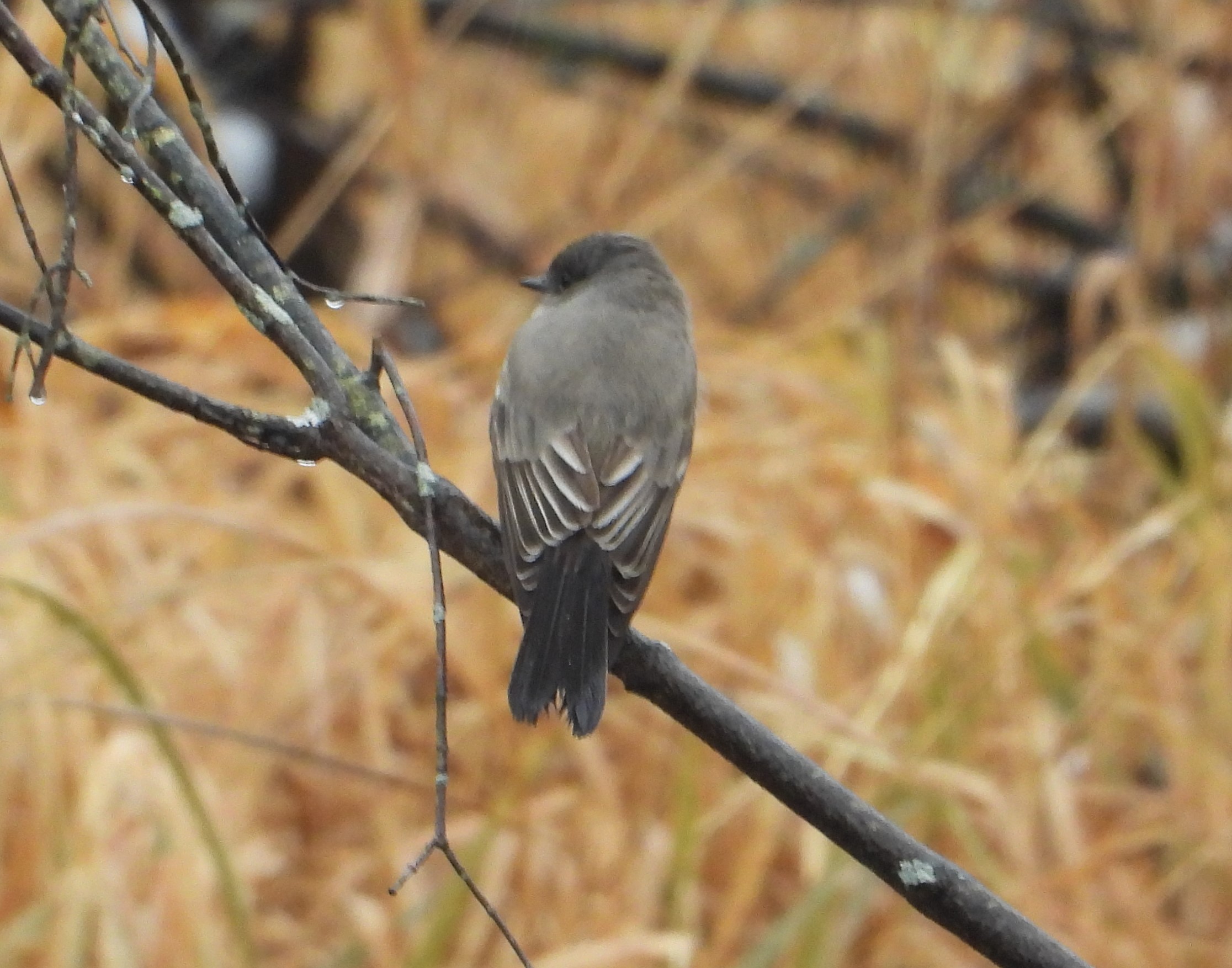
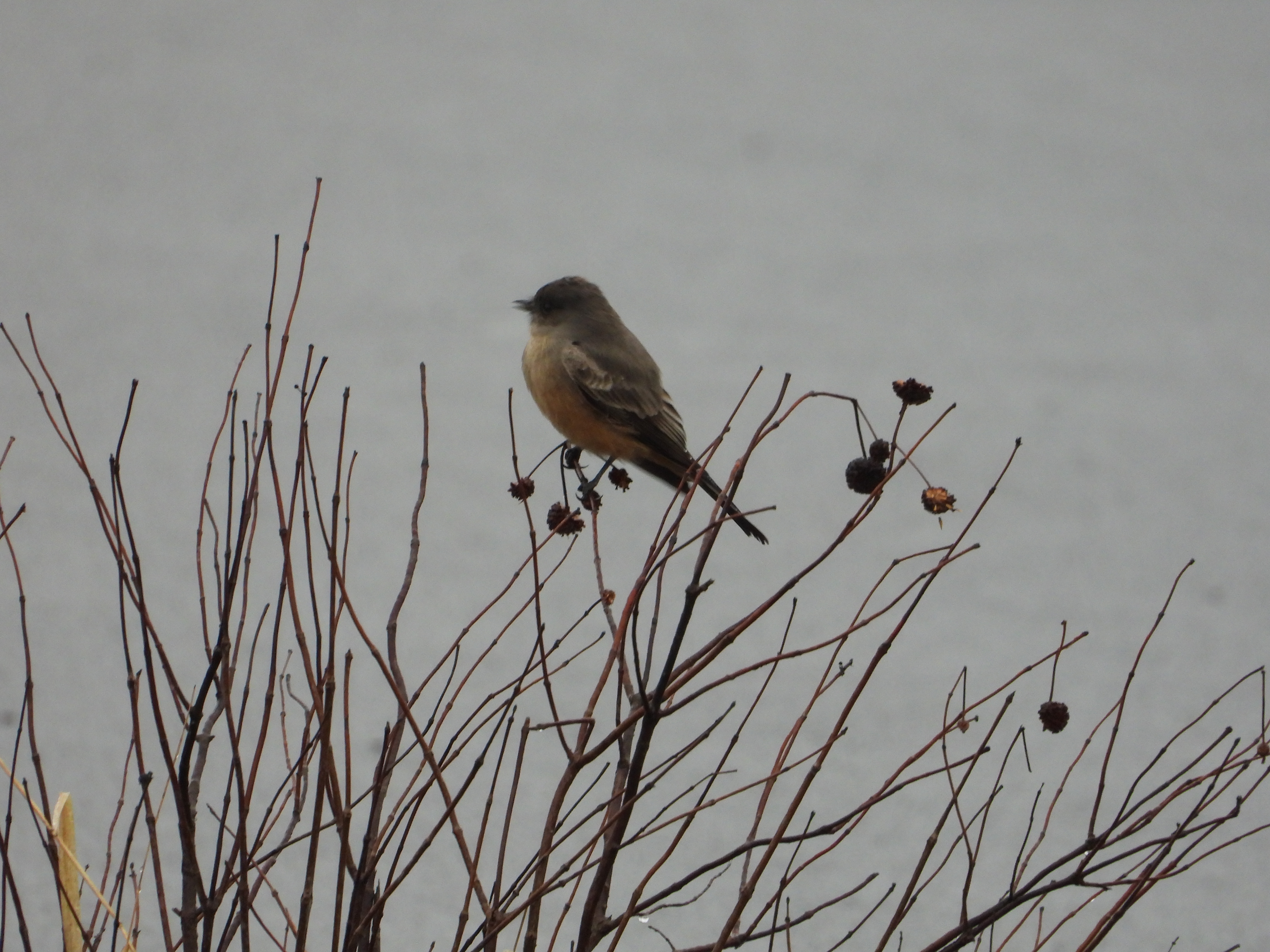
| Verbal Narrative & Description of Observation | at first glance I wondered why a robin was fly-catching, then I realized the bird was actually a fly-catcher. It looked like a phoebe but with a black tail, buffy russet belly and under tail coverts. The tail was black and the bird looked like a phoebe. Because of location I thought this must be a late Eastern Phoebe. I put it on my list as an Eastern Phoebe and photographed the bird. But I was bothered by the color differences, the black tail and russet belly and coverts. Because I continued to be bothered by the black tail, salmon russet appearance of the birds belly and under-tail I looked up phoebes in Sibley. At that point I began thinking this bird was a Say's phoebe and I called other birders to observe the bird with me. |
| Relative Size & Shape | Similar size to Eastern Phoebe |
| Head | Phoebe shaped head gray on head and face with a slightly darker line through eye but not bold, can be seen in photos. |
| Feet & Bill | shape of bill like Eastern Phoebe, legs and feet dark |
| Upper Back | gray |
| Lower Back & Rump | gray |
| Wings | long darker than the gray back of the bird and appeared black. |
| Breast, Belly, Flanks, Under Tail Coverts | belly buffy russet, under tail covert russet that appeared slightly darker |
| Tail | long black slight v at end. flared tail occasionally and bobbed occasionally less frequent then Eastern Phoebes I have observed. |
| IMPORTANT: What similar species were eliminated when making the identification and how was this bird different? | Robin. this bird was obviously a fly catcher, much smaller different shape and behavior. |
| Other Notes & Comments | my photos would not upload. See checklist photos. |
| This report was written from notes taken: | Immediately After |
Vermont Atlas of Life Partners