| Common Name | Yellow-headed Blackbird |
|---|---|
| Scientific Name | Xanthocephalus xanthocephalus |
| Type of Report | Rare Species |
| Date of Observation | 08/28/2019 |

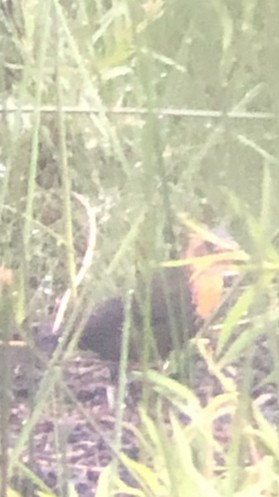
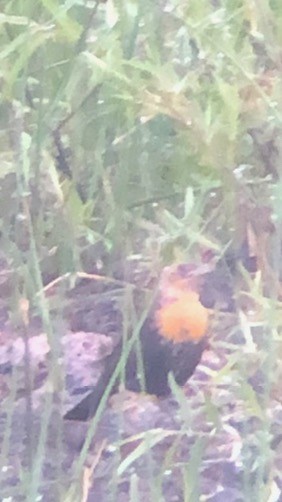
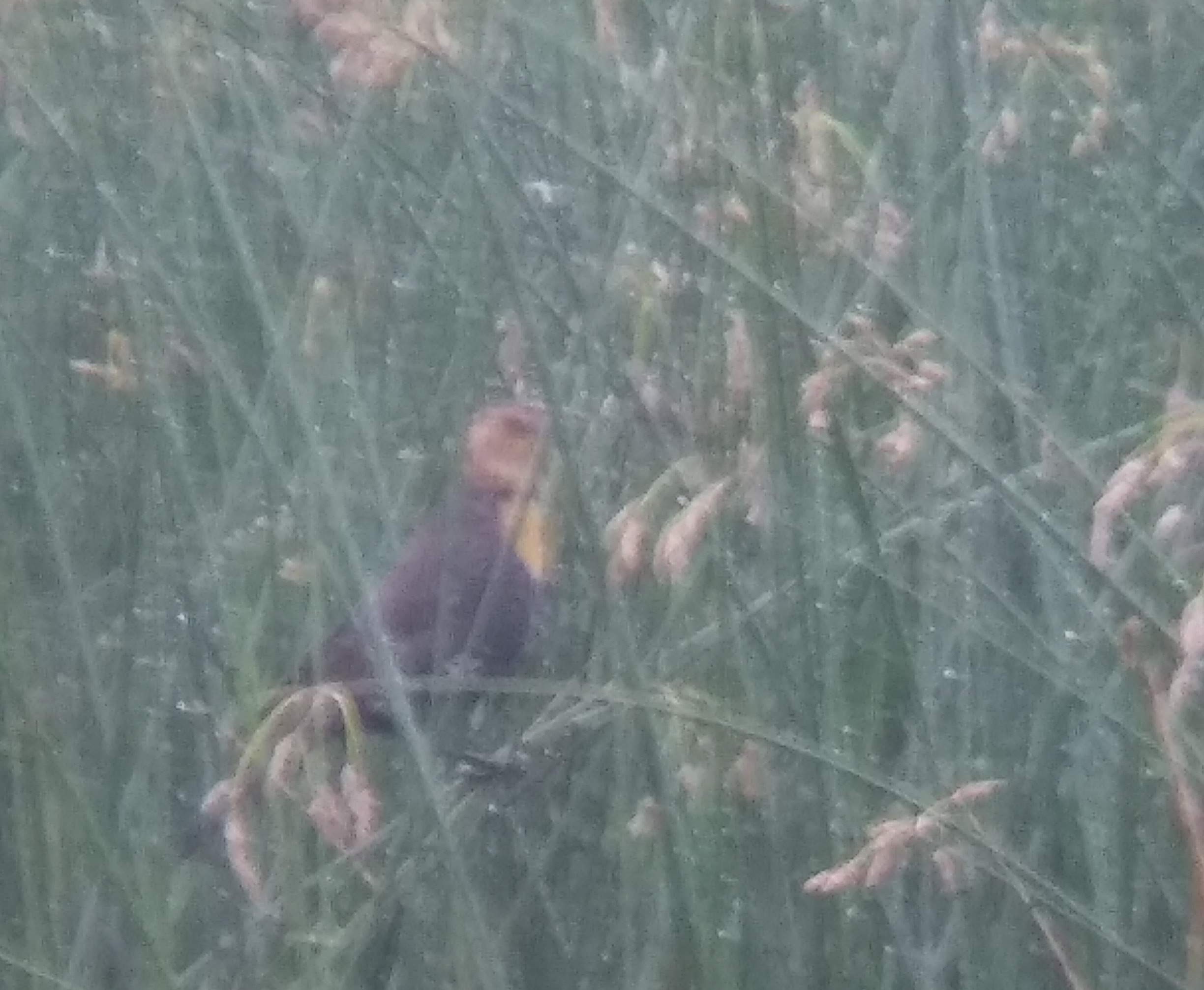
| Media | |
| Number Observed | 1 |
| Reporting Observer's Name | Jacob Crawford |
| Mailing Address | 7 Packard Road Jericho, Vermont 05465 United States Map It |
| Email hidden; Javascript is required. | |
| Date Completed | 08/30/2019 |
| Names & Emails of Other Contributing Observers | Clem Nilan and John Peckham |
| Latitude of Observation (enter 0 if unable to provide) | 44.535410 |
| Longitude of Observation (enter 0 if unable to provide) | -73.281132 |
| Place Name | Delta Park |
| Township | Colchester |
| County | Chittenden |
| Vermont eBird Checklist URL | ebird.org |
| Time of Day | 04:15 PM |
| Length of Time Observed | Approximately 20 minutes of actually seeing the bird |
| Maximum Estimated Distance from Bird (in feet) | 60 |
| Minimum Estimated Distance from Bird (in feet) | 12 |
| Noteworthy Weather Conditions | When I first observed the bird, it had recently stopped raining. Further observations and attempts to observe the bird were made in rain of increasing intensity. Once the rain stopped, I was able to locate the bird again and get more documentation photos. |
| Optical Equipment Used for Observation | Vortex Diamondback Binoculars, 8x42 |
| Observer’s Previous Acquaintance With This or Similar Species | I have never observed this species before, but have seen it in field guides |
| I certify that any attachments included with this report were captured during this observation event. | |
| Description of Habitat | The bird primarily remained in a damp patch of bulrushes and pencil reeds adjacent to the waters of Lake Champlain on the Winooski River delta. The bird was also seen flying around dense cattail-like reeds which had a slightly drier substrate beneath, not the damp mud found in the bulrush patch. Some of my best views of the bird came when it was walking and among sparse pencil reeds at the inland edge of the exposed delta mudflat, along the bulrush patch and reeds. Other species noted nearby in this habitat were Least Sandpiper, Marsh Wren, and Least Bittern. |
| Behaviors Observed | Overall, the bird was content with my presence. I noted that the bird was actively feeding for most of the time it was under observation. Slow and methodical movements from reed to reed or from the reeds to the ground resulted in multiple small insects being caught. The birds movements reminded me of those of a Red-eyed Vireo. Slow, steady head and body turns while searching for prey and precise attempts to catch any nearby insects. |
| Description of Vocalizations | The bird made a high pitched "chup... chup... chup" call when in flight. See attached audio for flight call vocalization recording |
| Verbal Narrative & Description of Observation | My initial observations that I wrote down in the field were as so, "White crescent outlines on wrists (upper wing) in flight, yellow oval on breast, dark gray body, back and tail, light yellow above and below eye with drabber cheek/lores, light white streaks seen on upper belly/lower breast." I first noticed the bird while walking along the edge of the bulrushes and marsh grasses looking for Pectoral Sandpipers. It flew from the main patch of bulrushes to an isolated clump about 15 feet away. Seeing the general shape, I was about to put the bird down as a Red-winged Blackbird, which are the most abundant species of blackbird typically found in this habitat. If it weren't for the bird giving a couple unfamiliar call notes, I may not have payed it anymore attention. Upon further examination I noticed a pale yellow supercilium, and an unfamiliar yellow facial pattern. The bird took flight and flew at a close distance over me, which was when I noted the white markings on the top of the wing near where it bends. I also noticed that the bird was dark everywhere except for an area of lighter yellow extending from the back of the head, to the throat, to the bird's breast. My initial and only impression of the bird's ID was Yellow-headed Blackbird, as the shape of the yellow outline closely resembled the shape of the yellow coloration found on Male Yellow-headed Blackbirds, which I have seen online and in field guides before. I walked east, seeing the general area where the bird had landed. I was able to relocate the bird, observe it for a couple minutes and then decided to retrieve my phone from my car to get some pictures of it. The bird was continuing in the location that I had left it and I was able to get some poor digiscoped photos of it before it moved back in the reeds. It took flight again and I started an audio recording in hopes of getting a recording of it's flight vocalizations. It flew back towards it's original location and I was able to get 5 call notes in my recording as it flew by heading west. I approached the area and began staking it out, as the bird was completely hidden. Some time later, I noticed that Clem Nilan had entered the park. I alerted him of the bird's presence and we both approached the area. It wasn't one minute before I spotted the bird hopping out onto the delta, actively feeding. Clem tried to get a photo with his camera, but was unable to do so as the bird had returned to the cover of the reeds. It began raining harder and harder and we decided to pack it in, as the bird was no longer active. After the rain had lightened, I returned with John Peckham to relocate the bird. When we arrived at the location (around 6:55 pm), she was already out on the delta, walking around and picking moths off of the pencil reeds. She then started working her way south along the reed edge, continuing to feed. At dusk, we watched her take flight and disappear into the reeds, concluding our observations of this bird. |
| Relative Size & Shape | Similar in size to Red-winged Blackbird, but bulkier. Close to the size of a Common Grackle, but note quite that big. |
| Head | Yellow supercilium with drab yellow cheek and lores. Yellow on the head below the eye and cheeks. |
| Feet & Bill | Black legs, similar in form to other blackbird species. Bill appeared slightly shorter than Red-winged Blackbird. |
| Upper Back | Dark gray/brown |
| Lower Back & Rump | Dark gray/brown |
| Wings | Dark gray/brown with white markings near alula/primary coverts |
| Breast, Belly, Flanks, Under Tail Coverts | Belly, flanks, and under tail coverts were all dark gray/brown, with the exception of some light white streaking seen on the upper portion of the belly, below the oval yellow pattern on the birds breast. |
| Tail | Fairly long tail, slightly longer than Red-winged Blackbird. |
| IMPORTANT: What similar species were eliminated when making the identification and how was this bird different? | I eliminated Red-winged Blackbird due to the extensive amounts of yellow and black body. Although a female Red-winged Blackbird can appear yellow around its head, it is rarely extensive and they have a brown streaked body, not dark gray. Eastern Meadowlark is the only other species that I can think of that would have an extensive Yellow breast, but no field marks or physical aspects of this bird align with this species. |
| Other Notes & Comments | I believed this bird to be a female, but immature male is also a possibility. |
| This report was written from notes taken: | During the Observation |

Vermont Atlas of Life Partners