| Common Name | Northern Red-tailed Hawk |
|---|---|
| Scientific Name | Buteo jamaicensis abieticola |
| Type of Report | Rare Species |
| Date of Observation | 03/28/2019 |
| Media | 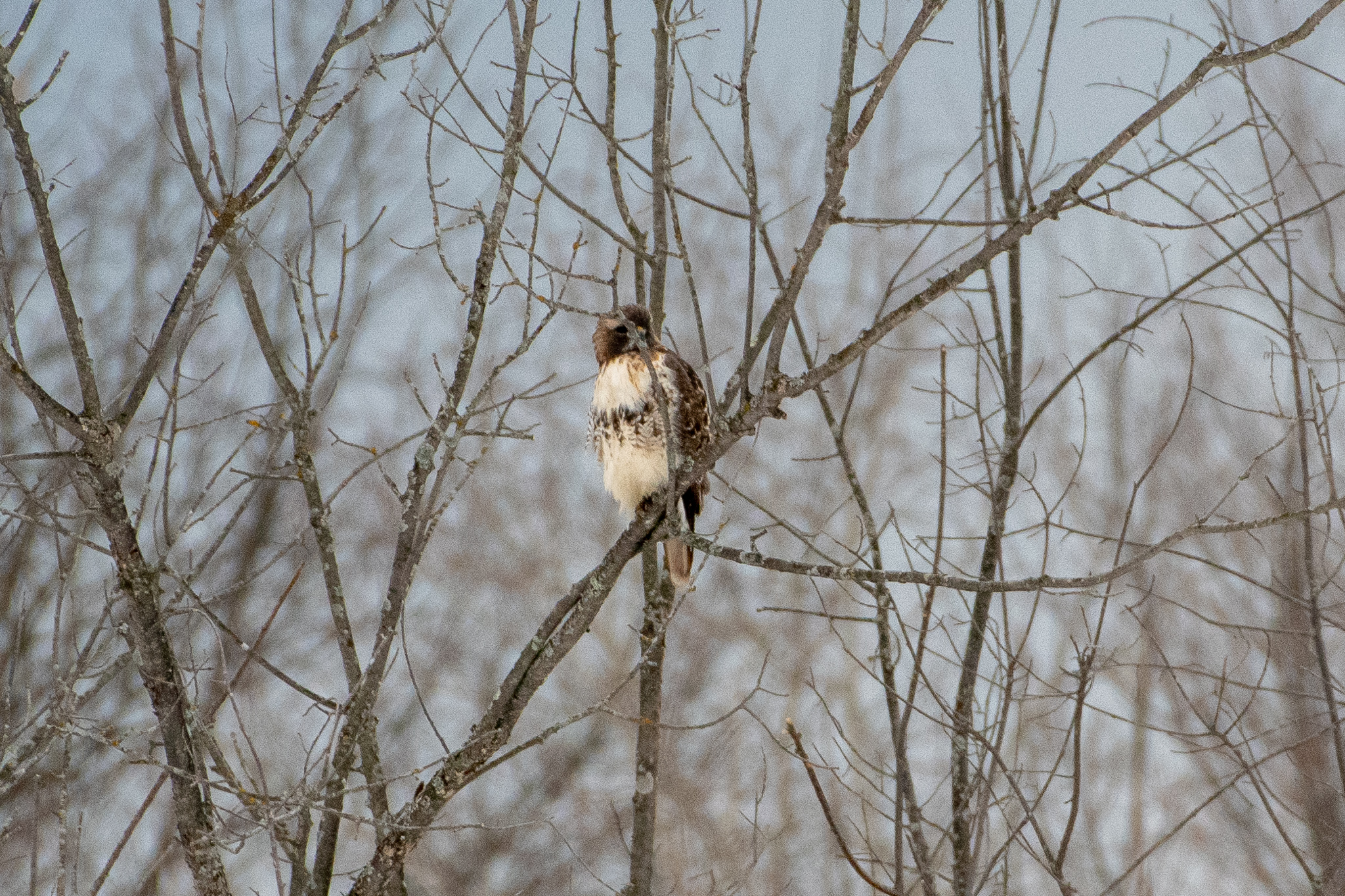 |
| Number Observed | 1 |
| Reporting Observer's Name | Richard Littauer |
| Mailing Address | 10 Monsignor Crosby Ave Apt 4 Montpelier, VT 05602 United States Map It |
| Email hidden; Javascript is required. | |
| Date Completed | 04/26/2019 |
| Latitude of Observation (enter 0 if unable to provide) | 44.5031 |
| Longitude of Observation (enter 0 if unable to provide) | -73.0128 |
| Place Name | Jericho Road |
| Township | Jericho |
| County | Chittenden |
| Vermont eBird Checklist URL | ebird.org |
| Time of Day | 06:23 PM |
| Length of Time Observed | 2 minutes |
| Maximum Estimated Distance from Bird (in feet) | 200 |
| Minimum Estimated Distance from Bird (in feet) | 500 |
| Noteworthy Weather Conditions | Overcast. |
| Optical Equipment Used for Observation | Nikon D500 camera with a 500mm lens. |
| Observer’s Previous Acquaintance With This or Similar Species | Less than a year's experience identifying subspecies of Red-tailed Hawks. 20+ years experience identifying red-tails. |
| I certify that any attachments included with this report were captured during this observation event. | |
| Description of Habitat | Light woods overlooking fields. Farmland. |
| Behaviors Observed | The bird was sitting in a tree away from the road. |
| Description of Vocalizations | None. |
| Verbal Narrative & Description of Observation | I was driving and I saw this hawk perched in a tree. I pulled over, got my camera, and took some photos of it, and looked at the photos. I thought it might be an abieticola from them, and logged it accordingly. I was late for a meeting, and so did not stick around for the bird to take flight. |
| Relative Size & Shape | Adult-sized Hawk. |
| Head | Almost completely brown head, with almost unnoticeable white supercilium. Very small white patch in throat. |
| Feet & Bill | The bill was mostly gray and yellow. Feet unknown. |
| Breast, Belly, Flanks, Under Tail Coverts | The belly has dark brown dribbling, and the upper chest has rufous marks. |
| Tail | Minimal banding seen in photo, and not clearly red to my eyes. |
| IMPORTANT: What similar species were eliminated when making the identification and how was this bird different? | Borealis was ruled out due to the amount of brown on the head, the lack of a white throat, and the dark dribbling with rufous shoulders. |
| Other Notes & Comments | Photos are the main evidence, I'm afraid. |
| This report was written from notes taken: | Written from Memory |
Vermont Atlas of Life Partners