| Common Name | Baltimore Oriole |
|---|---|
| Scientific Name | Icterus galbula |
| Type of Report | Out-of-Season |
| Date of Observation | 01/15/2019 |
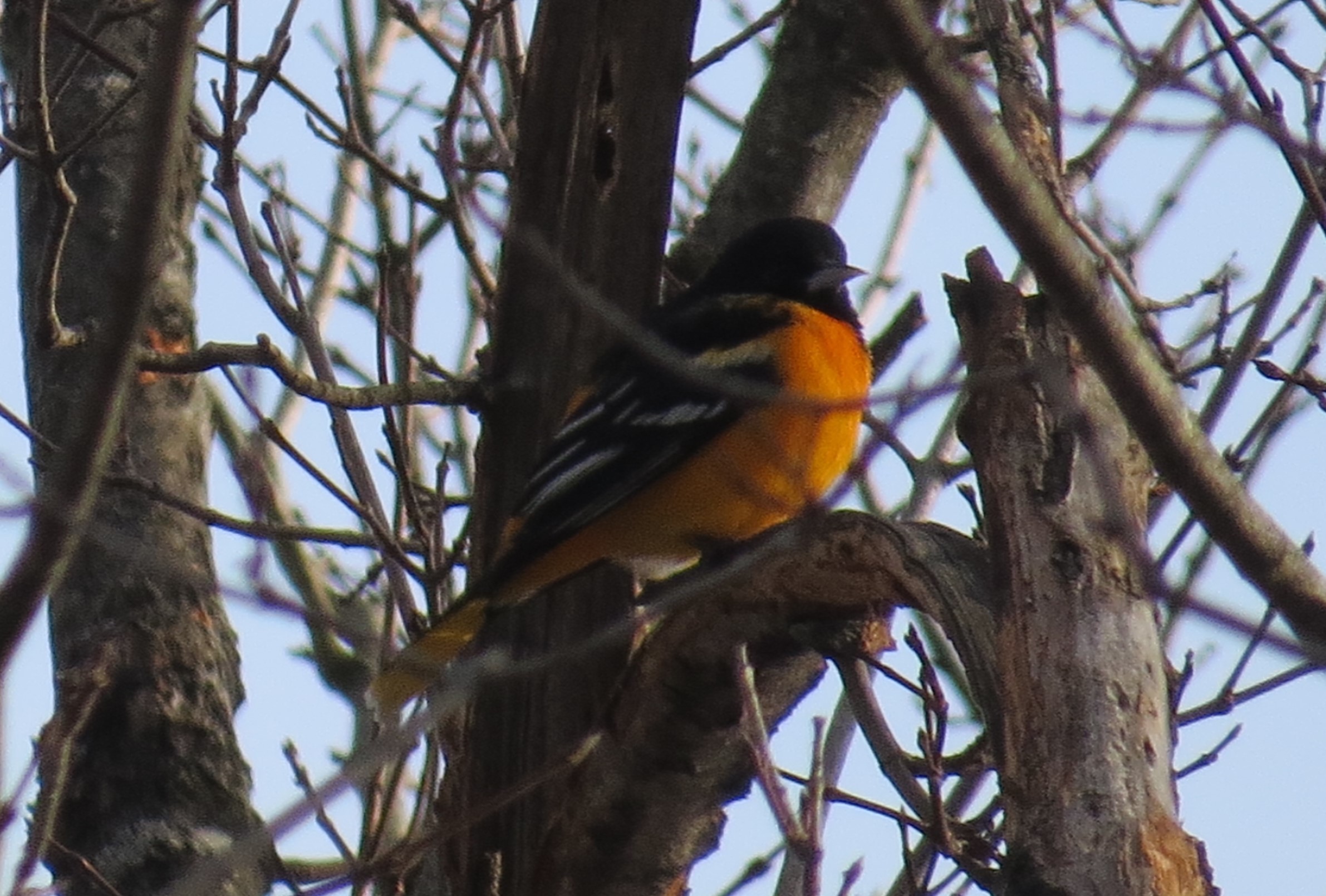
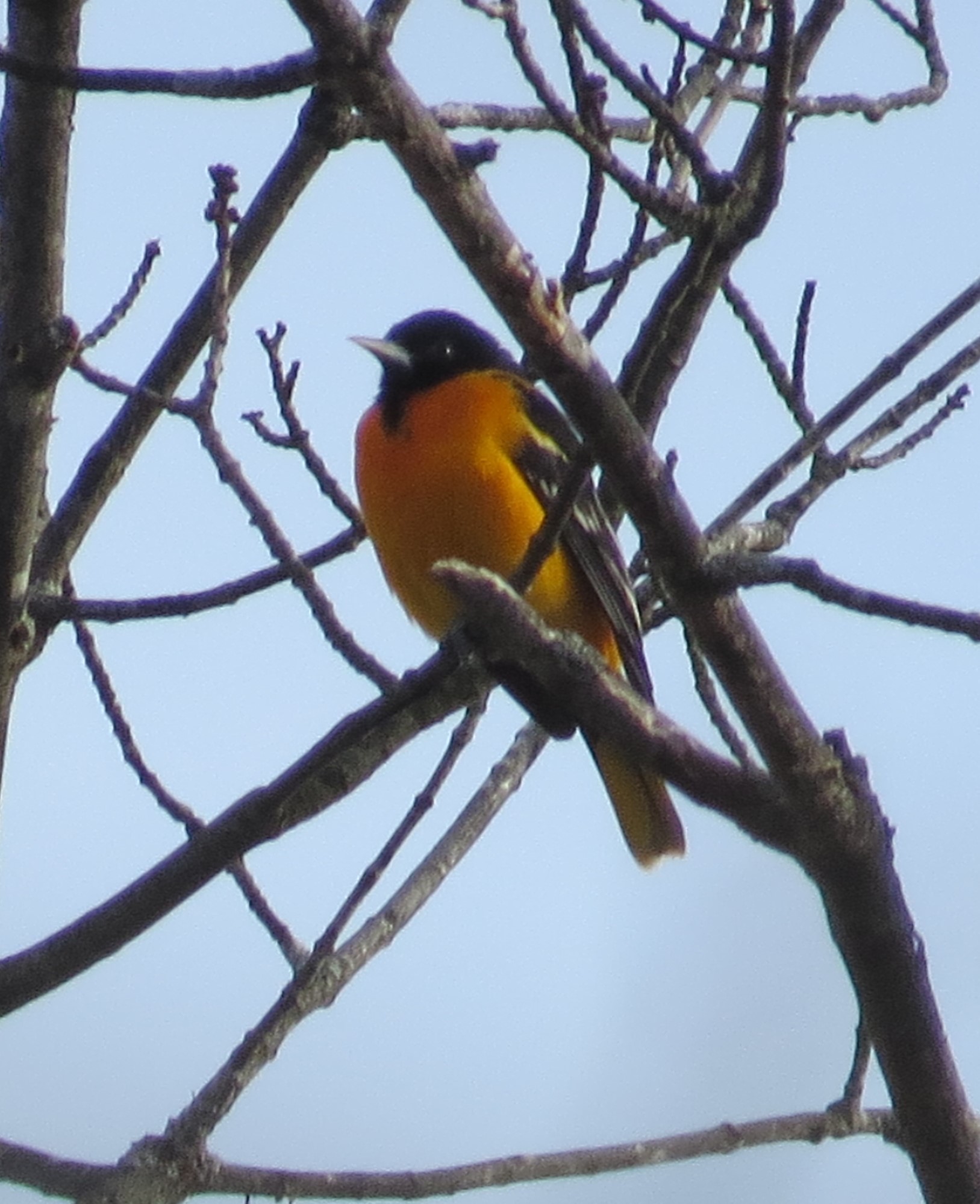
| Media | |
| Number Observed | 2 (this report: 1 adult male) |
| Reporting Observer's Name | Kenneth Cox |
| Mailing Address | 28 North Puckerbrush Road South Reading, VT 05153 United States Map It |
| Email hidden; Javascript is required. | |
| Date Completed | 01/21/2019 |
| Names & Emails of Other Contributing Observers | Cathryn Abbott |
| Latitude of Observation (enter 0 if unable to provide) | 42.872983 |
| Longitude of Observation (enter 0 if unable to provide) | 72.57145 |
| Place Name | Kenyon Residence, 175 Upper Dummerston Road |
| Township | Brattleboro |
| County | Windham |
| Time of Day | 09:08 AM |
| Length of Time Observed | 1 hour |
| Maximum Estimated Distance from Bird (in feet) | 180 |
| Minimum Estimated Distance from Bird (in feet) | 70 |
| Noteworthy Weather Conditions | Partly cloudy, cold, no precipitation. Good conditions for observing birds. |
| Optical Equipment Used for Observation | Bins (Cox): Swarovski 8.5X42 Swarovision |
| Observer’s Previous Acquaintance With This or Similar Species | This is a common species in Vermont from May through September and frequently encountered in suitable habitat. As such the species is very familiar to this observer. I have been an avid birder since the early 1970s. Other similar species with which I have experience are Bullock's Oriole (I. bullockii) and Orchard Oriole (I. spurius). |
| I certify that any attachments included with this report were captured during this observation event. | |
| Description of Habitat | Bird has been visiting feeders at the Kenyon property since at least the Brattleboro Christmas Bird Count (December 15, 2018). Feeders offer the usual seed types, suet and meal worms. The property is nicely landscaped with numerous deciduous and coniferous trees and shrubs of diverse age classes/sizes, perennials, vines, etc. |
| Behaviors Observed | During our viewing time the adult male was not seen at feeders but limited its activities to the crowns of the tall deciduous trees (Acer sp.?) located behind the Kenyon residence and next to VT Route 30. |
| Description of Vocalizations | None heard. |
| Verbal Narrative & Description of Observation | This bird was present throughout most of the one hour time interval that Cat Abbott and I were on location. Being the bird remained in the upper heights of deciduous trees during this time, it was clearly visible with binoculars. However, our angle of view was mostly from below limiting extensive observation of the bird's upper parts. Numerous photos were taken of which a couple are included in this report. In addition to this bird there was a second Baltimore Oriole. Sex and age of this bird is uncertain but believed to be either a first year male or female. Details of this bird are submitted in a separate RSD. |
| Relative Size & Shape | Bird was similar in size and shape to a Red-winged Blackbird. |
| Head | Head was completely black hooded including throat and nape. Black throat tapered to a point on orange upper breast. Eye was dark (black). |
| Feet & Bill | Gray bill of moderate length tapered to a point. Feet were not clearly visible. |
| Upper Back | Black with no discernible markings. |
| Lower Back & Rump | Lower back was orange. Rump was not seen from observers vantage point and hidden under bird's folded wings. |
| Wings | Wings black with white tertial and secondary feather edges, white median wing bar, and pale orange lesser wing coverts. |
| Breast, Belly, Flanks, Under Tail Coverts | Entirely orange. |
| Tail | From limited view of observer's vantage point the upper side of tail appeared dark (black), but pale orange underside of tail was clearly visible. |
| IMPORTANT: What similar species were eliminated when making the identification and how was this bird different? | Subject bird lacked orange superciliary, cheeks and ear coverts of adult male Bullock's Oriole, as well as latter species extensive white wing patches. Orchard Oriole was eliminated on basis of the subject bird being bright orange rather than dark reddish brown. |
| Other Notes & Comments | Bird was identified as an adult male on basis of plumage characteristics. |
| This report was written from notes taken: | Immediately After |
Vermont Atlas of Life Partners