| Common Name | Baltimore Oriole |
|---|---|
| Scientific Name | Icterus galbula |
| Type of Report | Out-of-Season |
| Date of Observation | 12/14/2017 |
| Media | |
| Number Observed | 1 |
| Reporting Observer's Name | Zacheriah Cota-Weaver |
| Mailing Address | 175 Depot Street Hyde Park, VT 05655 United States Map It |
| Email hidden; Javascript is required. | |
| Date Completed | 12/15/2017 |
| Latitude of Observation (enter 0 if unable to provide) | 44.325355 |
| Longitude of Observation (enter 0 if unable to provide) | -72.753341 |
| Place Name | 34 Meadow Lane |
| Township | Duxbury |
| County | Vermont |
| Vermont eBird Checklist URL | ebird.org |
| Time of Day | 07:45 AM |
| Length of Time Observed | 35 minutes |
| Maximum Estimated Distance from Bird (in feet) | 12 |
| Minimum Estimated Distance from Bird (in feet) | 3 |
| Noteworthy Weather Conditions | Clear sky. Temperature 9 degrees fahrenheit. |
| Optical Equipment Used for Observation | Eagle Optics 8x42 binoculars. |
| Observer’s Previous Acquaintance With This or Similar Species | Many previous encounters (100+), as species is a regular breeder in Vermont. |
| I certify that any attachments included with this report were captured during this observation event. | |
| Description of Habitat | Visiting feeder station behind a single story ranch home in a village setting. Flew in from backyard tree line. Traveled between outside wall mounted feeder and nearby hydrangea bush. |
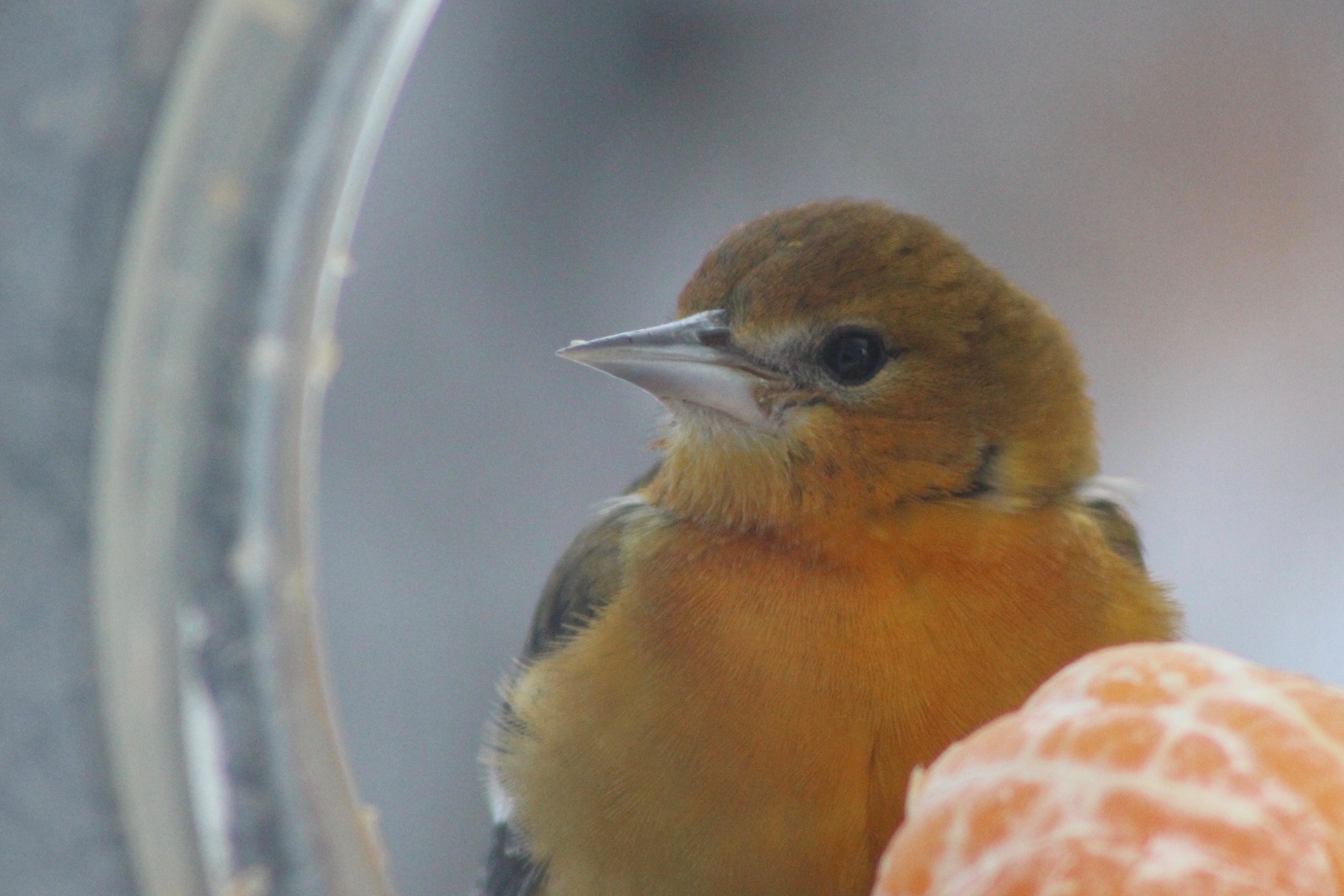
| Behaviors Observed | Flew in to feeder and began feeding vigorously on clementine. Video of feeding behavior was captured by homeowner and is available. While perched in hydrangea, birds wing feathers appeared to quiver, as if shivering. |
| Description of Vocalizations | No vocalizations heard. |
| Verbal Narrative & Description of Observation | Arrived at private residence where the bird has been visiting a feeder at 07:45. Bird was not present. The homeowner had placed a peeled clementine on a black oil sunflower seed feeder. On 12/13 the bird had eaten an entire clementine. I went inside a waited with homeowner and monitored the feeder. The bird arrived at 08:08, flying in from the tree line across the open yard. It immediately began eating the clementine. Twice the bird flew to a nearby hydrangea bush where it preened for a few minutes before returning to feed. |
| Relative Size & Shape | Larger than nearby DEJU. |
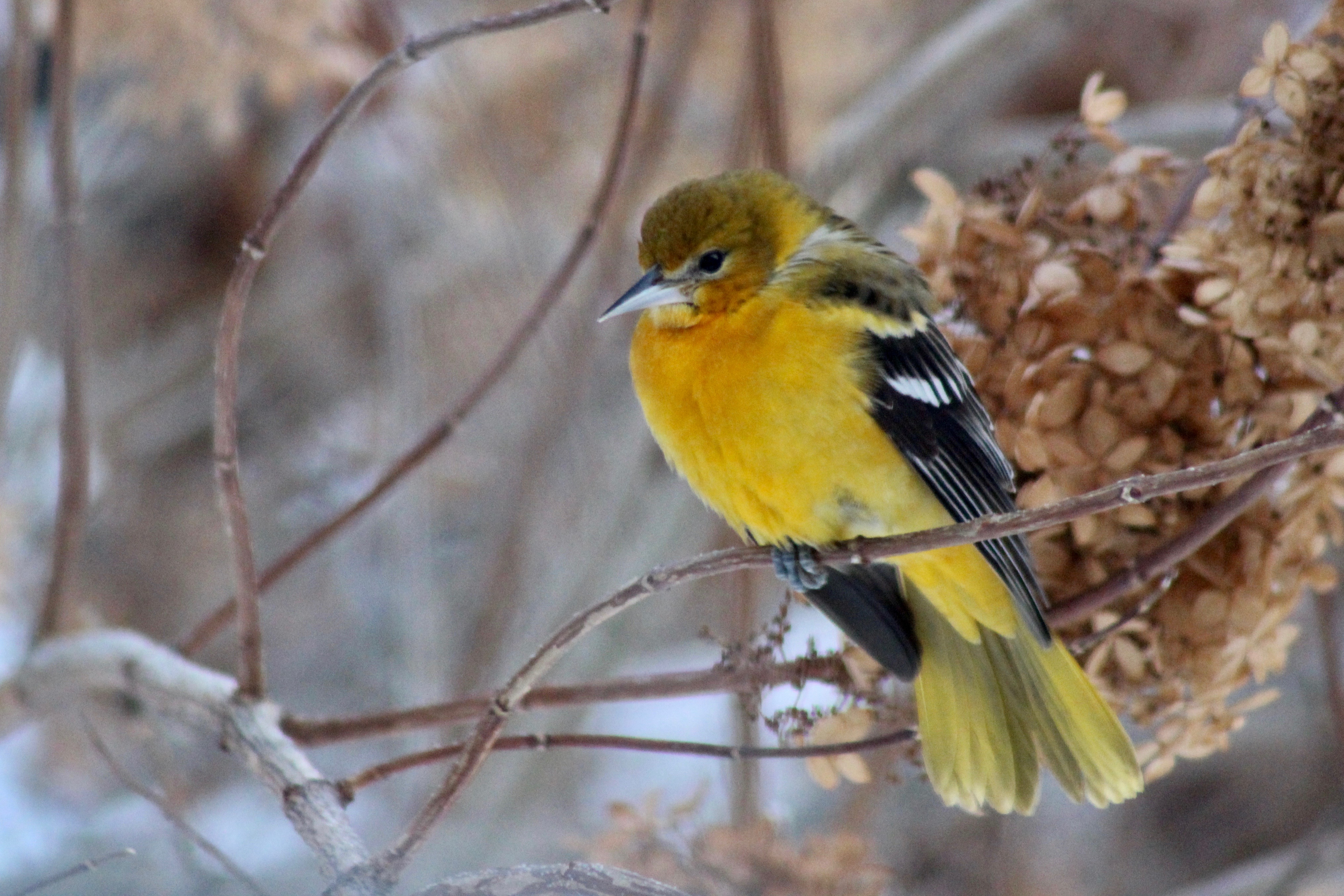
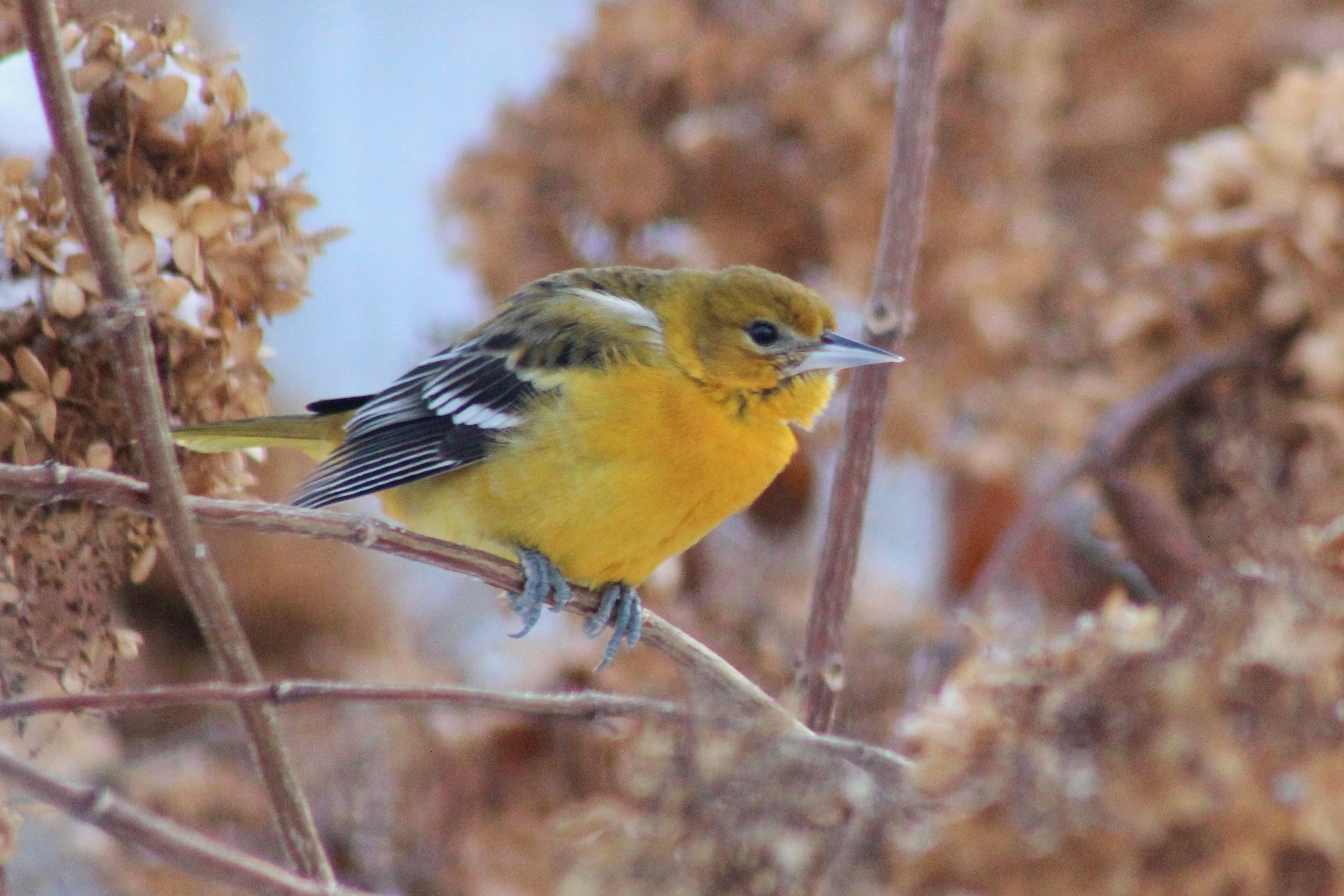
| Head | Brownish orange crown, brighter orange on sides of nape, cheeks, and throat. Black eyes. Dark gray lores with a faint dark gray eye line. |
| Feet & Bill | Legs and feet a blue-gray. Long and pointed bill with slight decurve in mandible. Bill a silvery blue except for top portion of maxilla which is dark gray. |
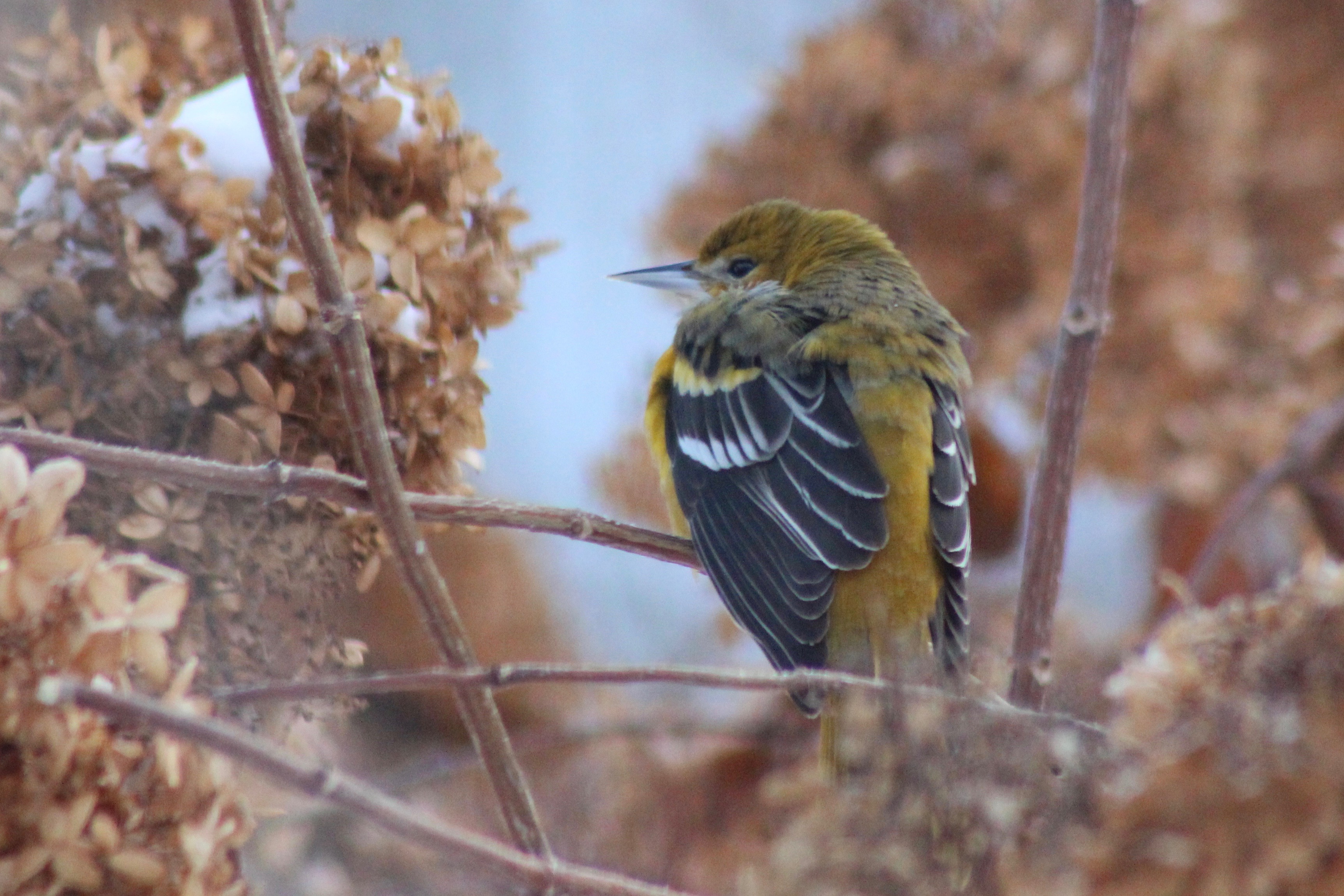
| Upper Back | Mottled dark orange and gray-brown. |
| Lower Back & Rump | Dusky brown-orange |
| Wings | Strong white wing bars on greater coverts, light orange wing bars on median coverts. Wings otherwise dark gray. |
| Breast, Belly, Flanks, Under Tail Coverts | Breast bright orange, fading into a light yellow-orange on belly and flanks. Under tail coverts a yellow-orange. |
| Tail | Tail a dusky brown-orange with olive tones. |
| IMPORTANT: What similar species were eliminated when making the identification and how was this bird different? | Bullock's Oriole considered: lacked the black throat of a first year male BUOR; lacked the cream belly and gray back of a female BUOR. Streak-backed Oriole considered: lacked the dark tip on the lower mandible of a first year female SBOR, lacked black throat of adult female SBOR. |
| Other Notes & Comments | First observed by Mary Whitcomb at her home on 12/9. Still present today 12/15. |
| This report was written from notes taken: | Written from Memory |
Vermont Atlas of Life Partners