| Common Name | King Eider |
|---|---|
| Scientific Name | Somateria spectabilis |
| Type of Report | Rare Species |
| Date of Observation | 11/14/2017 |
| Media | |
| Number Observed | 1 female |
| Reporting Observer's Name | Theodore Murin |
| Mailing Address | 71 Irish Cove Road South Burlington, VT 05403 United States Map It |
| Email hidden; Javascript is required. | |
| Date Completed | 11/15/2017 |
| Names & Emails of Other Contributing Observers | Jim Mead, Henry Trombley, Qing Ren |
| Latitude of Observation (enter 0 if unable to provide) | 44.03572 |
| Longitude of Observation (enter 0 if unable to provide) | -73.42555 |
| Place Name | Champlain Bridge |
| Township | Addison |
| County | Addison |
| Time of Day | 11:53 AM |
| Length of Time Observed | 2 hours |
| Maximum Estimated Distance from Bird (in feet) | 10000 |
| Minimum Estimated Distance from Bird (in feet) | 1000 |
| Noteworthy Weather Conditions | Overcast, nearly calm wind (ripples only on water surface), air temperature approx. 37 degrees Fahrenheit, water temperature approx. 49 degrees Fahrenheit; despite air/water temperature difference little atmospheric distortion noted due to elevated observation platform (bridge) and relatively close proximity at minimum distance, significant distortion at maximum distance. |
| Optical Equipment Used for Observation | Zeiss 8x42 TFL binoculars, a Nikon 20-45x 60mm spotting scope, and a Celestron 8-inch Schmidt-Cassegrain telescope alternately fitted with a Celestron 18mm X-Cel LX eyepiece (effective 113x magnification) and a T-ring, T-adapter and Canon 400D digital camera (effective 64x magnification) mounted on a custom platform, Manfrotto 3066 video head, and Manfrotto 132XB heavy duty tripod. |
| Observer’s Previous Acquaintance With This or Similar Species | Have seen a number of King Eiders and many Common Eiders. |
| I certify that any attachments included with this report were captured during this observation event. | |
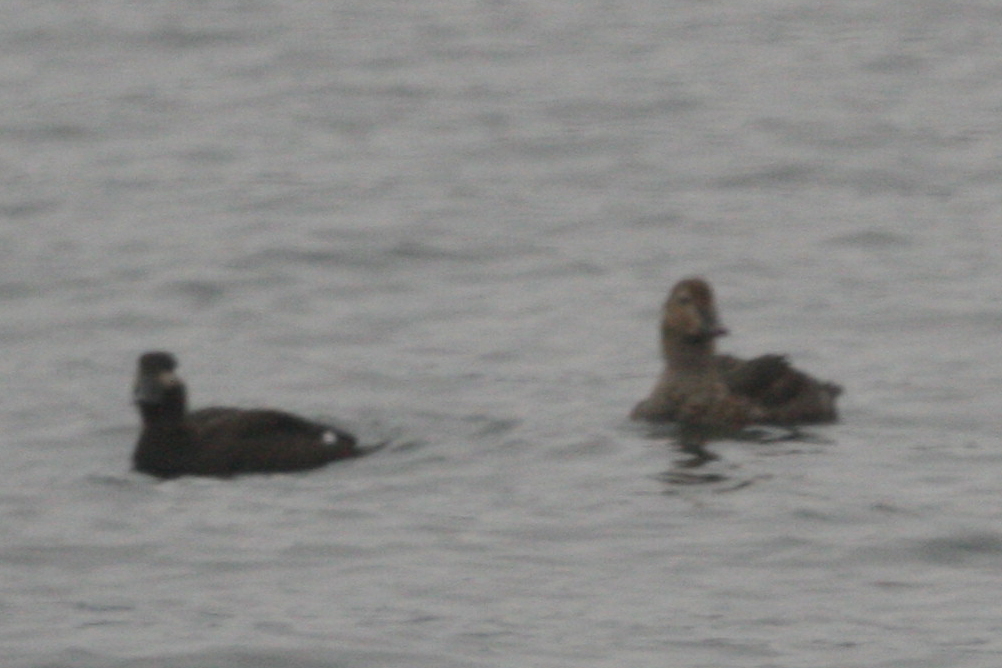
| Description of Habitat | Open lake; bird was closely associating with male White-winged Scoter and was eventually harassed by an adult Great Black-backed Gull. No other interactions were observed. There were not many birds in the general vicinity, including several Common Loons, 3 Red-throated Loons, and a smattering of various ducks. |
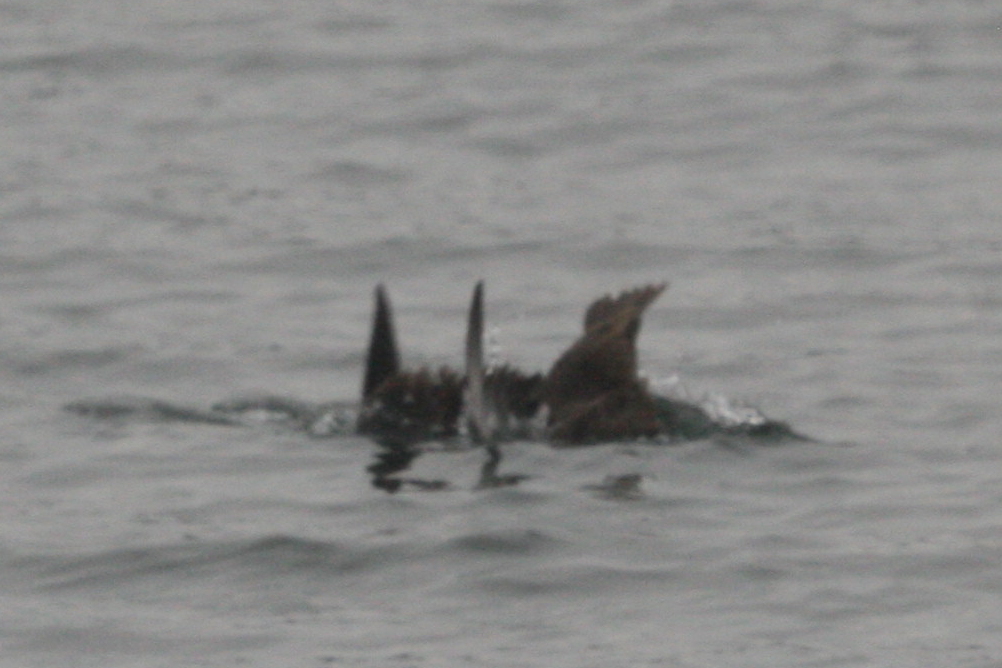
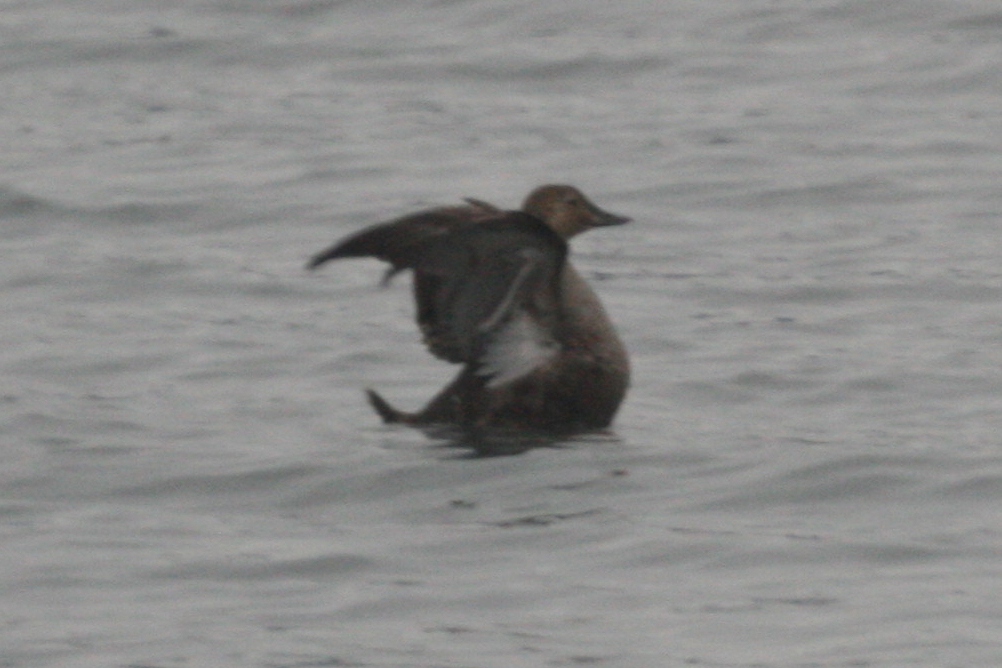
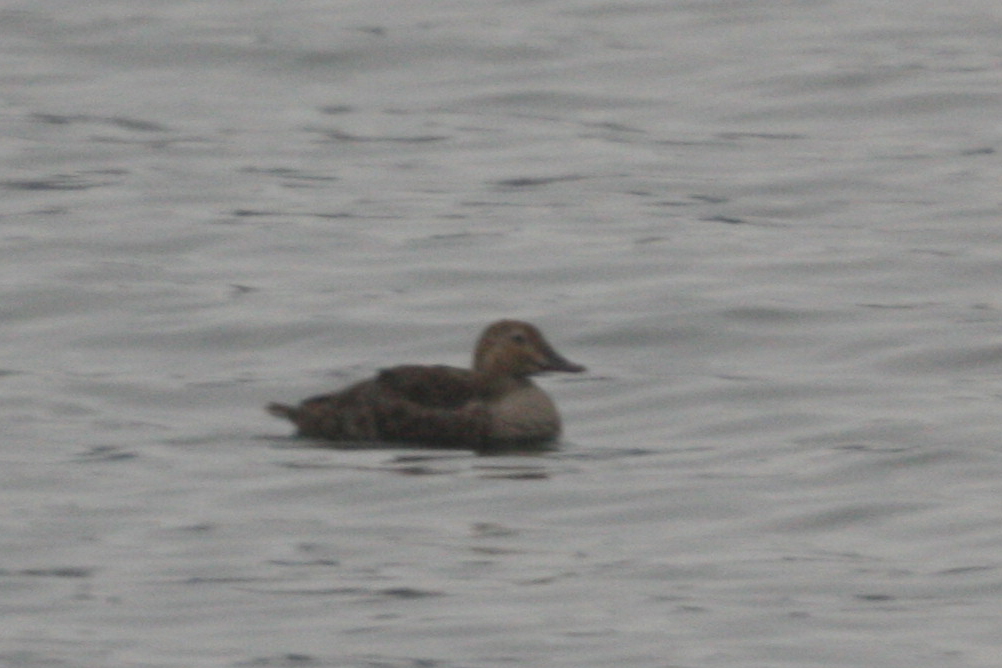
| Behaviors Observed | Observed through sessions of feeding and preening. Bird dove with semi-opened wings (see photo _10) and resurfaced on at least two occasions with what appeared to be popcorn balls of zebra mussels. Bird often dove immediately after male White-winged Scoter companion dove. Bird was eventually harassed by an adult Great Black-backed Gull and flew low over the water to relocate approximately two miles to the north. |
| Description of Vocalizations | None heard. |
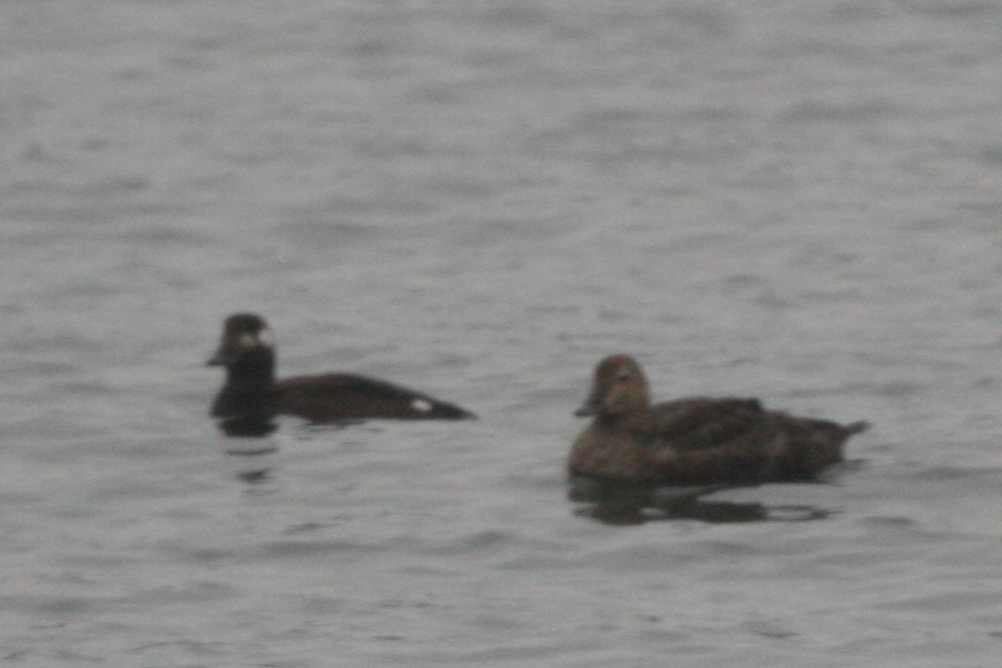
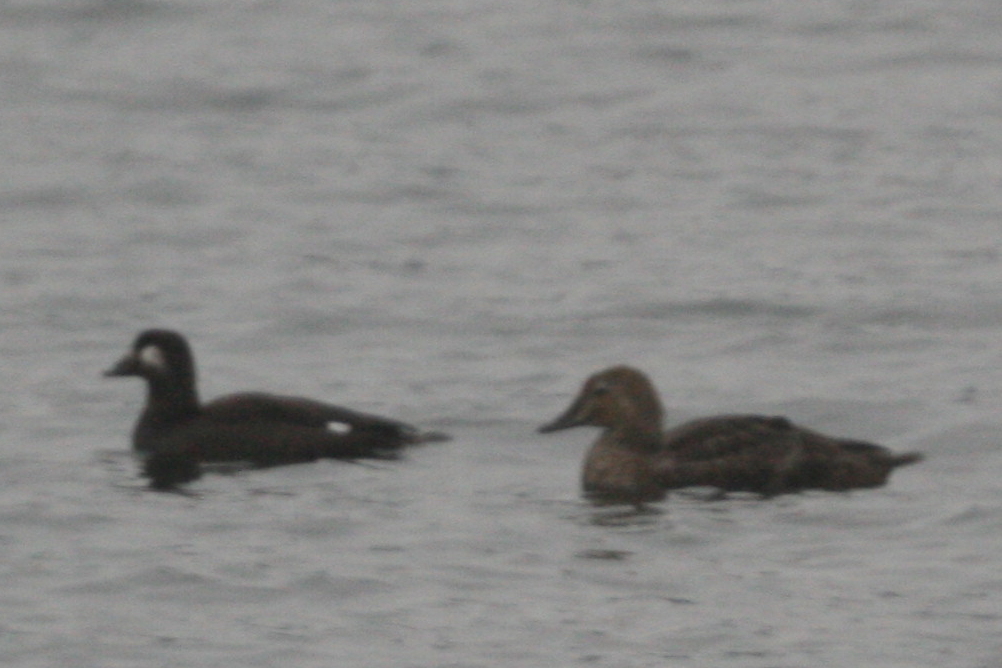
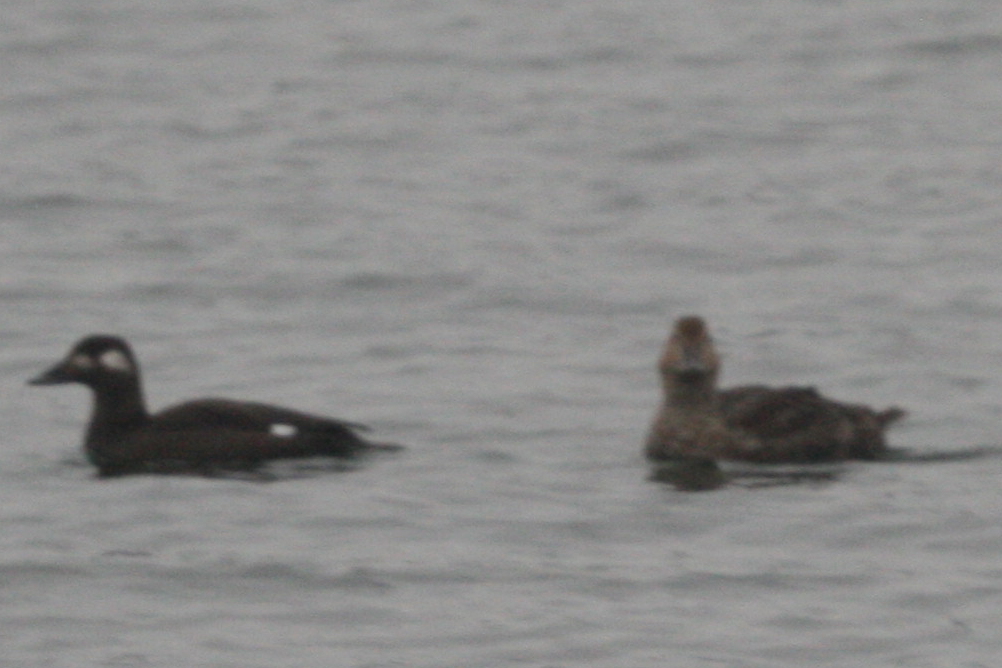
| Verbal Narrative & Description of Observation | A large brown, finely patterned duck, slightly larger than adjacent White-winged Scoter, with relatively heavily angular bill was seen off the west side of the Champlain Bridge in Addison. We observed the bird on and off for about 2 hours as it dove, preened, and closely associated with an adult male White-winged Scoter. It was eventually chased off about two miles to the north by an adult Great Black-backed Gull which apparently had intentions of eating it. The gull had stalked it and flew at it several times over the course of about 5 minutes. The bird dove several times to escape the gull, but eventually flew. Various observers came and went during the two hour period. |
| Relative Size & Shape | Slightly larger than adjacent male White-winged Scoter. |
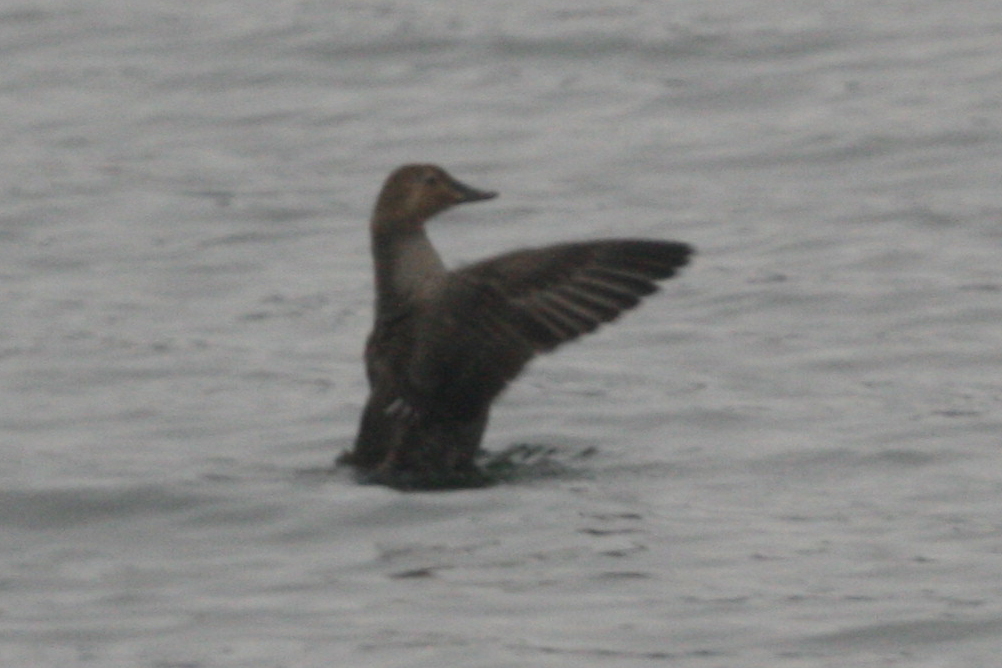
| Head | Warm, light brown head, with light eye ring fairly large over eye, light line behind eye arcing down side of face, light area at center base of bill reaching up toward eye. Dark eye. |
| Feet & Bill | Dark bill, relatively large with slight concave upper edge, upturned gape. Feet not seen. |
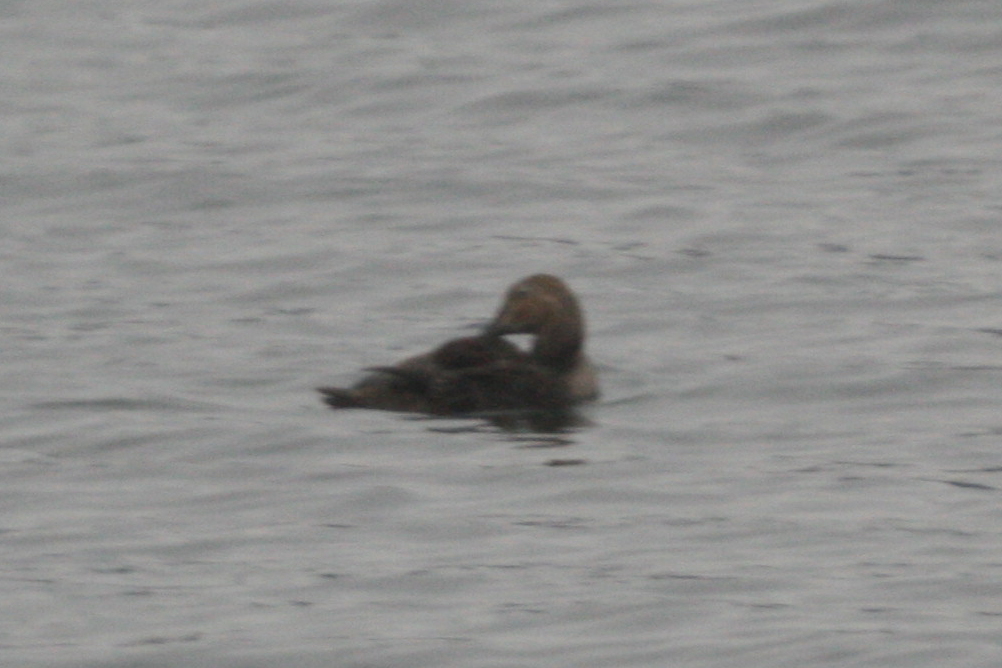
| Upper Back | Brown with fine dark pattern, slight "bump" in center of back (photos _1, and _7 through _9). |
| Lower Back & Rump | Brown with fine dark pattern. |
| Wings | Dark flight feathers with lighter brown inner webs. Greater coverts dark. Lesser coverts brown with fine dark pattern. Axillaries white. Thin white line across inner underwing coverts. |
| Breast, Belly, Flanks, Under Tail Coverts | Breast grayer brown with fine dark scalloping pattern, belly and sides darker, undertail not noted. |
| Tail | Tail fairly short and stout, dark, often held slightly above waterline at rest, splayed when initiating dive. |
| IMPORTANT: What similar species were eliminated when making the identification and how was this bird different? | Bill less substantial, more decurved on top, and with less feathering at base than female Common Eider. Head shape less elongated than Common Eider. Light pattern on face also slightly different than on Common. Overall size also smaller than Common Eider as noted in comparison to adjacent White-winged Scoter. Face pattern and white axillaries distinguish from wholly unexpected Spectacled Eider. Back "bump" unique. |
| Other Notes & Comments | Presumably this same bird was observed by myself and Qing Ren at this same location late on the afternoon of 11/12/17. After about 20 minutes of observing in poor lighting conditions we finally concluded its identification was inconclusive. |
| This report was written from notes taken: | Written from Memory |

Vermont Atlas of Life Partners