| Common Name | Black-bellied Whistling-Duck |
|---|---|
| Scientific Name | Dendrocygna autumnalis |
| Type of Report | Rare Species |
| Date of Observation | 06/05/2018 |
| Media | 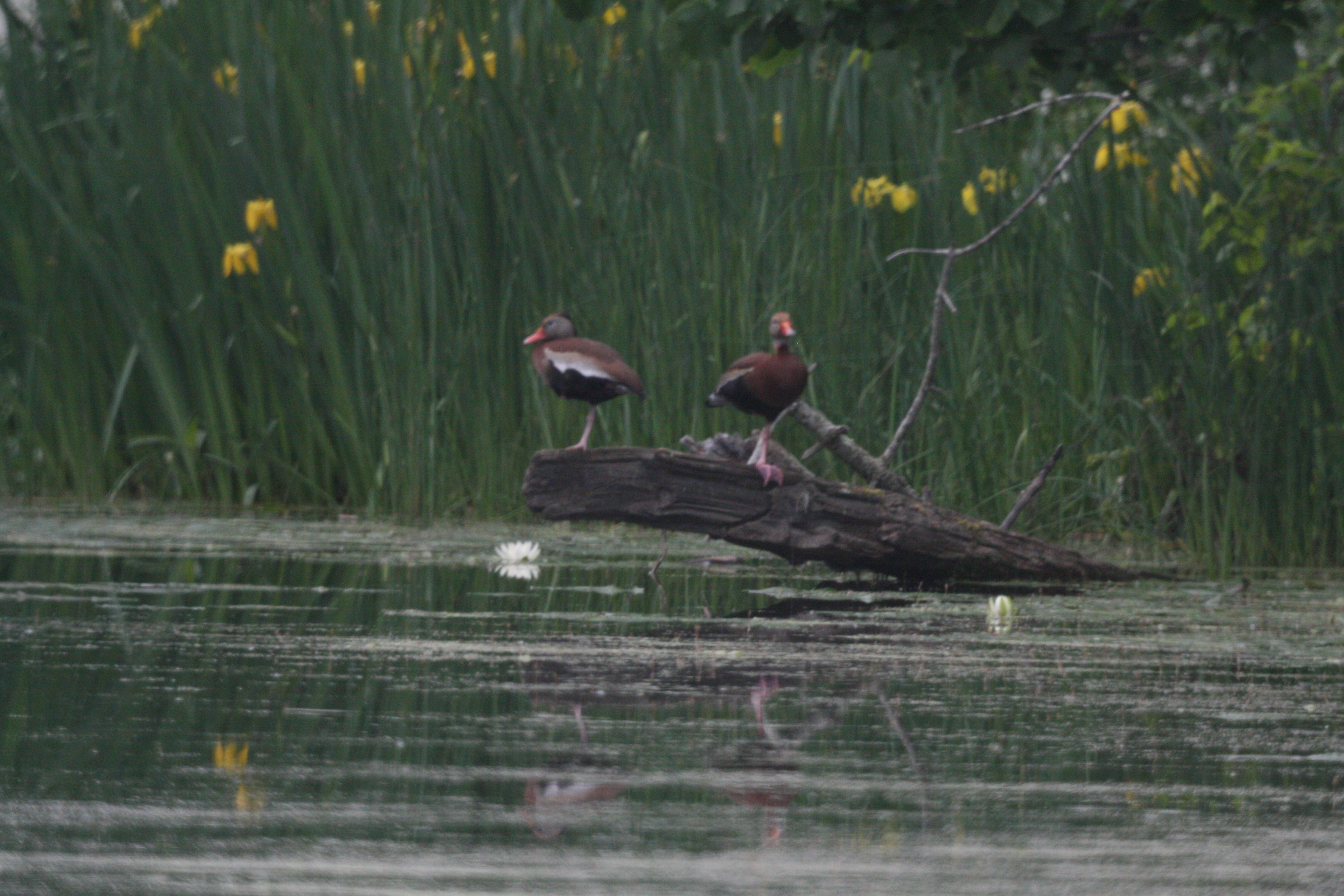 |
| Number Observed | 2 adults |
| Reporting Observer's Name | Theodore Murin |
| Mailing Address | 71 Irish Cove Road South Burlington, VT 05403 United States Map It |
| Email hidden; Javascript is required. | |
| Date Completed | 06/05/2018 |
| Names & Emails of Other Contributing Observers | Larry Haugh (Shelburne, VT), Jim Mead (Williston, VT), Henry Trombley (Starksboro, VT) |
| Latitude of Observation (enter 0 if unable to provide) | 43.859 |
| Longitude of Observation (enter 0 if unable to provide) | -73.255 |
| Place Name | near East Shoreham Covered Railroad Bridge |
| Township | Shoreham |
| County | Addison |
| Time of Day | 03:45 PM |
| Length of Time Observed | approx 40 minutes |
| Maximum Estimated Distance from Bird (in feet) | 800 |
| Minimum Estimated Distance from Bird (in feet) | 800 |
| Noteworthy Weather Conditions | overcast, calm, roughly 60 degrees Fahrenheit |
| Optical Equipment Used for Observation | Zeiss 8x42 TFL binoculars; a Nikon 20-45x 60mm spotting scope; and a Celestron 8-inch Schmidt-Cassegrain telescope alternately fitted with a Celestron 18mm X-Cel LX eyepiece (effective 113x magnification) and a T-ring, T-adapter and Canon 400D digital camera (effective 64x magnification) mounted on a custom platform, Manfrotto 3066 video head, and Manfrotto 132XB heavy duty tripod. |
| Observer’s Previous Acquaintance With This or Similar Species | Saw many, possibly hundreds, recently in Texas. |
| I certify that any attachments included with this report were captured during this observation event. | |
| Description of Habitat | Long, slender pond (apparently dammed stream) with cattail marsh and wooded edge adjacent to farm fields; spanned by covered railroad bridge and rural road bridge; houses not far away. No birds were closely associating and no interactions with other bird species were seen; a family of Canada Geese was swimming by possibly 500 feet away. |
| Behaviors Observed | Birds rested, slept and preened for entire observation period; birds looked at observers periodically but did not seem particularly interested in observers or surprisingly frequent car traffic ~800 feet away. |
| Description of Vocalizations | None heard |
| Verbal Narrative & Description of Observation | See photo. Two distinctly colored, long-legged and long-necked ducks were resting on a log which extended out of the water. Birds appeared nearly identical with the exception that one's belly and breast area appeared more distinctly and darkly marked - suggesting possible male and female - though apparently this field mark is more suggestive than reliable. |
| Relative Size & Shape | With no other birds nearby for reference, could only estimate as medium-sized ducks. Shape, however, was unusual due to long legs, upright posture and long necks. |
| Head | Crown strip cinnamon fading to dark on hind crown and nape; face and throat gray, eye dark, eye ring light. |
| Feet & Bill | Bill reddish pink with gray tip; concave top edge and generally similar in shape to Mallard. Legs long and light pink, toes and webbed feet pink. |
| Upper Back | Cinnamon |
| Lower Back & Rump | not seen |
| Wings | Not seen extended. Cinnamon scapulars, dirty cinnamon tertials, whitish and white coverts. |
| Breast, Belly, Flanks, Under Tail Coverts | Breast cinnamon with distinct delineation from black belly; flanks black; undertail whitish. |
| Tail | Tail black and somewhat spear shaped. |
| IMPORTANT: What similar species were eliminated when making the identification and how was this bird different? | Believe it would be difficult to confuse this distinct species with any other - see photo. |
| Other Notes & Comments | Belly and breast difference between the two suggests possibility of male and female - see note above. |
| This report was written from notes taken: | Written from Memory |
Vermont Atlas of Life Partners