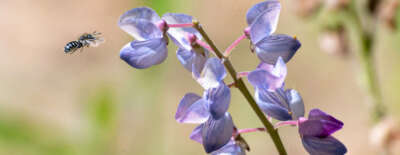
Saving the last of Vermont's native lupine
June 22, 2026It is lupine season here in Vermont. To most of us, all the lupine we see looks about the same: big purple flowers along the roadsides. These robust plants aren’t actually native to Vermont. But there's a very rare species of lupine that is native to Vermont, and there are almost none of these plants left in the state. Listen to the story at Vermont Public »
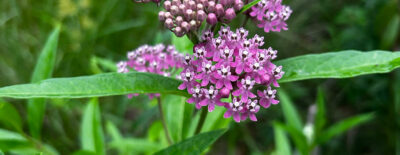
Beyond ‘No Mow May’: How to build a haven for native plants in your yard
April 25, 2026A national movement is encouraging homeowners to rip up their lawns to cultivate ecological diversity. Story at VTDigger »
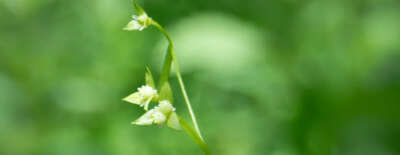
By a Stream in Vermont, a Glimpse of a Plant Last Seen a Century Ago
June 11, 2024“Are you sitting down?” Vermont’s state botanist asked a fellow plant expert after spotting false mermaid-weed last month. Read more at NYT »
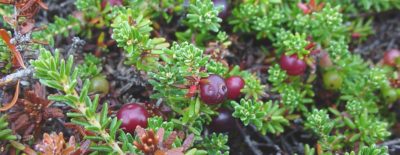
Alpine Plant Believed Locally Extinct in Vermont Since 1908 Rediscovered
November 18, 2022The Vermont Fish and Wildlife Department announced on Tuesday that the purple crowberry (Empetrum atropurpureum), a diminutive alpine shrub last documented in Vermont in 1908, has been rediscovered on Mt. Mansfield. Read the Blog Post »
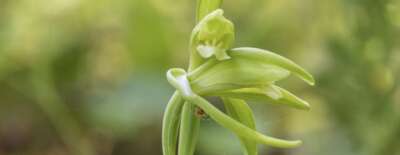
Federally Threatened Orchid Discovered in Vermont
June 08, 2022Botanists with the Vermont Fish and Wildlife Department confirmed that a population of Small Whorled Pogonia—believed to be extinct in Vermont since 1902 and listed as Threatened under the Federal Endangered Species Act—has been documented on Winooski Valley Park District conservation land in Chittenden County. The observation was first reported to the Vermont Atlas of Life project on iNaturalist last fall. Read the Blog Post »
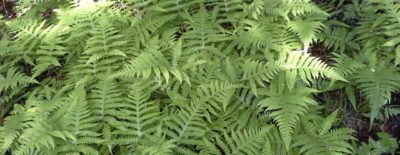
Tall Beech Fern (Phegopteris excelsior): Newly discovered fern species in Vermont
November 25, 2020In 1993, botanist Art Gilman found a fern in Northfield that he took for a Broad Beech Fern, but its fronds, spores, and lowest leaflets didn’t quite match. Three decades of study later, that plant has been described as Tall Beech Fern (Phegopteris excelsior), a species new to science that is thought to occur only in the glaciated Northeast. Read the Blog Post »

The Climbing Fern is Rediscovered in Vermont
August 06, 2019Last observed in Vermont in 1997, the climbing fern has been spotted again growing in the Northeast Kingdom, according to Vermont Fish & Wildlife’s botanist Bob Popp. Considered extirpated in the state, the climbing fern (Lygodium palmatum), was confirmed by botanist Art Gilman along a VELCO-owned powerline. Read the blog post »
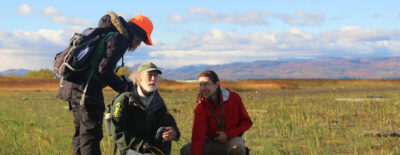
Vermont's Dry Summer Spurred Blooms Of Rare Plants Along Lake Champlain
November 11, 2016Lake Champlain water levels approached record lows this summer, which exposed acres of beach sand that would normally be underwater. This allowed some rare — and a few endangered— species of sand-dwelling grass plants to blossom, some of which may have lain dormant for decades. Listen to the story at Vermont Public »
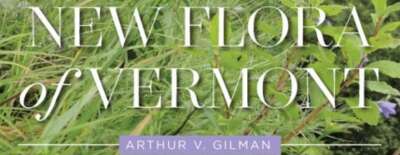
Comprehensive New Book Published on Vermont’s Plants
December 15, 2015A comprehensive new manual of Vermont’s plants has been released by the New York Botanical Garden Press. The first reference of its kind since 1969, New Flora of Vermont was written by botanist Arthur Gilman of Marshfield, Vermont. Read the blog post »

New to Science: Quillwort Discovered in Vermont
February 03, 2014Green Mountain Quillwort (Isoëtes viridimontana) was discovered in 2010 by Michael Rosenthal, an amateur botanist from Vermont, and described as a new species. It is currently known to exist in only one specific location: a pond in Windham County, Vermont, where it grows in a small, acidic, oligotrophic (low-nutrient) lake. Read the blog post »
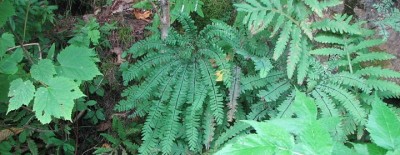
New to Science: Maidenhair Fern Described from Vermont
July 04, 1991Published in April 1991 in the botanical journal Rhodora, Cathy A. Paris's paper formally introduced Adiantum viridimontanum, an allotetraploid maidenhair fern species originating from the hybridization of Adiantum pedatum and Adiantum aleuticum. The deciduous terrestrial fern is strictly localized to serpentine and ultramafic rock outcrops in Vermont, Quebec, and coastal Maine. Read the paper »