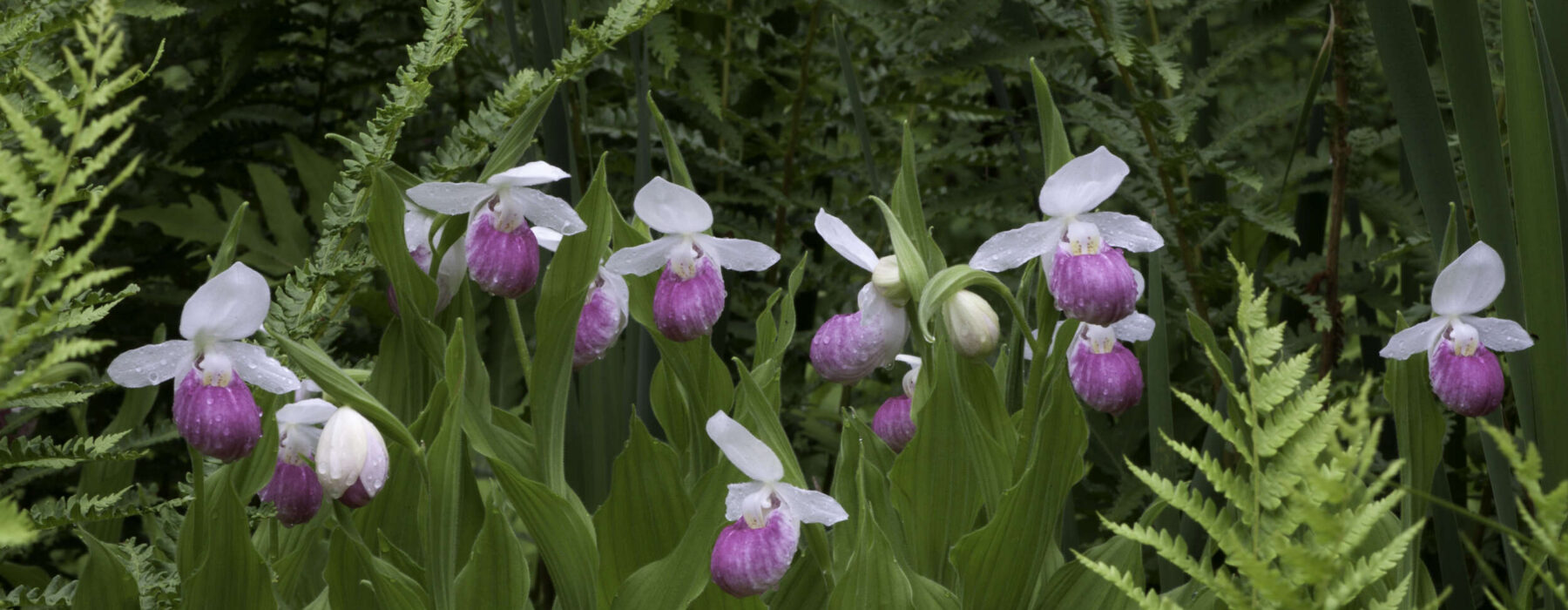
Vascular plants form the foundation of Vermont’s ecosystems. The group includes ferns and their allies, conifers, and flowering plants, which together occupy habitats ranging from the alpine tundra of Mount Mansfield to the calcareous fens and cliffs of the Champlain Valley. Vermont is home to more than 2,000 vascular plant species. Of the roughly 1,500 native species, about one-third are considered rare or uncommon, and 163 are listed as threatened or endangered. Explore them all here.
Vascular plants have specialized conducting tissues, xylem and phloem, that move water and nutrients through the plant body. This adaptation allowed them to colonize land and grow to considerable size. Vermont’s flora has been shaped by glaciation, bedrock geology, and centuries of human activity. Many species are restricted to specialized habitats, while a growing number of non-native species threaten native plant communities. Ongoing documentation is essential for understanding how plant distributions across the state are shifting with land use and climate change.
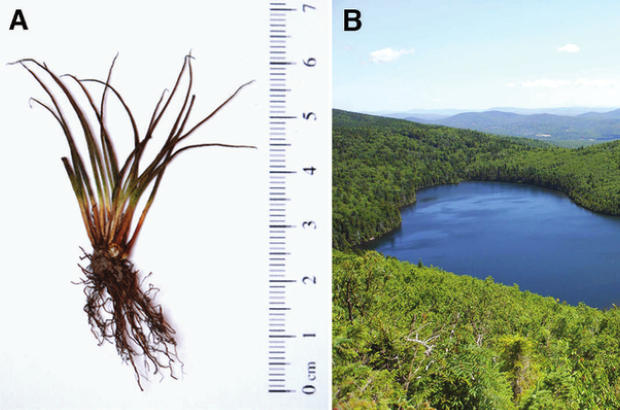
Green Mountain Quillwort (Isoëtes viridimontana) was discovered in 2010 by Michael Rosenthal, an amateur botanist from Vermont, and described as a new species. It is currently known to exist in only one specific location: a pond in Windham County, Vermont, where it grows in a small, acidic, oligotrophic (low-nutrient) lake.
About the Atlas
This atlas brings together more than a century of botanical records from herbarium specimens, field surveys, and community science observations. It draws on a wide variety of datasets, including the Pringle Herbarium at the University of Vermont, the Vermont Fish & Wildlife Department’s Natural Heritage Inventory, and iNaturalist Vermont. Here you can explore distribution maps, observation histories, conservation status, phenology, and habitat information, all updated as new records arrive.
Contribute
The atlas is only as complete as the records behind it. Many Vermont towns have been surveyed lightly or not at all, and even common species can be poorly documented. Repeated observations year after year also let us track changes in the timing of leaf-out, flowering, and fruiting. Observers of every skill level can help. Photograph the plants you find and share them on iNaturalist Vermont. Experts review each observation, and every confirmed record becomes part of a permanent public dataset that informs conservation planning, research, and land management across the state.