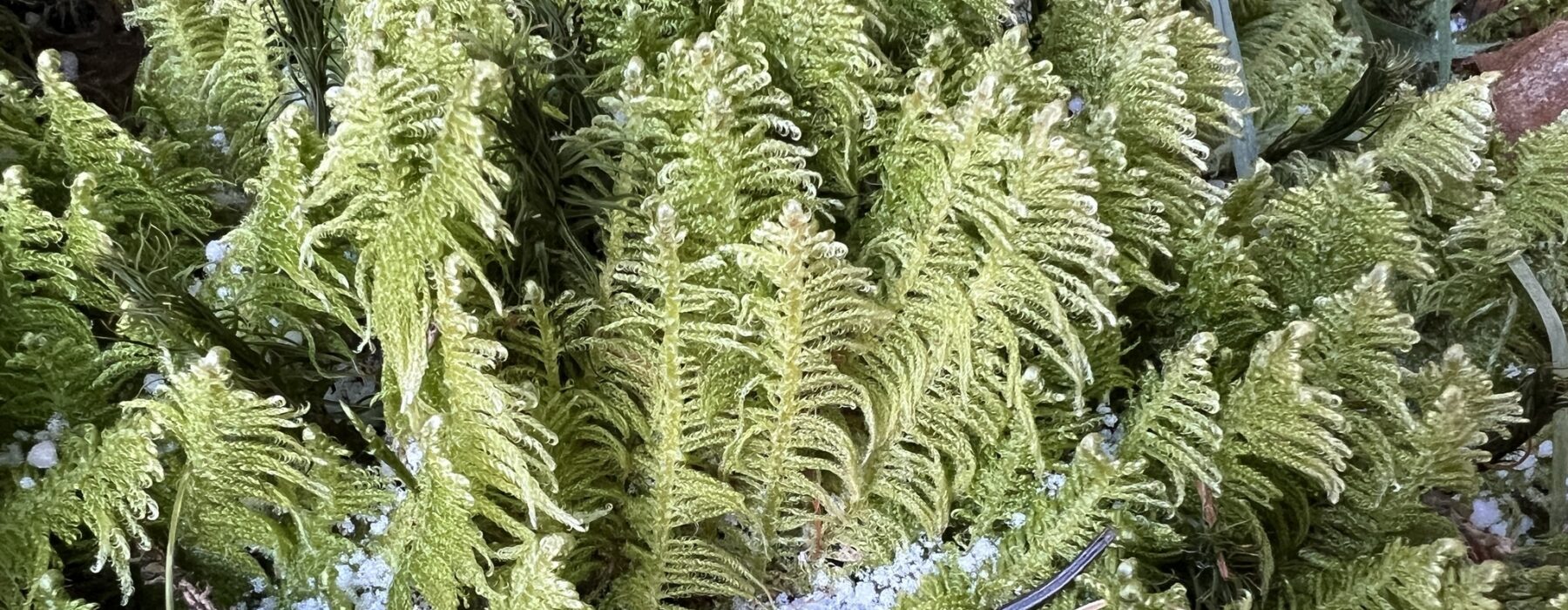
Vermont has hundreds of bryophyte species: mosses, liverworts, and hornworts. Lacking roots and internal vascular tissue, these non-vascular plants soak up water and nutrients straight through their surfaces.
Bryophytes are among the oldest land plants, with lineages going back more than 400 million years. Many species can survive almost complete drying and resume photosynthesis within hours of rehydrating. Because they take up water and nutrients straight from their surroundings, their distributions closely reflect local conditions, which makes occurrence records especially useful for tracking ecological change over time.
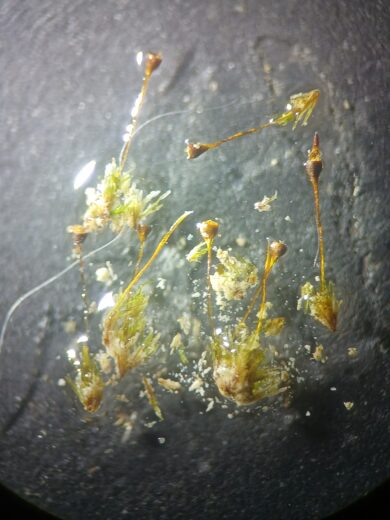
One of the first Vermont records of Donn’s Rock-Bristle (Seligeria donniana) discovered by Levi Smith and shared to iNaturalist Vermont (https://www.inaturalist.org/observations/250853787). You can read more about this at https://val.vtecostudies.org/newsfeed/new-moss-species-discovered-in-vermont/.
Bryophytes grow in nearly every habitat in the state, from rock faces and tree bark to stream edges, rotting logs, and alpine summits. They hold moisture, build soil, shelter tiny invertebrates, and give seedlings a place to start. Sphagnum mosses form the peatlands found in Vermont’s bogs and fens. Because many species respond quickly to changes in air quality, moisture, and forest condition, bryophytes are useful indicators of environmental health.
Even so, they are among the least-documented organisms in Vermont. Many are small and hard to identify, and much of what we know comes from a few dedicated specialists and older herbarium collections. This atlas gathers occurrence records from museum specimens, scientific surveys, and community observations to show where each species has been found, and where it hasn’t been looked for yet.
You can help fill the gaps. Photograph mosses, liverworts, and hornworts you find and share them on iNaturalist Vermont to contribute to this atlas.